Fluoride for children: how much is right?
Fluoride for children is an important protection against tooth decay. For most children, fluoride children's toothpaste in the right amount plus fluoridated salt in the kitchen is enough. From a dental point of view, tablets are usually not needed in Austria, and too much fluoride should be avoided.
By Stela Lobzhanidze, dentist in Vienna-Meidling
Published
Key points
- Fluoride works mainly directly on the tooth surface, which is why daily brushing with fluoride toothpaste matters so much.
- Until the second birthday, a rice-grain-sized amount of children's toothpaste with 1,000 ppm is enough; after that, a pea-sized amount.
- Fluoride tablets and fluoride toothpaste should not be used at the same time.
- Fluoride varnish applied at the dental practice can give milk teeth extra protection.
- Too much fluoride while the teeth are developing can cause white spots on the teeth.
How does fluoride protect children's teeth?
Fluoride hardens tooth enamel and makes it more resistant to the acids produced by decay-causing bacteria. It works mainly where it comes into direct contact with the tooth. According to the German National Association of Statutory Health Insurance Dentists (KZBV), swallowed fluoride contributes hardly anything to protection against decay.
Fluoride does not replace brushing or a low-sugar diet, though. It works best when your child's teeth come into contact with it regularly.
How much fluoride toothpaste can your child use?
Toddlers often swallow some of the toothpaste, so the right amount matters. Brush twice a day:
- from the first tooth to the second birthday: a rice-grain-sized amount of children's toothpaste with 1,000 ppm fluoride
- from the second to the sixth birthday: a pea-sized amount with 1,000 ppm fluoride
- from about six years: junior or adult toothpaste with about 1,450 ppm fluoride, a strip across the whole brush head
You will find the fluoride content in ppm on the packaging.
Does your child also need fluoride tablets?
The recommendations of the Austrian Supreme Health Council, published by the Austrian Dental Chamber, are clear: from a dental point of view, fluoride tablets are no longer necessary today. If they are prescribed anyway, it should only be when no fluoridated salt is used at home. Beforehand, the doctor asks which sources of fluoride your child already gets.
Most importantly, tablets and fluoride toothpaste should not be combined. If your baby takes tablets, brush the first teeth with fluoride-free toothpaste. Talk to your paediatrician or your dental practice about which approach suits your child.
What role do fluoridated salt and tap water play?
Once your child joins family meals in their second year of life, fluoridated table salt is recommended. According to the Austrian recommendations, the combination of fluoride toothpaste and fluoridated salt is ideal.
Normal drinking water contains little fluoride. You can find out the level where you live from your water supplier or the public health office. Mineral water used to prepare baby food can also raise the daily amount of fluoride. If the fluoride level in your water is higher, ask a dentist for individual advice.
Is fluoride dangerous for children?
In the recommended amounts, fluoride protects the teeth. If a child takes in too much fluoride over a long period while the teeth are developing, white spots or streaks can appear on the permanent teeth. This is called fluorosis. It usually has no further consequences and is only rarely noticeable.
The biggest risk factor is regularly swallowing fruit-flavoured children's toothpaste. Keep fluoride tablets and fluoride gels out of your child's reach. If your child has swallowed a larger amount, get medical advice straight away.
White spots can also have other causes, such as beginning decay or so-called chalky teeth. A dentist can find out what lies behind them.
When does your child get fluoride varnish at the dentist?
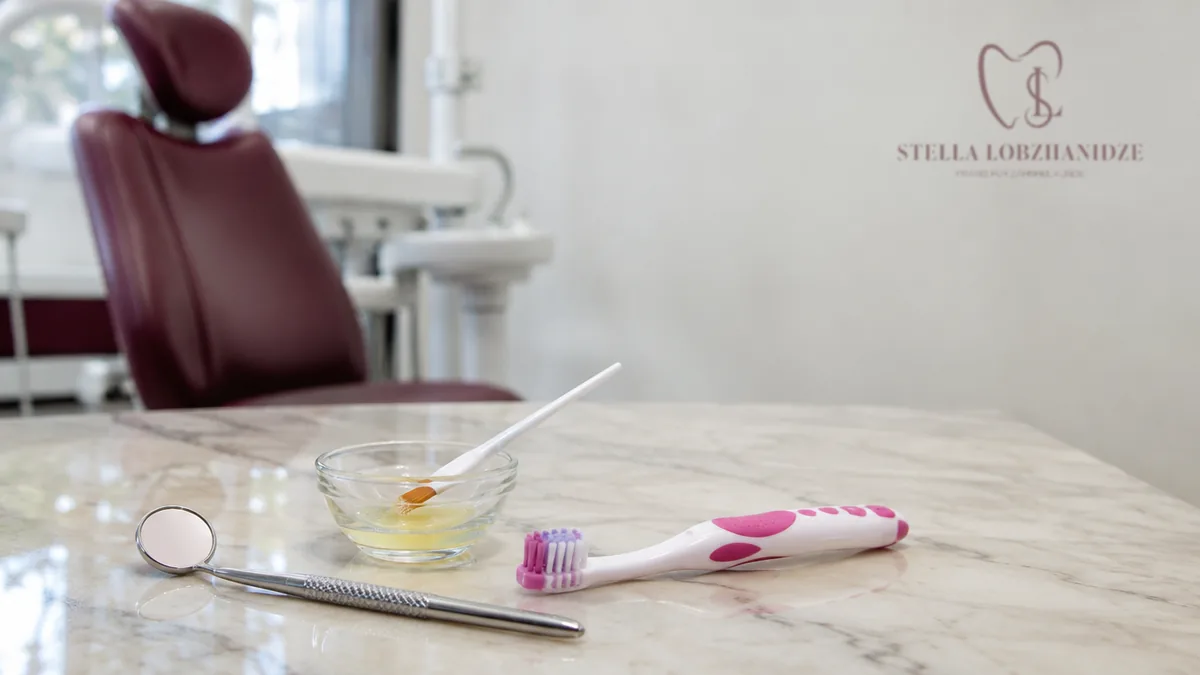
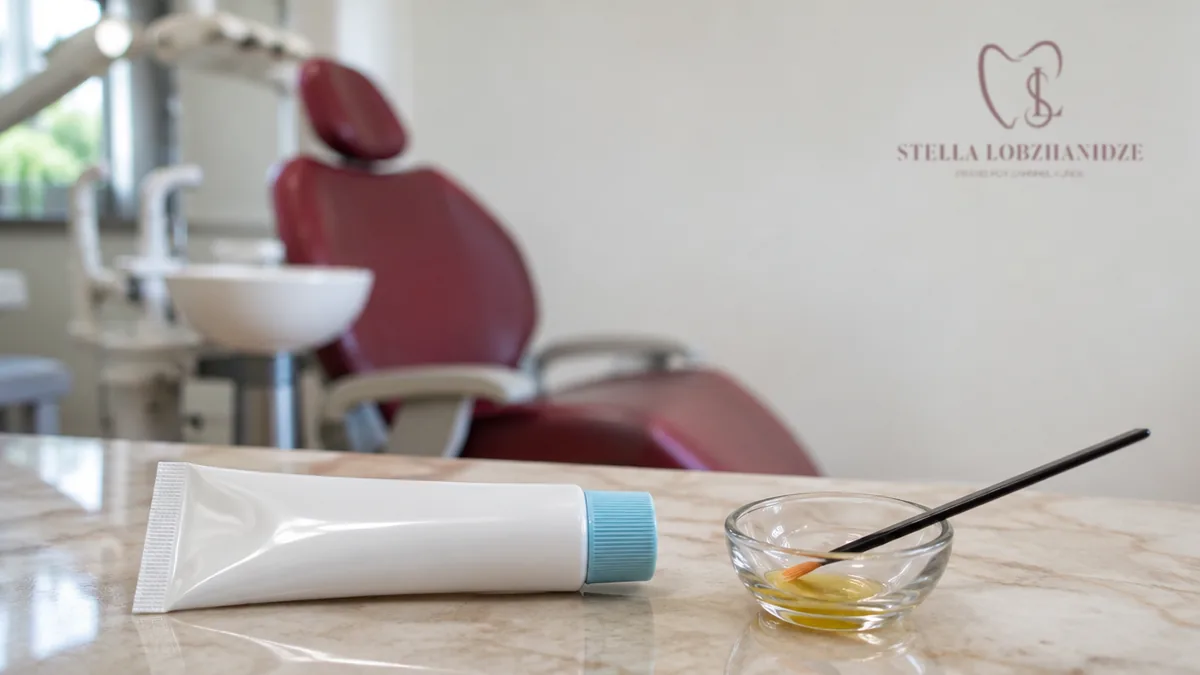
Fluoride varnish contains more fluoride than toothpaste. It is applied at the dental practice and hardens immediately on contact with saliva, so toddlers don't need to spit anything out. Studies suggest that fluoride varnish can protect milk teeth against decay.
How often the varnish makes sense depends on your child's risk of decay. With a high risk, it is applied more often. Fluoride gels and mouth rinses for use at home are only intended from school age.
How do we apply fluoride at our practice?
At our practice in 1120 Vienna-Meidling, we apply fluoride varnish with a small brush to children's teeth from the first milk tooth. Teenagers can have fluoride gel in a soft tray. We recommend fluoride treatment twice a year at check-up or prophylaxis appointments.
We are also happy to discuss which toothpaste and which amount suit your child. You can book an appointment online or by phone on +43 1 813 31 23.
Come to the practice if:
- you are unsure which toothpaste your child should use and how much
- you are thinking about giving your child fluoride tablets
- you notice white or brownish spots on your child's teeth
- your child has already had decay and you would like to strengthen protection
Book an appointment
Book online or give us a call.
Sources
- KZBV – Fluoride für Kinder
- gesundheitsinformation.de (IQWiG) – Kariesprophylaxe bei Kindern und Jugendlichen
- Österreichische Zahnärztekammer – Kariesprophylaxe mit Fluoriden (Empfehlungen des Obersten Sanitätsrates, 2010)
- gesundheit.gv.at – Zahnpflege für Säuglinge und Kinder
- Österreichische Zahnärztekammer – Gesamtösterreichisches Prophylaxeprogramm der Zahn-, Mund- und Kieferheilkunde
- Gesundheit Österreich GmbH – Kurzrecherche zum Fluorideinsatz in der Kariesprophylaxe bei Kindern, Jugendlichen und Schwangeren (2021)
- AWMF – S3-Leitlinie Kariesprävention bei bleibenden Zähnen (083-021, 2025)
This article is for general information only and does not replace a dental examination or advice.