Brushing baby teeth: how to care for your child's milk teeth
Start brushing baby teeth as soon as the first tooth appears: twice a day, with a soft children's toothbrush and a small amount of fluoride children's toothpaste. Keep brushing after your child until they can write fluently. A fixed routine usually keeps arguments to a minimum.
By Stela Lobzhanidze, dentist in Vienna-Meidling
Published
Key points
- Tooth care starts when the first milk tooth comes through.
- Under the age of two, a rice-grain-sized amount of children's toothpaste with 1,000 ppm fluoride is enough; after that, a pea-sized amount.
- Brush twice a day, with the evening brush as the last thing before sleep.
- Parents should brush after their child until the child can write fluently, often well into primary school.
- From about two and a half years, floss between the back milk molars.
When should you start brushing baby teeth?
Tooth care begins as soon as the first milk tooth breaks through the gum. This usually happens between the fifth and tenth month of life.
Milk teeth fall out later, but until then they hold space for the permanent teeth and help with chewing and speaking. Their enamel is also more sensitive than that of permanent teeth. Good care pays off from the very beginning.
How much toothpaste does your child need?
The Austrian health portal recommends fluoride children's toothpaste in an amount suited to your child's age:
- under two years: a rice-grain-sized amount of children's toothpaste with 1,000 ppm fluoride
- from two years: a pea-sized amount with 1,000 ppm fluoride
- from about six years: junior or adult toothpaste with 1,000 to 1,500 ppm fluoride
Toddlers often swallow some of the toothpaste, which is why the small amount matters. Older children should spit out the toothpaste after brushing but not rinse with water. That way the fluoride keeps working for longer.
Which toothbrush is right for milk teeth?
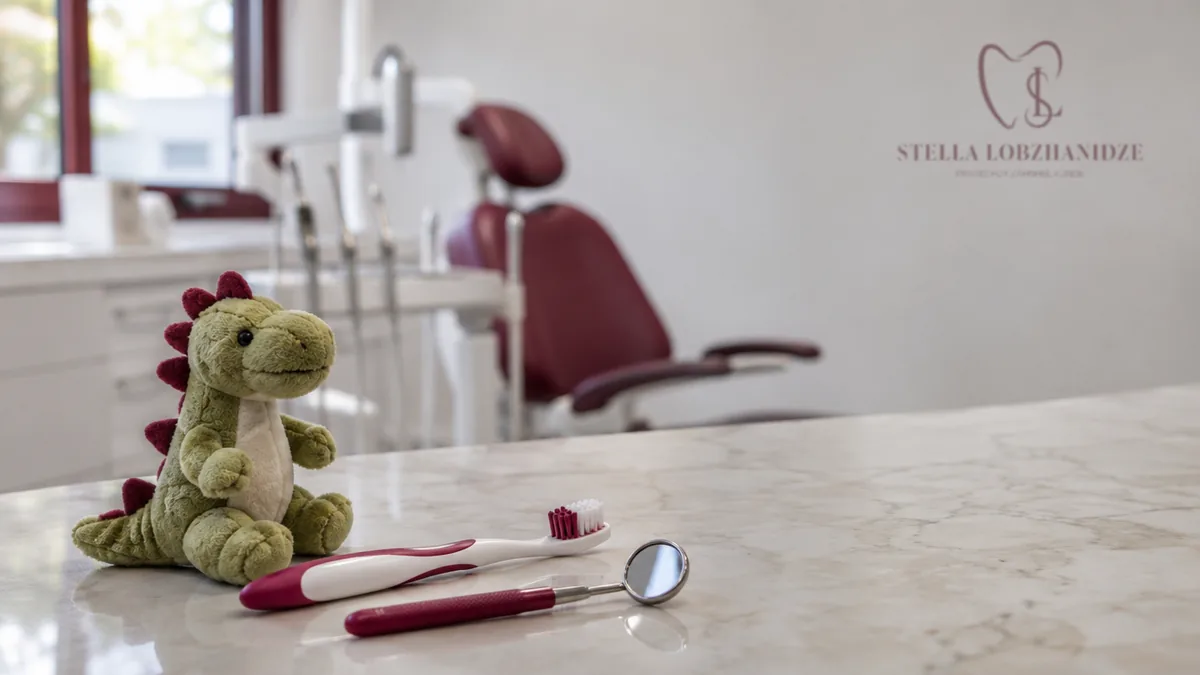
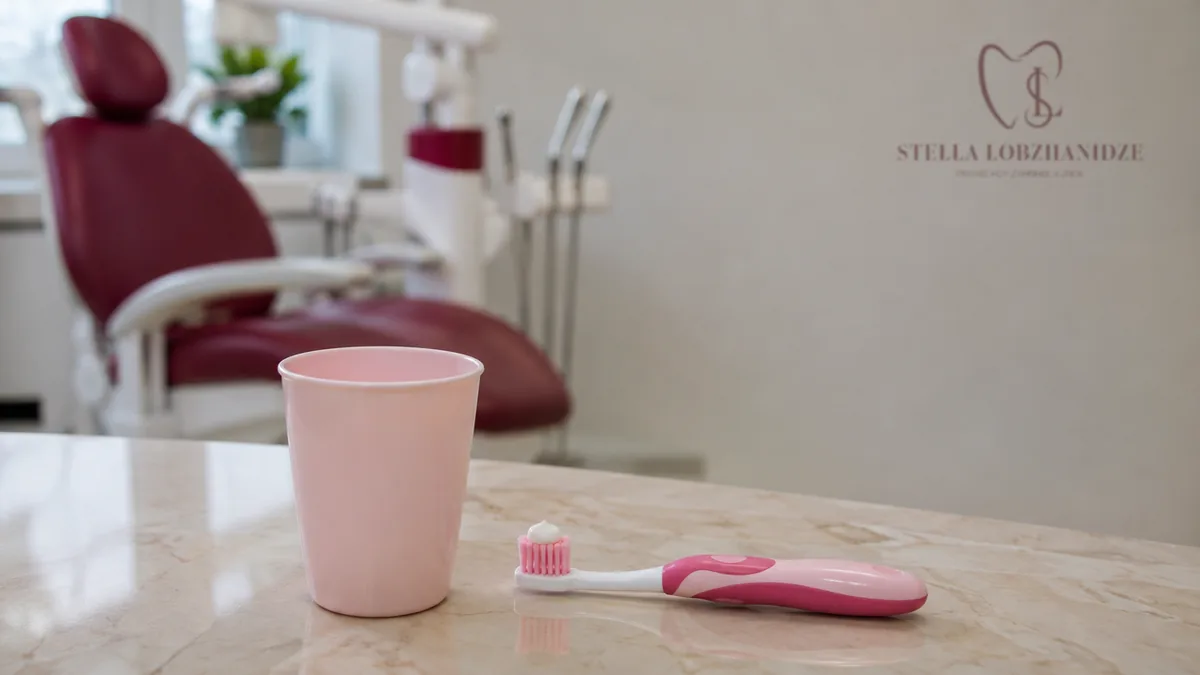
Choose a children's toothbrush that suits your child's age. It has a small, narrow head and a thick handle that small hands can hold easily. The bristles should be soft and rounded.
For the very first teeth, a cotton bud is also fine. An electric children's toothbrush can motivate children who don't like brushing.
Replace the toothbrush at least four times a year and after every cold.
How do you brush milk teeth properly?
A fixed order works well. In Austria this is known as the KAI method. Brush twice a day for about two minutes in total:
- Chewing surfaces: start with the surfaces your child chews with.
- Outer surfaces: then brush the outsides with small circular movements.
- Inner surfaces: finally clean the insides, always from the gum towards the tooth.
- In the evening: after brushing there is nothing more to eat, and only still water to drink.
Brush thoroughly but gently so the gums are not hurt. Once all the milk teeth are in, at around two and a half years, also floss the gap between the two back molars. Decay develops there especially often and quickly.
When can your child brush on their own?
Your child can start practising early. Young children, however, don't yet have the fine motor skills for thorough cleaning. The Austrian Dental Chamber therefore advises parents to brush after their child until the child can write fluently. This often lasts into the later years of primary school.
Even after that, it makes sense to check now and then whether all surfaces are reached and whether your child brushes long enough.
What helps if your child doesn't want their teeth brushed?
Many children resist toothbrushing at times. These points may help:
- Make brushing a fixed part of every morning and evening.
- Let your child brush first, then brush again yourself.
- Children's toothpaste usually tastes fruity, because many children dislike mint.
- Some children enjoy an electric children's toothbrush more.
If it still doesn't work, ask at your dental practice. The team can show you how best to help your child.
How do we support you at our practice?
Ideally, your child comes for a check-up soon after the first milk tooth. At their first visit to our practice in 1120 Vienna-Meidling, the focus is on getting to know us. Your child can try out the chair and the instruments, and you receive tips on tooth care at home.
From the first milk tooth, we can apply fluoride varnish to children's teeth with a small brush. This is recommended twice a year at check-ups. Our recall service reminds you of the next check-up.
You can book an appointment online or by phone on +43 1 813 31 23.
Come to the practice if:
- the first milk tooth has come through and your child has never been to a dental practice
- you notice white or brownish spots on the milk teeth
- your child complains of pain when eating something cold or sweet
- you are unsure how to brush your child's teeth properly
Book an appointment
Book online or give us a call.
Sources
- gesundheit.gv.at – Zahnpflege für Säuglinge und Kinder
- Österreichische Zahnärztekammer – Mundhygiene für zu Hause: 12 Tipps
- gesundheitsinformation.de (IQWiG) – Kariesprophylaxe bei Kindern und Jugendlichen
- BZÄK – Hinweise für Eltern zur Zahnpflege
- NHS – Taking care of children's teeth
- ÖGK – Kinderzahnheilkunde und Kieferorthopädie
- Gesundheit Österreich GmbH – Österreichische Zahnstatuserhebung 2023/24: 6- bis 7-jährige Kinder
This article is for general information only and does not replace a dental examination or advice.