Tooth decay in baby teeth: why the first teeth need protection too
Tooth decay in baby teeth is not harmless just because the teeth fall out later. Milk teeth hold space for the permanent teeth, and their enamel is more sensitive. Caught early, beginning decay can often be stopped without drilling.
By Stela Lobzhanidze, dentist in Vienna-Meidling
Published
Key points
- Decay develops when bacteria in plaque turn sugar into acids that attack the tooth.
- The enamel of milk teeth is more sensitive than that of permanent teeth.
- The first signs are rough white spots that can later turn brownish.
- Early decay can often be stopped with fluoride and good care, without drilling.
- If milk teeth are lost too early, the permanent teeth may come through crooked.
Is decay in baby teeth a problem if they fall out anyway?
Yes, it should be taken seriously. Milk teeth help with chewing and speaking. Above all, they hold space for the permanent teeth. If a milk tooth is lost too early because of decay, the teeth that follow can end up crowded or crooked. Many complex orthodontic treatments go back to this.
In toddlers, severe decay can also affect eating, growth and development. If it reaches the nerve, the bone at the root tip can become inflamed.
Why do even toddlers get tooth decay?
Decay results from three things together: plaque, insufficient cleaning and frequent sugar. Bacteria in plaque feed on the sugar and produce acids that slowly dissolve the tooth.
Milk teeth are particularly vulnerable because their enamel is more sensitive. The risk is high when children often eat or drink sweet things. This includes constant sucking on a bottle of sweetened tea or juice.
Decay-causing bacteria are passed on through saliva. So don't lick your child's dummy, bottle teat or baby spoon yourself.
How can you recognise tooth decay in your child?
Decay starts without pain. Look out for these signs while brushing:
- rough, whitish spots on the enamel
- spots that turn brownish
- small holes in the tooth surface
- sensitivity or pain with cold or sweet foods
White spots can also have other causes. Only a dentist can judge what lies behind them. Decay between the teeth is often not visible from the outside.
Does a decayed milk tooth need treatment?
That depends on how far the decay has progressed. Options include:
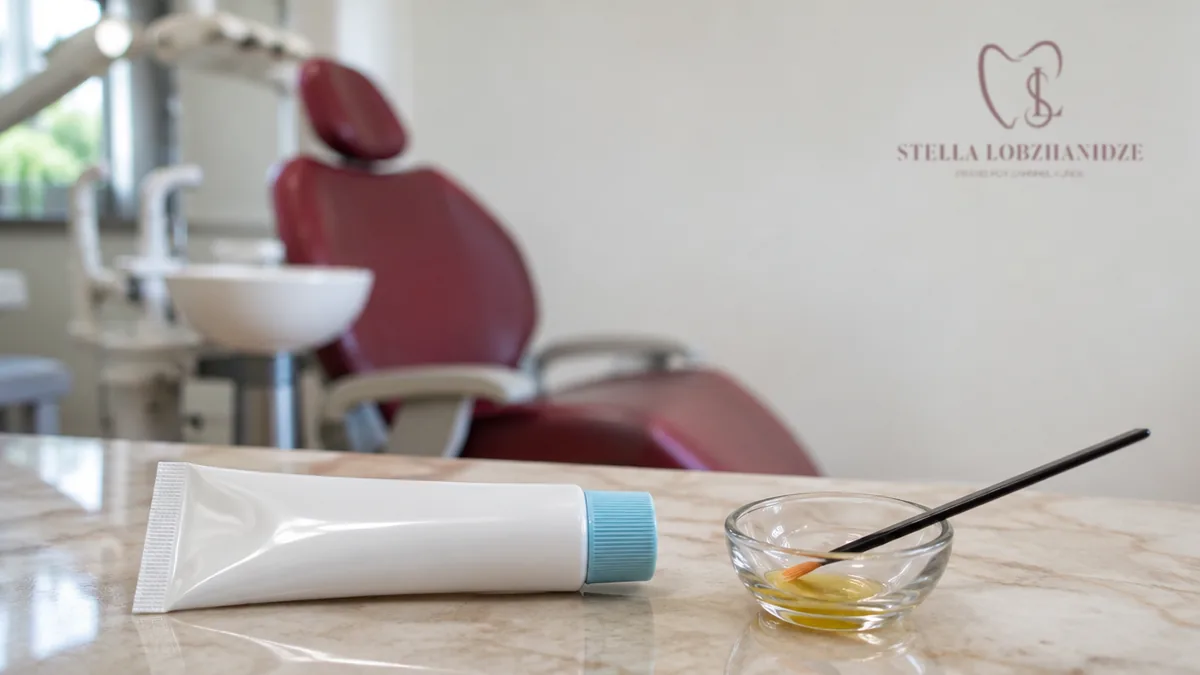
- for beginning decay: fluoride varnish or gel to help the enamel harden again, plus good care at home
- for mild decay: resin infiltration, which hardens the tooth with plastic without drilling
- for a cavity: a filling after the decay has been removed
- if the nerve is affected: usually root canal treatment; sometimes the tooth has to be removed
Decay in milk teeth most often increases between the ages of two and three. That is exactly when treatment is difficult. Children who already know the dental practice are usually easier to treat. This is why early check-ups are worthwhile.
Can decay spread to the permanent teeth?
The bacteria that cause decay stay in the mouth if it is not treated. Newly erupted permanent teeth are especially vulnerable at first, because their enamel has not yet fully hardened.
If a child already has decay at the age of three or four, their risk of decay is considered higher. Closer check-ups and extra fluoride protection then make sense.
How can you prevent decay in baby teeth?
The most important steps are simple:
- Brush twice a day from the first tooth with fluoride children's toothpaste.
- Give water or unsweetened tea to drink, not juice or soft drinks in a bottle.
- A bottle is for drinking only, not for constant sucking. From the first birthday, your child should ideally drink from a cup or glass.
- Leave breaks between meals so saliva can strengthen the enamel again.
- Take your child for regular check-ups.
How do we approach this at our practice?
At our practice in 1120 Vienna-Meidling, children first get to know the surroundings at their own pace. To look for decay between the teeth, we use DIAGNOcam. It shines light through the tooth and works without X-rays.
If a filling is needed, we remove the decay under local anaesthetic and replace it with tooth-coloured composite. To protect children's teeth, we apply fluoride varnish. You can book an appointment online or on +43 1 813 31 23.
Come to the practice if:
- you see white, brown or dark areas on the milk teeth
- your child complains of pain with cold, warm or sweet foods
- a milk tooth has a visible hole or is crumbling
- your child has not had a dental check-up since the first milk tooth
See a dentist or the emergency service straight away if:
- your child's cheek or gum becomes swollen
- your child has severe toothache and a fever
Outside opening hours, you can reach the dental emergency service on +43 1 512 20 78
Book an appointment
Book online or give us a call.
Sources
- gesundheit.gv.at – Karies: Was ist das?
- gesundheitsinformation.de (IQWiG) – Karies
- Österreichische Zahnärztekammer – Gesamtösterreichisches Prophylaxeprogramm der Zahn-, Mund- und Kieferheilkunde
- gesundheit.gv.at – Zahnpflege für Säuglinge und Kinder
- Gesundheit Österreich GmbH – Österreichische Zahnstatuserhebung 2023/24: 6- bis 7-jährige Kinder
- Österreichische Zahnärztekammer – Monat der Mundgesundheit 2018
- Land Oberösterreich, ÖGK – Gesunde Zähne von Anfang an
This article is for general information only and does not replace a dental examination or advice.