Missing back tooth: does it need replacing?
Replacing a missing back tooth often makes sense, even if nobody can see the gap. Without a replacement, the neighbouring teeth can drift into the space, and the jawbone at that spot shrinks. Whether a bridge, an implant or another option suits you is best discussed with your dentist soon.
By Stela Lobzhanidze, dentist in Vienna-Meidling
Published
Key points
- When a back tooth is missing, the neighbouring teeth can shift into the gap.
- Without chewing forces, the jawbone in the gap shrinks within a few months.
- A bridge means reshaping the neighbouring teeth, an implant leaves them untouched.
- Whether and how the gap is filled depends on your teeth, your health and your wishes.
- Get advice early, before your teeth start to shift.
What happens when a back tooth is missing?
Back teeth do most of the work when you chew. If one is missing, eating can become harder, and sometimes speaking too.
The neighbouring teeth lose their support at the gap. Over time they can shift into the empty space.
The jawbone changes as well. Because chewing forces no longer reach that spot, it shrinks within a few months. A later implant may then need a bone graft.
Do you have to replace a missing back tooth?
There is no obligation. Whether a replacement makes sense, and which one, depends on several things:
- the condition of the neighbouring teeth and the teeth in the opposite jaw
- your oral health and oral hygiene
- your age and lifestyle
- your wishes and the costs
The fact that nobody sees the gap when you smile is not a good reason to ignore it. The effects on neighbouring teeth and bone happen at the back of the mouth too.
Your dentist examines your teeth and suggests suitable options. If you are unsure, a second opinion can help.
When is a bridge right for a back tooth?
With a conventional bridge, the teeth on either side of the gap receive crowns, and the replacement tooth sits between them. This requires stable, healthy neighbouring teeth.
The neighbouring teeth have to be reshaped for this. Some enamel is removed, and this step cannot be undone.
If the very last back tooth is missing, there is a neighbour on one side only. A so-called cantilever bridge then needs at least two supporting teeth. Bonded bridges, which are attached to the inside of the neighbouring teeth, are usually not strong enough for the chewing forces at the back.
When is an implant the better choice?
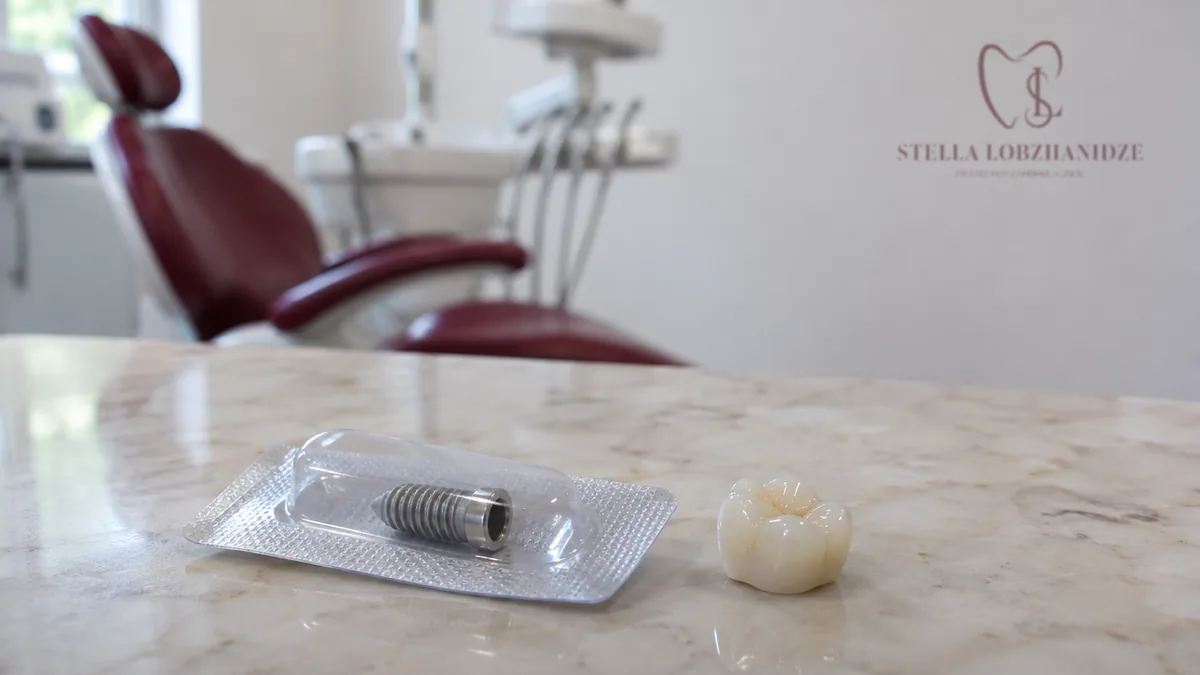
An implant is an artificial tooth root made of titanium or ceramic. It is anchored in the jawbone and later carries a crown. The neighbouring teeth are left untouched. The implant also transfers chewing forces into the bone, which can reduce bone loss.
You need enough healthy bone. It takes about three to nine months for the implant to fuse firmly with the bone. Only then is the crown added.
An implant is not always suitable. Reasons against it can include active gum disease, poor oral hygiene or poorly controlled diabetes. Smoking can disrupt healing, and jaw growth must be complete.
A removable partial denture is more of an option when several teeth are missing and fixed bridges can no longer be anchored well.
How long can you wait with the gap?
There is no fixed deadline. The longer the gap stays open, the more time the neighbouring teeth have to shift and the more bone can be lost. Experts therefore advise replacing a missing tooth fairly soon.
If a back tooth has been taken out, bring up the gap at your next check-up. That leaves time to plan the right solution calmly.
What are the next steps at Stella Dent?
At our practice in 1120 Vienna-Meidling we offer bridges, implants and dentures. For planning implants we have a CBCT (DVT) scanner that shows teeth, jaw and bone in three dimensions.
After the examination we discuss the options for your gap with you. Before any treatment you receive a detailed cost estimate. We bill SVS and KFA directly. With other insurance funds we treat you as a Wahlärztin (private dentist), and you get part of the costs back after submitting the invoice. Our team will help you with that.
Book an appointment online at stelladent.termin365.at or call us on +43 1 813 31 23.
Come to the practice if:
- a back tooth has been taken out or fallen out and the gap has not been treated yet
- you notice teeth next to the gap shifting
- chewing on one side is difficult
- you are unsure whether a bridge or an implant is right for you
Book an appointment
Book online or give us a call.
Sources
- gesundheitsinformation.de (IQWiG) – Kronen, Brücken, Implantate: Welche Arten von Zahnersatz gibt es?
- Cleveland Clinic – Dental Bridges
- Cleveland Clinic – Dental Implants
- Landeszahnärztekammer Thüringen – ZahnRat 44: Zahnersatz auf Implantaten
- Verbraucherzentrale – Brücke, Krone, Implantat: Welche Unterschiede gibt es beim Zahnersatz?
- gesundheit.gv.at – Zahnersatz: Kronen und Brücken
- gesundheit.gv.at – Zahnimplantate
This article is for general information only and does not replace a dental examination or advice.