Periodontitis treatment: what happens, step by step?
Periodontitis treatment follows several steps: preparation with oral hygiene guidance, thorough cleaning of the gum pockets, a review of the result and then regular aftercare. Surgery is only needed for very deep pockets. How well you care for your teeth at home also makes a big difference.
By Stela Lobzhanidze, dentist in Vienna-Meidling
Published
Key points
- Treatment starts with a detailed examination, a talk about risk factors and guidance on oral hygiene.
- The core step is cleaning the gum pockets below the gum line, usually under local anaesthetic.
- A few weeks to months later, your dentist checks whether the pockets have healed.
- Antibiotics and surgery are only used in addition, and only for severe forms.
- Periodontitis needs long-term aftercare, otherwise it can flare up again.
How does periodontitis treatment work?
The aim is to stop the inflammation and prevent further loss of tissue and bone. Periodontitis cannot be fully reversed. The earlier it is treated, the better it can be kept under control.
Treatment usually has four steps:
- Preparation: examination, advice, oral hygiene guidance and removal of tartar
- Cleaning of the gum pockets below the gum line
- Review of healing and further treatment if needed
- Long-term aftercare at regular intervals
Overall, treatment therefore usually takes several months.
What happens during the preparation phase?
It begins with a thorough examination, including measuring the gum pockets, and usually an X-ray. Periodontitis generally needs treatment if pockets of 4 millimetres or more are found.
Your dentist then talks to you about risk factors such as smoking or diabetes. She shows you how to use your toothbrush, interdental brushes and floss correctly. Plaque is often stained so you can see where it still sits.
Tartar is removed and overhanging edges of fillings or crowns are smoothed. A professional dental cleaning is often part of the preparation too.
How are the gum pockets cleaned?
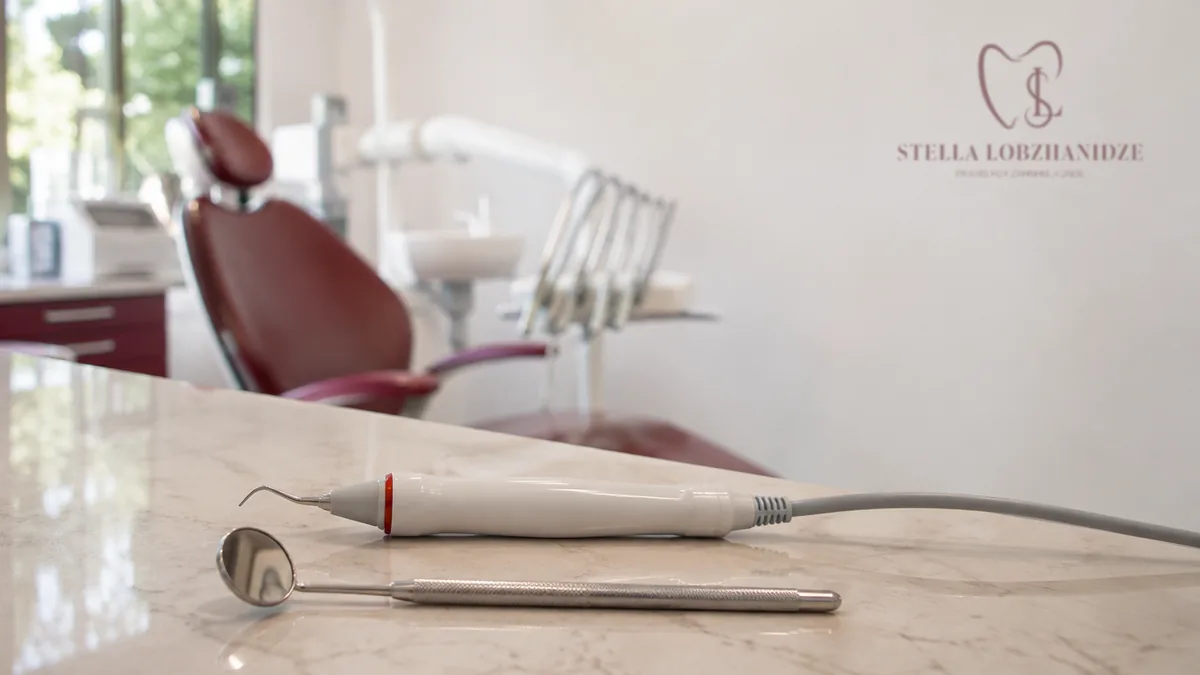
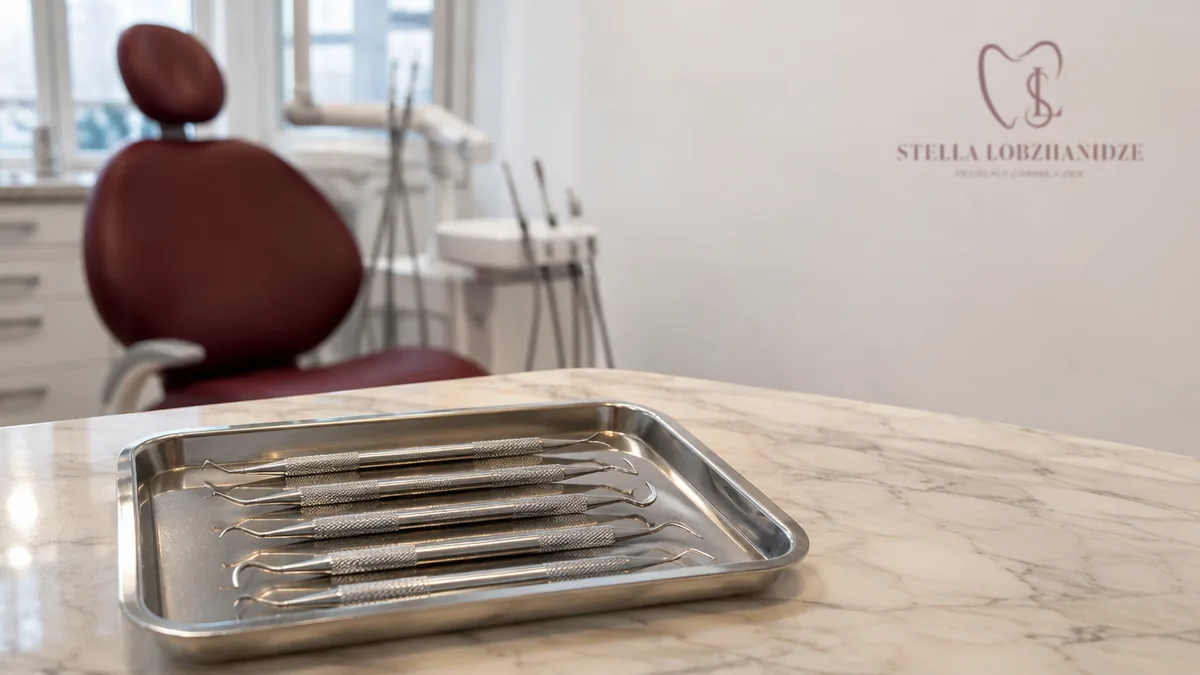
In the main step, your dentist removes bacterial plaque and hard deposits below the gum line, including on exposed roots. She uses fine hand instruments or ultrasound. This is called closed treatment because the gum is not cut open.
You usually get a local anaesthetic for this. Depending on how much needs to be done, the cleaning is spread over several sessions.
Studies suggest that this treatment reduces gum bleeding and can help protect against tooth loss.
Are antibiotics always needed for periodontitis?
No. For severe forms, an antibiotic may be considered in addition to the cleaning. On its own it is not enough, and the pockets still have to be cleaned.
Your dentist decides, based on the findings, whether an antibiotic makes sense for you.
Do you need surgery for periodontitis?
Usually not. A few weeks to months after the cleaning, your dentist checks how the gums have healed. If some pockets are still too deep, the cleaning is often repeated there.
For very deep pockets, open treatment may be useful. Under local anaesthetic, the gum is folded back, the root is cleaned and the gum is stitched closely back onto the tooth. The wound heals in about a week, and then the stitches are removed.
After treatment the gums may recede slightly, partly because the swelling goes down. Your teeth may then look a little longer.
How often do you need check-ups after treatment?
Periodontitis needs long-term care. At aftercare appointments, your oral hygiene and gum bleeding are checked, deposits are removed and the pockets are measured. How often you should come depends on how severe the disease was and how high your risk is.
At home, brush at least twice a day and clean between your teeth. This helps prevent a relapse. Reducing risk factors such as smoking also helps.
Which services your health insurance covers depends on your insurance provider. If in doubt, ask them.
Where can you get periodontitis treatment in Vienna?
At our practice in 1120 Vienna-Meidling, we treat periodontitis as part of our periodontal care. With deep scaling, we remove bacteria and hard deposits over several sessions, including below the gum line. We also show you how to look after your teeth well at home.
For prevention and aftercare we offer professional dental cleaning. If you wish, our recall service reminds you of check-ups and prophylaxis appointments. Before any treatment you receive a cost estimate. Book online or call +43 1 813 31 23.
Come to the practice if:
- your gums bleed, are red or swollen
- you have been diagnosed with periodontitis and your last check-up was a while ago
- your gums start bleeding or swelling again after treatment
- teeth become loose or shift
Book an appointment
Book online or give us a call.
Sources
- gesundheitsinformation.de – Wie wird eine Parodontitis behandelt?
- Gesundheit Österreich – Parodontitis (Parodontose)
- KZBV – Parodontitis: Behandlung der Parodontitis
- NHS – Gum disease
- gesundheit.gv.at – Gingivitis – Zahnfleischentzündung
- EFP – Treatment of stage I–III periodontitis: The EFP S3 level clinical practice guideline (J Clin Periodontol 2020)
- gesund.bund.de (BMG, mit IQWiG) – Zahnfleischentzündung und Parodontitis
This article is for general information only and does not replace a dental examination or advice.