Tartar and plaque: what is the difference?
The difference between tartar and plaque: plaque is a soft film of bacteria that you remove yourself with a toothbrush and floss. Tartar is hardened plaque that sticks so firmly that only a dental practice can remove it. Both encourage gum inflammation.
By Stela Lobzhanidze, dentist in Vienna-Meidling
Published
Key points
- Plaque is soft and can be removed by thorough brushing.
- If plaque is left in place, minerals from saliva build up in it and tartar forms.
- Tartar forms mainly on the inside of the lower front teeth and the outside of the upper back teeth.
- Do not scrape tartar off yourself, and home remedies do not dissolve it.
- At the practice, tartar is removed and the tooth surface is then polished.
What is the difference between plaque and tartar?
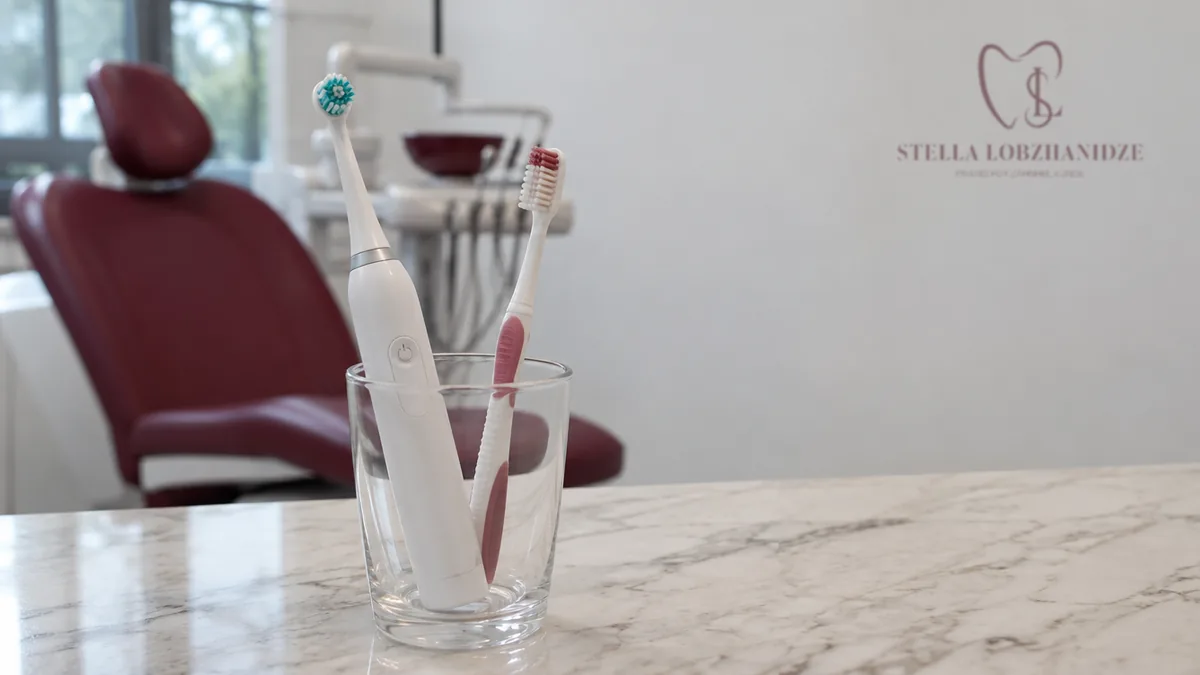
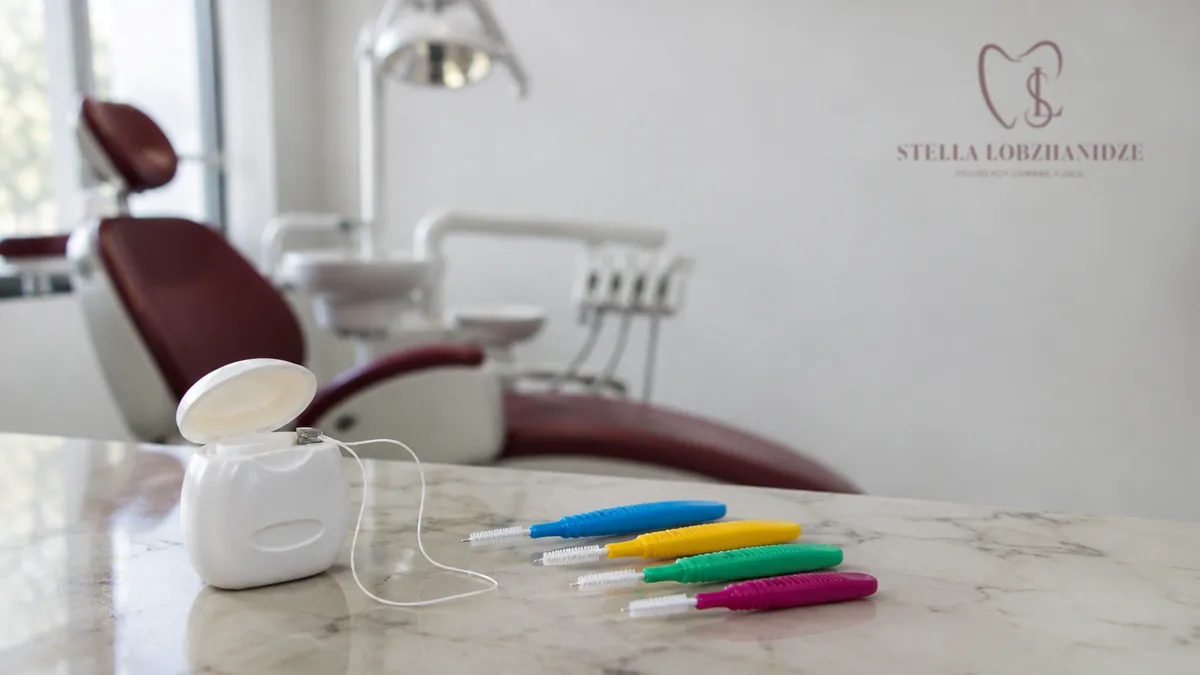
Plaque is a soft film of bacteria, food remains and components of saliva. You can feel it with your tongue when your teeth feel furry or rough. You remove it yourself with a toothbrush, floss or interdental brushes.
Tartar is plaque that has hardened. It sticks so firmly to the tooth that brushing no longer helps. Above the gum line it shows as a yellowish to brownish, rough layer. Deposits below the gum line are called subgingival calculus.
How does tartar form?
Tartar develops step by step from plaque that is not removed:
- Shortly after brushing, a thin film forms on the enamel. It is harmless and protects the tooth.
- After a few hours, bacteria and food remains settle on it. This is plaque.
- After one to two days, the plaque becomes firmer.
- After about ten to twenty days, minerals from saliva, mainly calcium and phosphate, build up in it. The plaque hardens.
Tartar forms especially where salivary glands open into the mouth: on the inside of the lower front teeth and the outside of the upper back teeth.
Does tartar harm your teeth?
Tartar itself is not considered a disease. But it makes oral care harder, and new plaque easily sticks to its rough surface. The consequences:
- The gums become irritated and can become inflamed.
- Bad breath can develop.
- The risk of periodontitis rises.
- Deposits below the gum line encourage inflammation in gum pockets and can make existing periodontitis worse.
Can you remove tartar at home?
No. Do not try to scrape tartar off yourself. You can injure your gums and damage the enamel. Remnants and rough patches often stay behind, where new plaque settles even faster.
Home remedies such as baking soda, coconut oil or tea tree oil do not dissolve tartar either. Lemon and vinegar even attack the enamel. No toothpaste reliably removes tartar, and mouthwash does not replace brushing.
What you can do yourself is something else: remove soft plaque regularly, before it hardens.
How can you prevent tartar?
Thorough care at home stops plaque from turning into tartar:
- Brush twice a day with fluoride toothpaste and gentle pressure.
- Pay special attention to the gum line, the inside of the lower front teeth and the outside of the upper back teeth.
- Clean between your teeth once a day with floss or interdental brushes.
- Ask the practice to show you where plaque is left behind. It is stained so you can see it.
Whether you use a manual or an electric toothbrush matters less than using the right technique.
Do you need a professional dental cleaning, and how often?
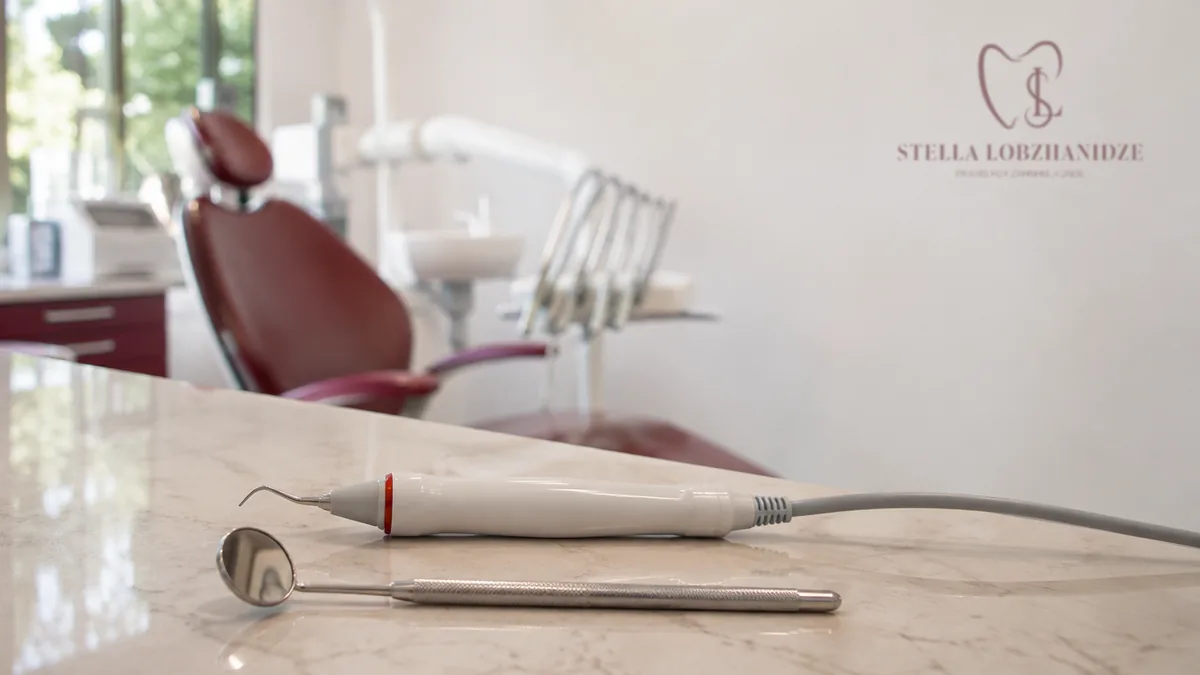
Tartar can only be removed at a dental practice, using ultrasound or fine hand instruments. The teeth are then polished so that new plaque sticks less easily.
A professional dental cleaning adds further steps, such as removing stains and applying fluoride. The Austrian Dental Chamber recommends it at least once a year. How often it makes sense for you depends on your risk. Discuss this with your dentist.
Which costs your health insurance covers depends on your insurance provider. If in doubt, ask them.
Where can you have tartar removed in Vienna?
At our practice in 1120 Vienna-Meidling, our professional oral hygiene treatment removes hard and soft deposits with ultrasound, Airflow and hand instruments, including below the gum line. The teeth are then polished and treated with fluoride, and you get tips for care at home.
If you wish, our recall service reminds you of your next appointment. Before any treatment you receive a cost estimate. Book online or call +43 1 813 31 23.
Come to the practice if:
- you see hard, yellowish or brownish deposits on your teeth
- your gums bleed or look red
- your last check-up or dental cleaning was more than a year ago
- bad breath persists despite thorough oral care
Book an appointment
Book online or give us a call.
Sources
- Barmer – Zahnstein
- gesundheitsinformation.de – Welche Vor- und Nachteile hat die professionelle Zahnreinigung?
- Bundeszahnärztekammer – Handbuch der Mundhygiene 2025
- Österreichische Zahnärztekammer – Mundhygiene für zu Hause: 12 Tipps
- Gesundheit Österreich – Parodontitis (Parodontose)
- gesundheit.gv.at – Gingivitis – Zahnfleischentzündung
- gesundheit.gv.at – Zahngesundheit
This article is for general information only and does not replace a dental examination or advice.