Broken or sore denture: what now?
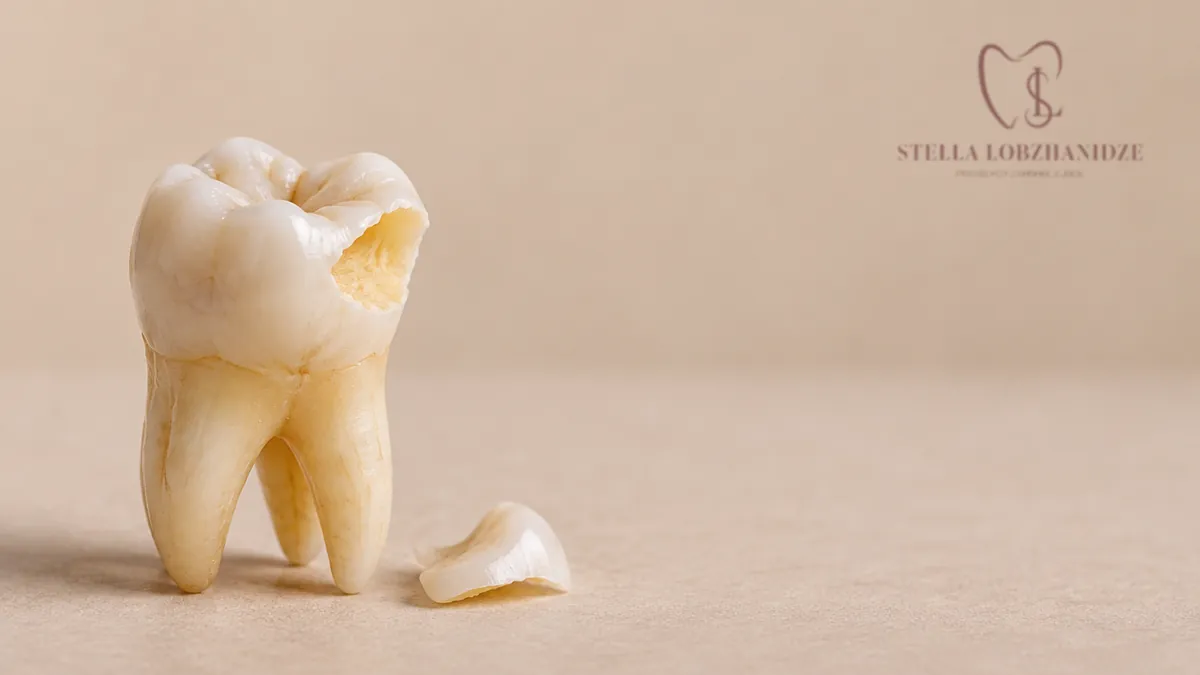
If your denture has broken, keep all the pieces and take them to a dental practice, where the dentist will check whether it can be repaired. If a denture rubs or feels loose, have the fit checked and adjusted rather than putting up with the pain.
By Stela Lobzhanidze, dentist in Vienna-Meidling
Published
Key points
- If your denture breaks, bring all the pieces so the dentist can check whether a repair is possible.
- A damaged denture should be repaired by professionals, not at home.
- Sore spots are often caused by a poor fit, damage to the denture or leftover adhesive.
- Jaw and gums change over time, so a denture that once fitted well can become loose.
- Daily cleaning and regular check-ups help prevent sore spots and inflammation.
What can you do if your denture has broken?
Stay calm and proceed as follows:
- Take the denture out, especially if sharp edges or cracks have formed.
- Collect all broken pieces and teeth, including small parts.
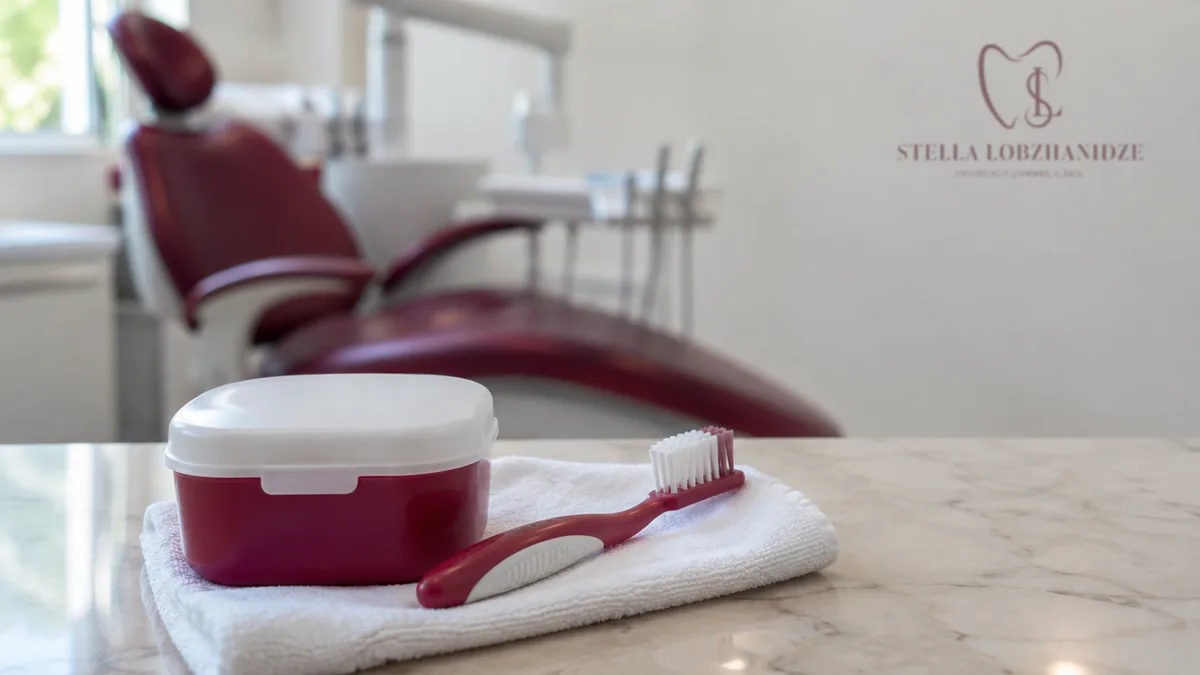
- Keep everything together in a denture box. Do not wrap the pieces in paper tissues, so they do not end up in the bin by mistake.
- Call the practice and make an appointment.
- Bring all the pieces with you. The dentist will check whether a repair is possible.
Can you glue a broken denture yourself?
It is better not to. Health bodies advise having a damaged denture checked by professionals. For a denture to hold and not rub, it has to fit the jaw exactly. Even a small shift when gluing or filing can change the fit.
A denture with cracks, breaks or sharp edges can cause painful sore spots and inflammation. So it is better not to wear it until it has been properly repaired.
Why does the denture rub, and what helps?
Common reasons for sore spots are:
- the denture no longer fits well or is damaged
- jaw and gums have changed over time
- adhesive or deposits are left on the denture
- the denture was fitted after teeth were removed and the mouth is still healing
Do not just put up with sore spots. Have the fit checked by a dentist. In most cases the denture can be adjusted. Immediate dentures, fitted straight after teeth are removed, often need adjusting or replacing within the first year.
Suddenly needing more adhesive than usual is also a warning sign.
How long does it take to get used to a denture?
Most people get used to a new denture within a few weeks. It helps to practise putting it in and taking it out and to eat softer food at first.
Pain is not part of this. If the denture hurts, slips or clicks when you speak, your dentist should take a look.
When is a new denture better than a repair?
Well-cared-for dentures can last many years, but they wear over time. Whether a repair, an adjustment or a new denture makes sense is decided by the dentist after an examination.
In Austria, time limits apply to a new denture covered by health insurance. According to the ÖGK, a new denture may be possible earlier if the old one can no longer be repaired. The insurer has to approve the cost estimate before treatment begins.
How do you clean your denture properly?
Good care helps prevent sore spots, inflammation and breakage:
- Clean the denture thoroughly every day with a denture brush. Ask at the practice which cleaning product suits your denture.
- Clean it over a basin filled with water or over a towel. If the denture falls, it can break.
- Rinse the denture after meals and remove all adhesive.
- Also brush your gums, tongue and any remaining teeth.
- Only wear the denture at night if your dentist recommends it.
- Look at your mouth before putting the denture in. Redness, swelling, bleeding or sore spots are a reason to book an appointment.
Where can you get help with your denture in Vienna?
At our practice in 1120 Vienna-Meidling we make and look after partial and full dentures. At regular check-ups we check the fit and show you the right care. Before any treatment you receive a cost estimate, and we help you submit it to your health insurer.
If your denture has broken or you are in pain, please call us: +43 1 813 31 23. We keep emergency appointments free every day for acute problems.
Come to the practice if:
- your denture is broken or has cracks or sharp edges
- the denture rubs, hurts or causes sores
- it feels loose, slips or clicks when you speak
- you suddenly need more adhesive than usual
- the gums under the denture are red, swollen or inflamed
Book an appointment
Book online or give us a call.
Sources
- NHS – Dentures (false teeth)
- Bundeszahnärztekammer, ZQP – Ratgeber Mundpflege: Praxistipps für den Pflegealltag
- ÖGK – Zahnersatz
- IQWiG, gesundheitsinformation.de – Kronen, Brücken, Implantate: Welche Arten von Zahnersatz gibt es?
- gesundheit.gv.at – Zahnersatz
- Landeszahnärztekammer Wien – Aktuelles zum Prothesenersatz
- AWMF-Leitlinie 083-047 (S2k) – Zahnmedizinische Betreuung geriatrischer Patienten (2026)
This article is for general information only and does not replace a dental examination or advice.