Veneers or teeth whitening: which is right for your teeth?
Whether veneers or whitening suit you better depends mainly on what bothers you. If healthy teeth have simply become darker overall, whitening is often enough. If the issue is shape, chipped edges, small gaps or stains that do not respond to whitening, veneers are more likely to be an option.
By Stela Lobzhanidze, dentist in Vienna-Meidling
Published
Key points
- Whitening only lightens natural teeth; fillings and crowns keep their colour.
- Veneers change colour and shape, but usually a little enamel has to be removed first.
- The effect of whitening fades again after a few months to a few years.
- With good care, ceramic veneers often last ten to 15 years and then need replacing.
- Both treatments are usually considered cosmetic and are generally paid for privately.
What is the difference between veneers and whitening?
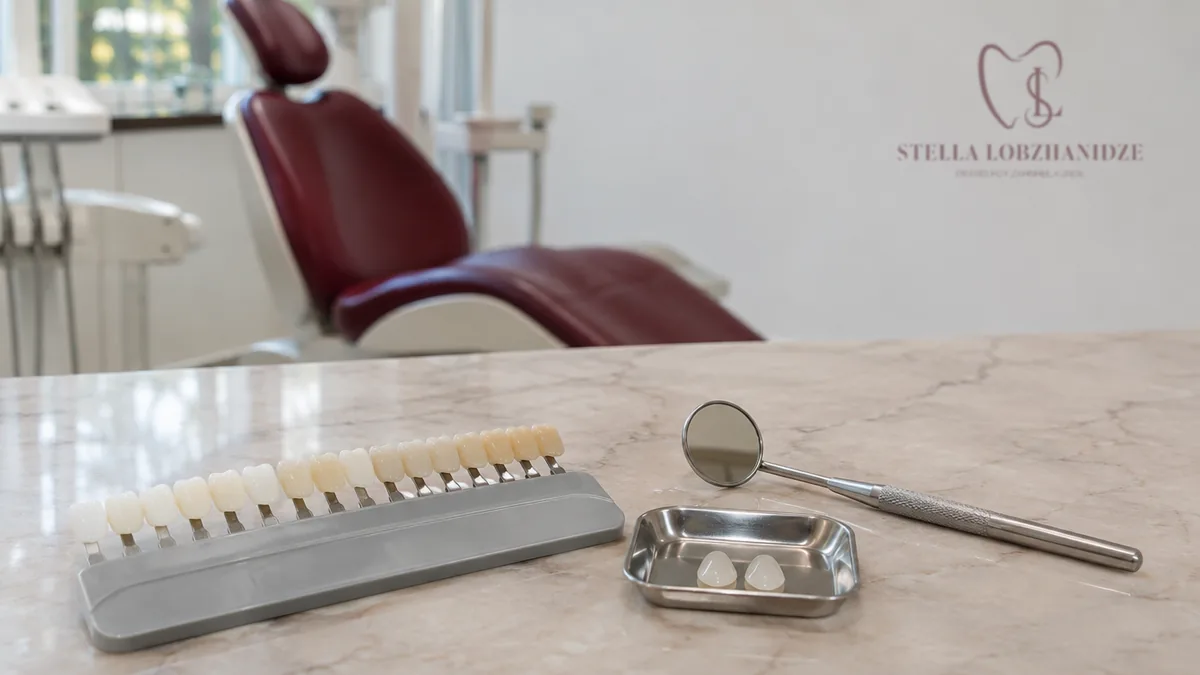
Whitening uses a gel that lightens stains in the tooth enamel. These stains often build up over years, for example from coffee, tea, red wine or smoking. The tooth itself is not changed.
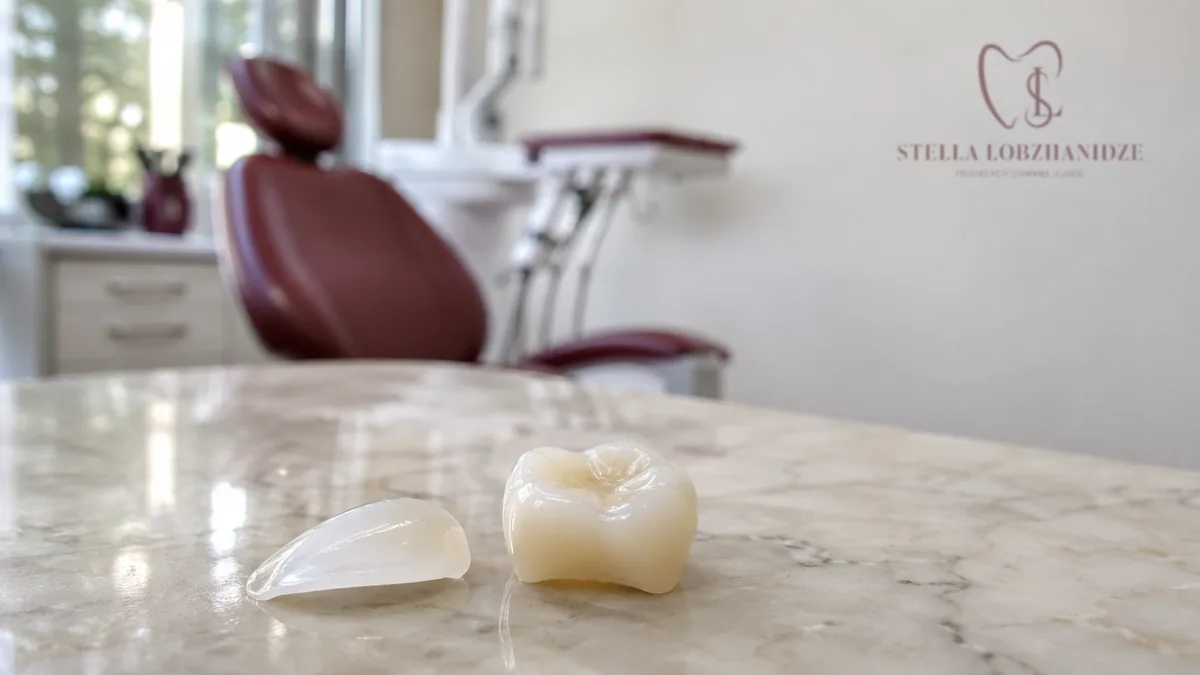
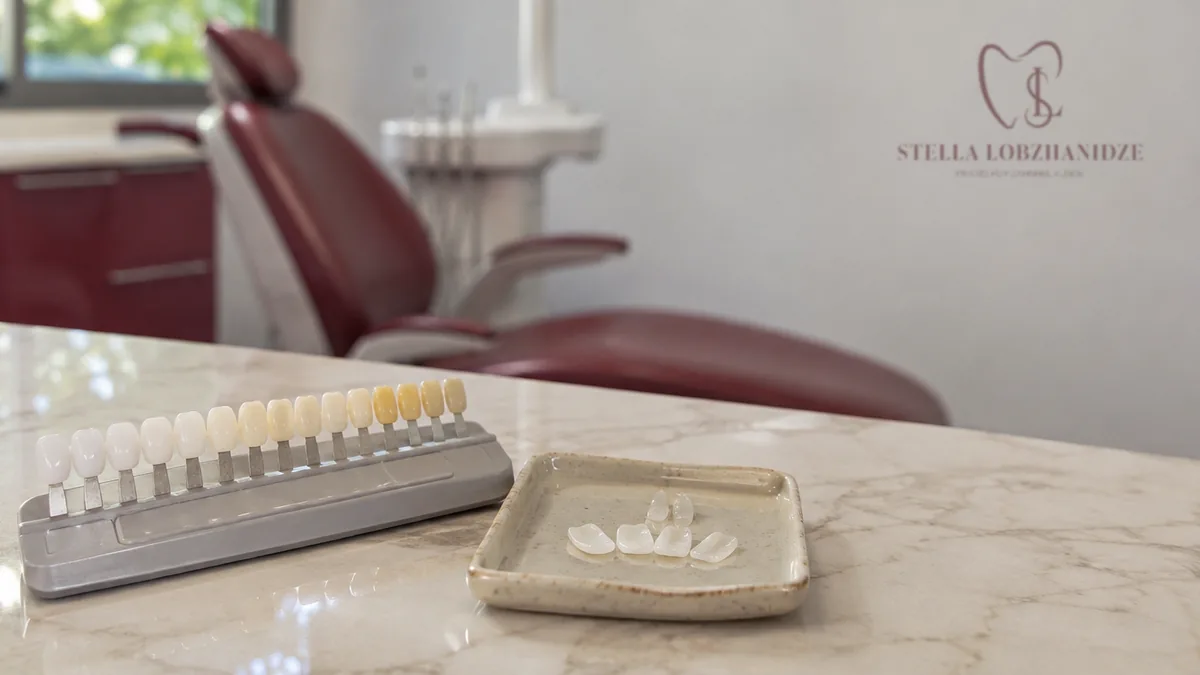
Veneers are thin shells, usually made of ceramic, that are bonded to the front of the teeth. They cover the tooth surface and can change not only the colour but also the shape and size of a tooth.
When is whitening enough?
Whitening is an option if your teeth are healthy and only the colour bothers you. An examination always comes first. Tooth decay and gum inflammation are treated beforehand and plaque is removed. Your dentist will also find out what is causing the discolouration.
- Only natural teeth are lightened. Fillings, crowns and implants stay as they are.
- Whitening is not recommended for anyone under 18 or during pregnancy and breastfeeding.
- Common side effects are teeth that are sensitive to cold and irritated gums. They usually settle after a short time.
If a single tooth has darkened after root canal treatment, there is a separate method in which the whitening agent is placed inside the tooth.
Veneers or whitening: when are veneers the better choice?
Veneers can correct things that whitening cannot reach. These include:
- stains that do not respond to whitening
- chipped or worn tooth edges
- small gaps between the front teeth
- teeth that look too short or are unevenly spaced
- slightly crooked teeth
Veneers are often not suitable for severely crooked teeth or major damage to the front teeth. People who grind their teeth heavily at night also risk the shells coming loose.
Do teeth have to be ground down for veneers?
With conventional veneers, a thin layer of enamel is removed from the front of the tooth, usually less than one millimetre. This step cannot be undone.
So-called no-prep veneers often do not need any grinding. They are thinner and cover strong discolouration less reliably.
If a ceramic veneer is firmly bonded to the enamel, it usually has to be ground off to remove it, and more tooth structure is lost. Composite facings on a tooth that has not been ground down, by contrast, can be removed again without damaging the tooth.
How long do whitening and veneers last?
Whitening is not permanent. How long the effect lasts depends on the method, your oral hygiene and the condition of your teeth. Some teeth darken again after a few months, while in others the colour holds for a few years.
With good care and regular check-ups, ceramic veneers usually last ten to 15 years. The shells can chip, and decay can form at the edges. A veneer then needs to be repaired or replaced.
Does health insurance pay for veneers or whitening?
Whitening is a purely cosmetic treatment, and veneers are usually done for aesthetic reasons too. Austrian social insurance generally covers treatments that are necessary and appropriate. You will therefore usually pay for purely cosmetic treatments yourself.
Your health insurer can tell you whether a contribution is possible in your case.
How do we advise you in Vienna-Meidling?
At our practice in 1120 Vienna we offer both: in-office whitening, supplemented by home whitening with custom-made trays, and ceramic veneers made in a dental laboratory. For veneers we remove only a very small amount of the tooth surface, about 0.3 to 0.7 millimetres.
Before any treatment we examine your teeth and discuss which option suits your wishes. You will receive a cost estimate in advance.
You can book an appointment online at stelladent.termin365.at or by phone on +43 1 813 31 23.
Come to the practice if:
- you are planning whitening, because an examination is needed first
- a single tooth has become noticeably darker
- your teeth stay sensitive for more than a few days after whitening
- a veneer is loose, has chipped or is discoloured at the edge
Book an appointment
Book online or give us a call.
Sources
- NHS – Teeth whitening
- Verbraucherzentrale – Bleaching: Möglichkeiten der Zahnaufhellung
- Verbraucherzentrale – Veneers: Korrektur bei leichten Zahnfehlstellungen
- Stiftung Warentest – Keramikschalen für schöne Zähne: Veneers eignen sich nicht für jeden
- gesundheit.gv.at – Zahnersatz
- gesundheit.gv.at – Zahnverfärbungen
- Bundeszahnärztekammer – Bleaching (Zahnaufhellung)
This article is for general information only and does not replace a dental examination or advice.