Teeth grinding: when does a splint help?
Teeth grinding, known medically as bruxism, affects about one in five people and often goes unnoticed for a long time. A splint protects the teeth during sleep but does not stop the grinding for good. That is why relaxation and looking at possible triggers matter too.
By Stela Lobzhanidze, dentist in Vienna-Meidling
Published
Key points
- Grinding and clenching can happen at night during sleep or during the day while awake.
- Common triggers are stress, anxiety, sleep problems, alcohol, caffeine and smoking.
- Untreated, grinding can wear down teeth, fillings and dental work and strain the jaw.
- A hard, custom-made splint protects the teeth, but only works while you wear it.
- Self-observation and relaxation exercises help especially with daytime clenching.
How can you tell that you grind your teeth?
Many people do not notice it themselves. Often a partner or parent hears it, or the dentist sees signs of wear at a check-up. These signs can point to it:
- grinding noises during sleep
- tense or tired jaw muscles, sometimes neck pain
- headaches in the morning, often at the temples
- jaw joint pain or difficulty opening the mouth after waking up
- sensitive, worn or cracked teeth
What causes teeth grinding?
Often there is no clear cause. Stress and anxiety are considered the most common triggers. Daytime clenching is more often linked to pressure at work or in the family.
Grinding during sleep is associated with sleep problems and pauses in breathing during sleep (sleep apnoea). Heavy drinking, caffeine, smoking, drugs and some medicines, such as certain antidepressants, can also play a role.
What are the effects of teeth grinding on teeth and jaw?
Constant rubbing wears away enamel and dentine. In severe cases, the crown of the tooth is badly damaged. Fillings, crowns and implants can also be affected.
Grinding can also contribute to problems with the jaw joint, known as temporomandibular disorder (TMD). Typical signs are pain, clicking noises and difficulty opening the mouth.
Does a splint help against teeth grinding?
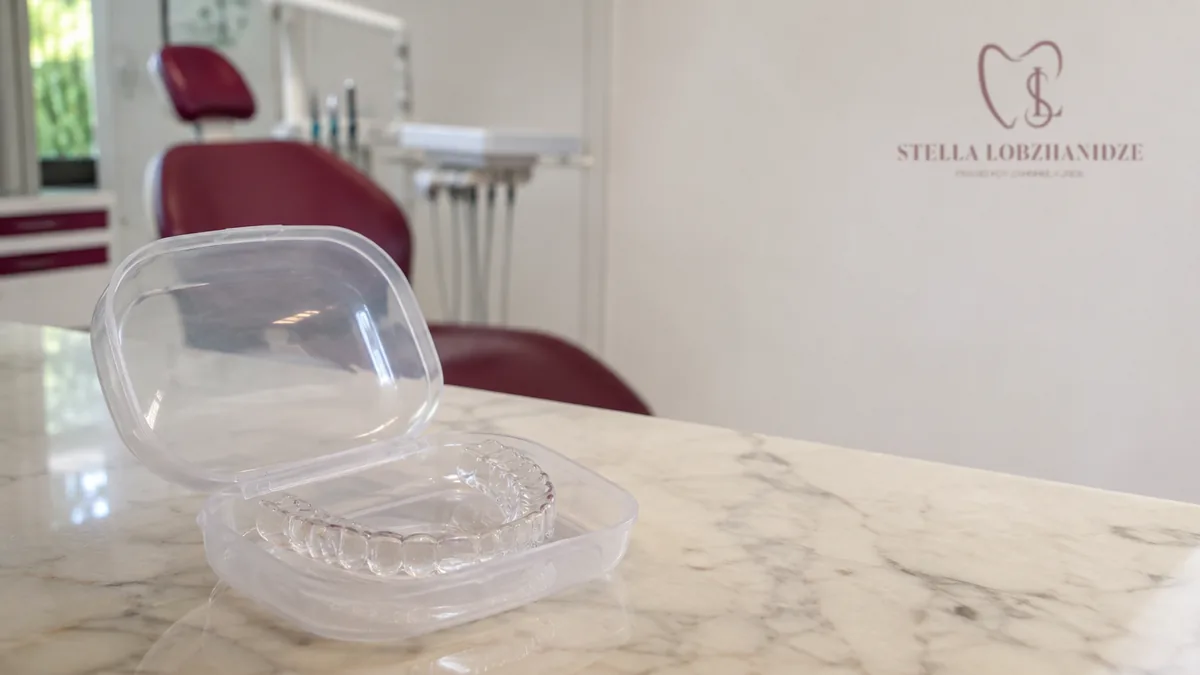
A night splint, also called an occlusal splint, is custom-made from an impression and usually worn at night. It stops the teeth from rubbing directly against each other and so protects them from wear.
According to the German S3 guideline on bruxism, a splint can reduce grinding during sleep for a while. A lasting effect has not been shown, though. If you stop wearing it, the grinding usually returns soon.
Hard splints that cover all the teeth of one jaw are recommended. Soft splints are not suitable for grinding because they can even increase muscle activity. Your dentist will discuss with you how long and how often to wear the splint.
Whether and to what extent your health insurance fund covers the splint depends on its rules. Please ask your fund.
What can you do yourself about teeth grinding?
Especially with daytime clenching, it helps to become aware of your own habits. These steps are worth a try:
- During the day, notice when you press your teeth together, and relax your jaw.
- Learn a relaxation method, such as progressive muscle relaxation.
- Go to bed at regular times and give yourself a quiet wind-down before sleep.
- Drink less alcohol and coffee, and avoid smoking.
- Avoid chewing gum and very hard food while your jaw or teeth hurt.
- A cold pack wrapped in a cloth can ease jaw pain. Ask at a pharmacy for a suitable painkiller if needed.
If a lot of stress, anxiety or a sleep problem is behind it, your GP can also help.
Do children grind their teeth too?
Yes, teeth grinding can start in childhood. Children who grind have a higher risk of doing so as adults. Second-hand smoke is considered a risk factor in children.
Medicines against grinding are not recommended for children. A splint may only be considered for a short time. If you are worried, have your child's teeth checked by a dentist.
How can Stella Dent help you?
At regular check-ups in our practice in 1120 Vienna-Meidling, we look for signs of wear on the teeth and for jaw problems. Your dentist will discuss with you whether a splint makes sense and which further steps are suitable. Before every treatment you receive a cost estimate.
You can book an appointment online or by phone on +43 1 813 31 23.
Come to the practice if:
- your teeth are worn, sensitive or damaged
- you have pain in your jaw, face or ear
- someone notices that you grind your teeth at night
- you often wake up with a headache or a tense jaw
- you are worried because your child grinds their teeth
Book an appointment
Book online or give us a call.
Sources
- gesundheit.gv.at – Zähneknirschen (Bruxismus)
- DGZMK/DGFDT – S3-Leitlinie Bruxismus (Langversion, Stand 2019)
- NHS – Teeth grinding (bruxism)
- MedUni Wien – Nächtliches Zähneknirschen kann Kiefergelenke schädigen
- Cochrane – Occlusal splints for treating sleep bruxism (tooth grinding)
This article is for general information only and does not replace a dental examination or advice.