Which toothpaste is the right one?
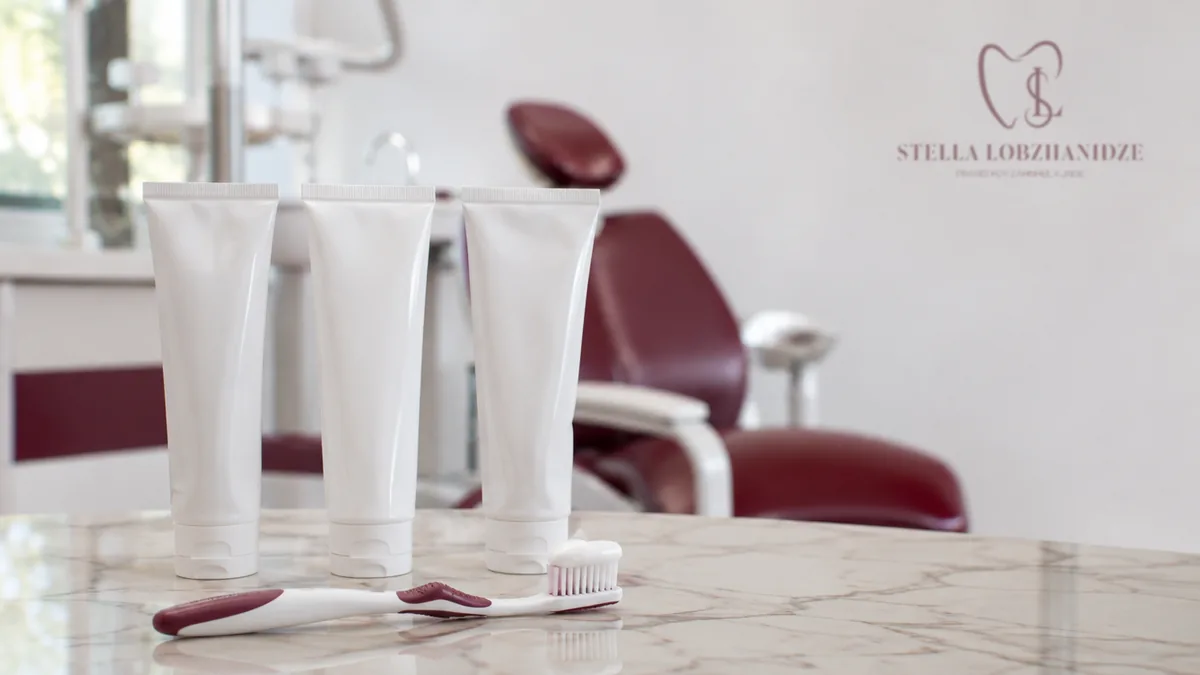
When choosing a toothpaste, one thing matters most: it should contain fluoride. For adults and school-age children, the Austrian recommendations give 1,000 to 1,500 ppm fluoride, while young children need a smaller amount. Extra ingredients for sensitive teeth or gums are worth it if you have specific problems.
By Stela Lobzhanidze, dentist in Vienna-Meidling
Published
Key points
- Fluoride toothpaste has been shown to lower the risk of decay in both baby teeth and permanent teeth.
- Used as recommended, fluoride in toothpaste is considered safe.
- Young children brush with a rice-grain-sized amount, and from age two with a pea-sized amount.
- For sensitive teeth, pastes with sealing ingredients and low abrasion help.
- After brushing, spit out the foam, but do not rinse with water.
Does toothpaste need to contain fluoride?
Yes, fluoride is the most important ingredient. It hardens enamel, protects it from acids produced in plaque and helps minerals return to weakened enamel.
Several large reviews show that toothpaste with fluoride lowers the risk of decay much more than toothpaste without it. This applies to baby teeth and permanent teeth. Drinking water is not fluoridated in Austria, which makes toothpaste all the more important.
For school-age children and adults, the Austrian Ministry of Health recommends toothpaste with 1,000 to 1,500 ppm fluoride. You will find the amount on the pack.
Is fluoride in toothpaste dangerous?
Used as recommended, fluoride in toothpaste is considered safe. According to Cochrane, there is no evidence of serious side effects.
Children up to about eight years old who regularly swallow too much toothpaste can develop mild fluorosis. These are small white spots on the teeth that are not considered harmful to health.
From a dental point of view, fluoride tablets are usually no longer needed today. If your child gets fluoride from several sources, talk to your dentist or paediatrician.
How much toothpaste do children need?
Dental societies in Germany recommend the following amounts, each twice a day:
- from the first tooth to the second birthday: a rice-grain-sized amount of children's toothpaste with 1,000 ppm fluoride
- from two to six years: a pea-sized amount of children's toothpaste with 1,000 ppm fluoride
- from about six years: junior or adult toothpaste with 1,000 to 1,500 ppm fluoride
Keep helping school-age children with brushing. On their own they often remove only about a third of the plaque. Practise spitting out the foam with your child.
Do fluoride-free toothpastes prevent tooth decay?
Based on current knowledge, toothpastes without fluoride protect less well against decay. In studies they usually serve as the comparison, and fluoride toothpaste does better.
Some pastes advertise calcium phosphate or hydroxyapatite as a replacement for fluoride. Health authorities and dental societies, however, still rely on fluoride to prevent decay. Experts criticise campaigns against fluoride because they unsettle people.
Which toothpaste is suitable for sensitive teeth?
Sensitivity often occurs when tiny tubules in the dentin are exposed at the neck of the tooth. Sensitive toothpastes contain ingredients that seal these tubules, such as tin compounds or hydroxyapatite. Potassium salts tend to dampen the nerve's reaction instead.
Choose a low-abrasion paste. Whitening toothpastes are usually unsuitable for sensitive teeth or exposed tooth necks. They only remove surface stains, and highly abrasive pastes combined with firm pressure can wear away enamel and dentin.
How do you recognise a good toothpaste?
With so much choice, these questions help:
- Does it contain the right amount of fluoride for your age?
- Does it suit your needs, such as sensitive teeth or bleeding gums?
- Is it low-abrasion if your teeth are sensitive?
- Do you use whitening pastes only now and then rather than every day?
Adults need a pea-sized amount. Brush twice a day for two to three minutes, spit out the foam and do not rinse with water. This keeps the fluoride on your teeth for longer.
How can Stella Dent in Vienna help?
During professional teeth cleaning at our practice in 1120 Vienna-Meidling, you get tips for your care at home, including on the right toothpaste. At the end, your teeth are treated with fluoride.
For children we offer fluoride varnish from the first baby tooth, and for teenagers and adults fluoride gel in a soft tray. You can book an appointment online at stelladent.termin365.at or by phone on +43 1 813 31 23.
Come to the practice if:
- your gums keep bleeding for more than one to two weeks despite good care
- your teeth are sensitive to cold, heat or brushing
- you are unsure how much fluoride your child gets in total
Book an appointment
Book online or give us a call.
Sources
- Bundesministerium für Gesundheit (Oberster Sanitätsrat) – Kariesprophylaxe mit Fluoriden
- Gesundheit Österreich GmbH – Kurzrecherche zum Fluorideinsatz in der Kariesprophylaxe
- Verbraucherzentrale – Ist Fluorid in Zahnpasta gefährlich?
- Apotheken Umschau – Zahnpasta: Welche ist die richtige für mich?
- Techniker Krankenkasse – Gesund im Mund: Welche Zahnpflege ist die Richtige?
- gesundheit.gv.at – Zahngesundheit
- gesundheit.gv.at – Zahnpflege für Säuglinge und Kinder
This article is for general information only and does not replace a dental examination or advice.