How long does teeth whitening last, and how can you keep the result longer?
How long teeth whitening lasts varies a lot: usually a few months to a few years. No method is permanent. Good oral care, regular check-ups and fewer staining foods and drinks help your teeth stay lighter for longer.
By Stela Lobzhanidze, dentist in Vienna-Meidling
Published
Key points
- Depending on the method and your habits, a whitening result lasts a few months to a few years.
- Coffee, tea, red wine and smoking make teeth darken again more quickly.
- Thorough brushing, check-ups and professional teeth cleaning help maintain the result.
- Whitening too often can harm the teeth, so a touch-up should be planned with your dentist.
- Crowns, fillings and veneers do not change colour with whitening.
How long does whitening at the dentist last?
There is no fixed figure. According to the Austrian health portal gesundheit.gv.at, none of the methods is permanent. How long it lasts depends on the method, the strength of the product, oral hygiene and diet.
Reputable sources give different figures. The German Dental Association mentions several months up to two years. The German consumer advice centre writes that, at best, teeth stay light for several years, but sometimes darken again after a few months. The NHS speaks of around three years if you follow your dentist's advice.
Why do teeth turn yellowish again after whitening?
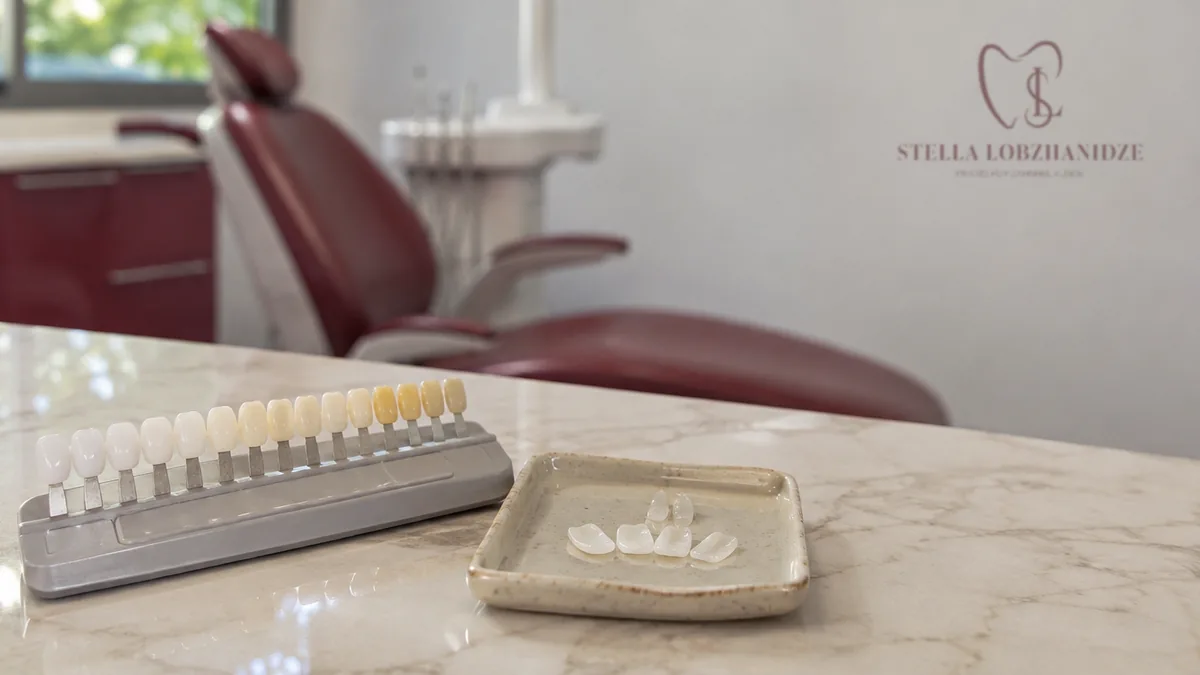
Whitening lightens the pigments in the tooth. After that, new pigments build up again in everyday life, mainly from coffee, tea, red wine and tobacco.
Natural changes also play a role. Over the years the enamel becomes thinner, and the yellowish dentin underneath shows through more.
Plaque that is not removed when brushing also becomes discoloured over time.
Which foods should you avoid after whitening?
Anything that stains strongly shortens the effect. This includes:
- coffee and tea
- red wine
- other strongly staining food and drinks
- cigarettes and other tobacco products
- frequent acidic drinks such as soft drinks or energy drinks, because they attack the enamel
You do not have to give up everything. But drink staining drinks less often and brush your teeth thoroughly and regularly.
What can you do to make the result last longer?
According to the German health insurer Techniker Krankenkasse, good oral hygiene is the most important way to keep the result. These habits help:
- Brush your teeth regularly and thoroughly.
- Go for regular dental check-ups.
- Have your teeth cleaned professionally. This removes stains from coffee, tea, red wine or tobacco.
- Do not smoke.
- Do not use whitening toothpaste regularly. Its abrasive particles can roughen the enamel.
How often can whitening be repeated?
The sources do not give a fixed rule. What is clear: whitening too often can harm the teeth, and the effects of repeated use have not yet been fully researched.
Have your teeth examined before every touch-up. Decay, cracks or leaking fillings must be ruled out first. Your dentist will advise you whether and when a touch-up makes sense.
Does whitening work on crowns and fillings?
No. Crowns, bridges, veneers and fillings keep their colour. After whitening they may look darker than your natural teeth. That is why they are sometimes adjusted to the new tooth colour later.
A root-filled tooth that has turned dark does not respond to whitening from the outside either. It can be lightened from the inside.
How do we support you in Vienna after whitening?
At our practice in 1120 Vienna-Meidling, we offer whitening at the practice and home whitening with custom trays. During professional teeth cleaning we remove plaque and stains, then polish and apply fluoride to the teeth.
If you wish, our recall service reminds you of check-up and prophylaxis appointments. Book an appointment on +43 1 813 31 23 or online at stelladent.termin365.at.
Come to the practice if:
- you are planning a touch-up, so that your teeth and fillings can be checked first
- your teeth stay sensitive or painful for a long time after whitening
- a filling or crown stands out in colour after whitening
- a single tooth becomes clearly darker than the others
Book an appointment
Book online or give us a call.
Sources
- Bundeszahnärztekammer – Bleaching (Zahnaufhellung)
- Verbraucherzentrale – Bleaching: Möglichkeiten der Zahnaufhellung
- Techniker Krankenkasse – Weiße Zähne dank Bleaching
- gesundheit.gv.at – Zahnverfärbungen
- NHS – Teeth whitening
- Österreichische Zahnärztekammer – Mundhygiene: 12 Tipps
- ÖGK – Professionelle Zahnreinigung (Mundhygiene)
This article is for general information only and does not replace a dental examination or advice.