Discoloured teeth: causes and what you can do about them
The most common causes of discoloured teeth are coffee, tea, red wine, smoking and the natural ageing of teeth. Some medicines, injuries or a dead tooth nerve can also discolour teeth. Surface stains can usually be removed well, deeper discolouration belongs in a dentist's hands.
By Stela Lobzhanidze, dentist in Vienna-Meidling
Published
Key points
- There are external stains on the tooth surface and internal discolouration inside the tooth.
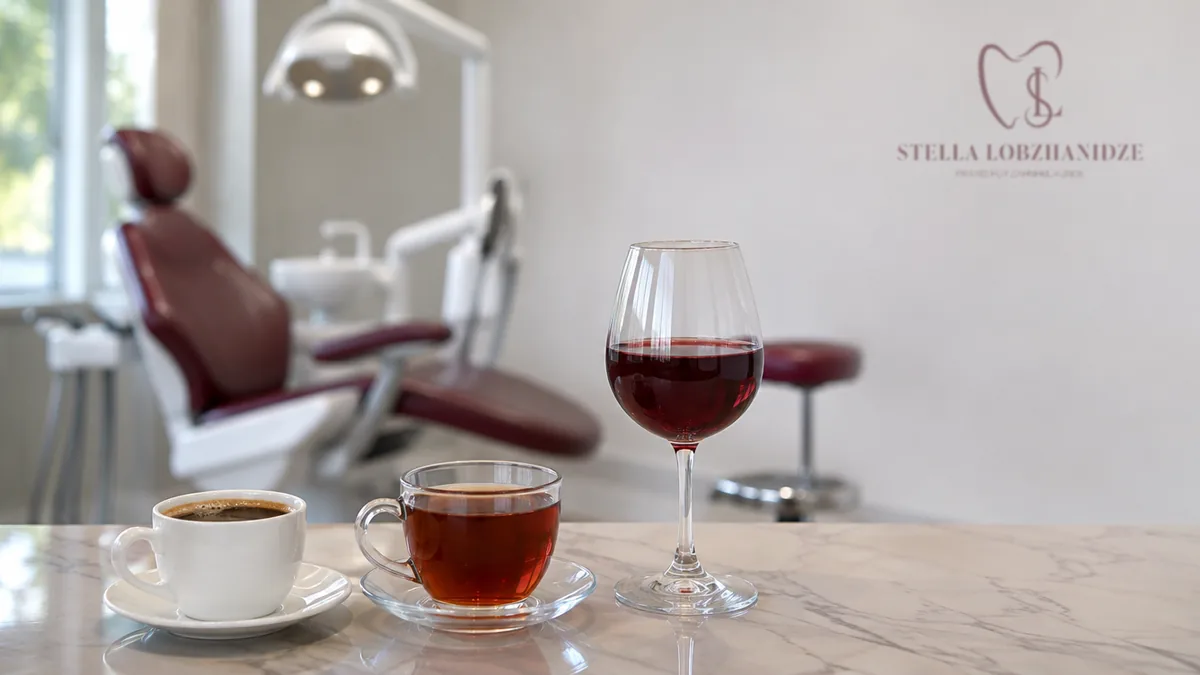
- Coffee, tea, red wine and tobacco are the most common causes of external stains.
- With age the enamel becomes thinner, so teeth look more yellow.
- A single grey or dark tooth can be a sign of a dead tooth nerve.
- Professional teeth cleaning removes deposits, whitening or veneers help with deeper discolouration.
What causes discoloured teeth?
Experts distinguish two types. External stains sit on the tooth surface. Internal discolouration develops in the tooth itself or while the tooth is forming.
- External causes: coffee, tea, red wine and tobacco, colourings from food, plaque due to poor oral hygiene, certain mouthwashes and medicines
- Internal causes: injuries to the tooth, root canal treatment, a dead tooth nerve, malnutrition, hereditary factors, some liver or blood disorders and age-related changes
Tooth decay can also discolour teeth. Only a dentist can tell whether a spot is just a stain or a cavity.
Why do teeth turn yellow over time?
Enamel is the outer, light layer of the tooth. Over the years it becomes thinner. The dentin underneath then shows through more, and dentin is naturally yellowish.
How light your teeth are also depends on your genes. Slightly yellowish teeth are therefore often not a sign of poor care.
Do coffee, tea, red wine and smoking stain teeth?
Yes. These contain pigments that build up on the tooth surface. In smokers, nicotine adds to this.
Acidic drinks such as soft drinks or energy drinks do not stain directly. But if you drink them often, the enamel becomes more porous and takes up pigments more easily.
To prevent discolouration, the Austrian health portal gesundheit.gv.at recommends a sensible diet, regular oral hygiene and not smoking.
Can medicines discolour teeth?
Yes, some can. This is known, for example, for mouthwashes containing chlorhexidine and for medicines containing iron or nitrates. Fluorides can also cause discolouration.
The package leaflet often mentions this. But do not stop taking a medicine on your own. Talk to your doctor or pharmacist if you notice discolouration.
What does dark discolouration on just one tooth mean?
If only one tooth turns grey or dark, the tooth nerve may have died. This can happen after an accident or after root canal treatment. Decay can also darken individual spots.
Have such a tooth examined by a dentist, even if it does not hurt. If the tooth has had root canal treatment, it can be lightened from the inside.
Can you remove tooth stains yourself?
Only to a limited extent. Whitening toothpastes remove surface stains, for example from coffee or tea. They do not reach deeper discolouration. Because they usually work with abrasive particles, the German Dental Association advises against regular use.
Whitening products sold freely vary widely in how well they work and are used without a prior check-up. The dental practice offers these options:
- professional teeth cleaning for deposits and surface stains
- whitening at the practice or at home with a custom tray
- internal whitening of a root-filled tooth
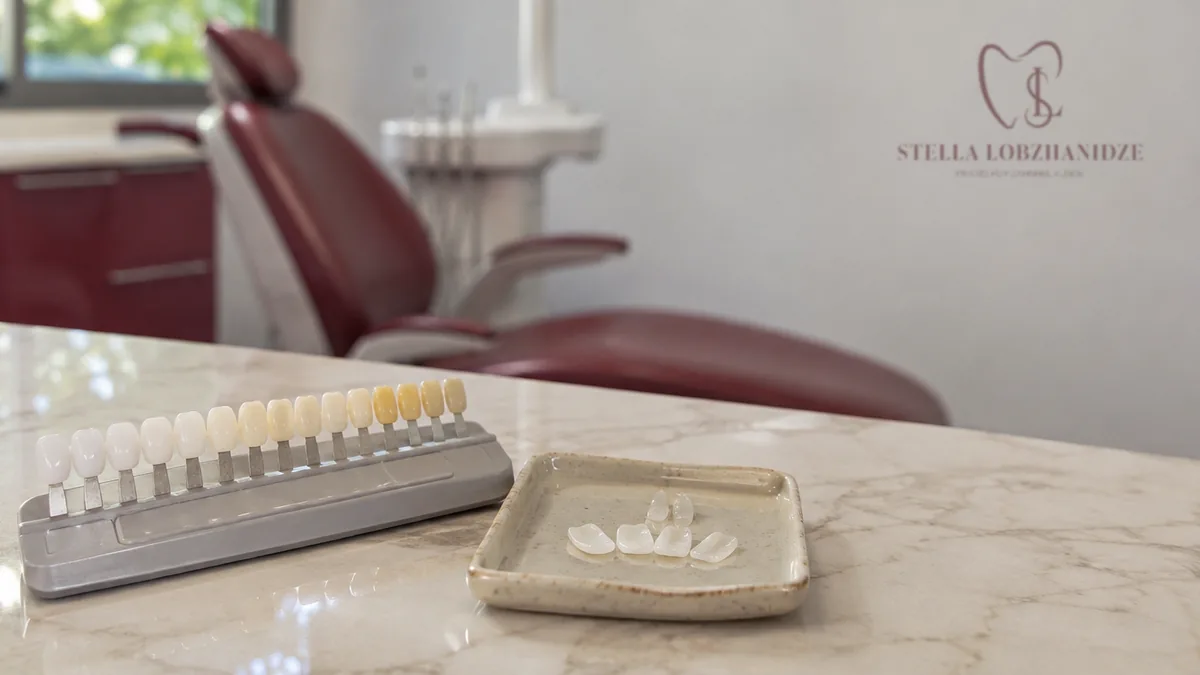
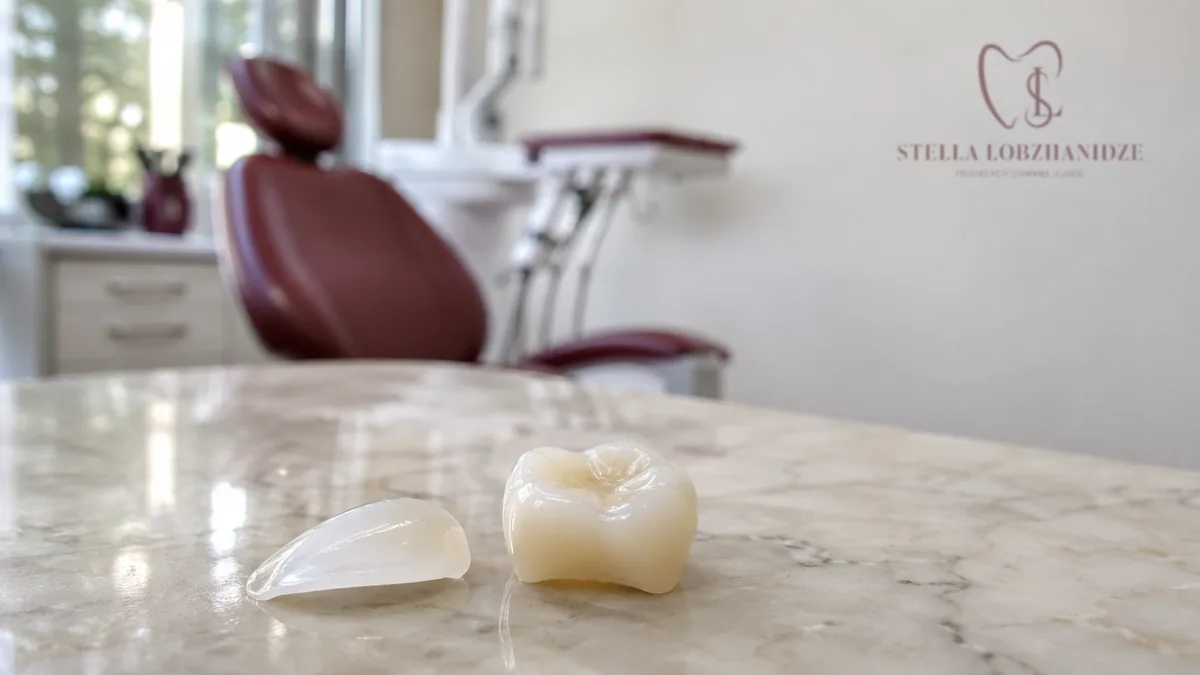
- veneers for severe discolouration
How do we help with discoloured teeth in Vienna?
At our practice in 1120 Vienna-Meidling, we first find out where the discolouration comes from. During professional teeth cleaning we remove deposits and stains with ultrasound, Airflow and hand instruments.
For deeper discolouration we offer whitening and veneers. Before any treatment you receive a cost estimate. Book an appointment on +43 1 813 31 23 or online at stelladent.termin365.at.
Come to the practice if:
- a single tooth turns grey, brown or dark
- a tooth changes colour after an accident
- you notice dark spots that cannot be brushed away
- you would like to whiten your teeth and want to know which method suits you
Book an appointment
Book online or give us a call.
Sources
- gesundheit.gv.at – Zahnverfärbungen
- Techniker Krankenkasse – Zahnverfärbungen entfernen
- Bundeszahnärztekammer – Bleaching (Zahnaufhellung)
- Verbraucherzentrale – Bleaching: Möglichkeiten der Zahnaufhellung
- VKI – Mittel zur Zahnaufhellung: Test (Presseaussendung, Mai 2026)
- Österreichische Zahnärztekammer – Mundhygiene: 12 Tipps
- ÖGK – Professionelle Zahnreinigung (Mundhygiene)
This article is for general information only and does not replace a dental examination or advice.