How do I prepare for teeth whitening?
Teeth whitening always starts with a dental check-up. Any tooth decay or gum inflammation is treated first, and a professional clean removes surface deposits. After that, we can judge how much lighter your teeth are likely to get.
By Stela Lobzhanidze, dentist in Vienna-Meidling
Published · updated
Key points
- Under EU law, whitening products with more than 0.1% hydrogen peroxide must not be used on anyone under 18.
- Your dentist first checks that your teeth and gums are healthy.
- Fillings, crowns and other dental work do not get lighter.
- Your teeth may feel sensitive afterwards, but this usually passes quickly.
- Coffee, tea, red wine and smoking will stain your teeth again over time.
Who is teeth whitening suitable for?
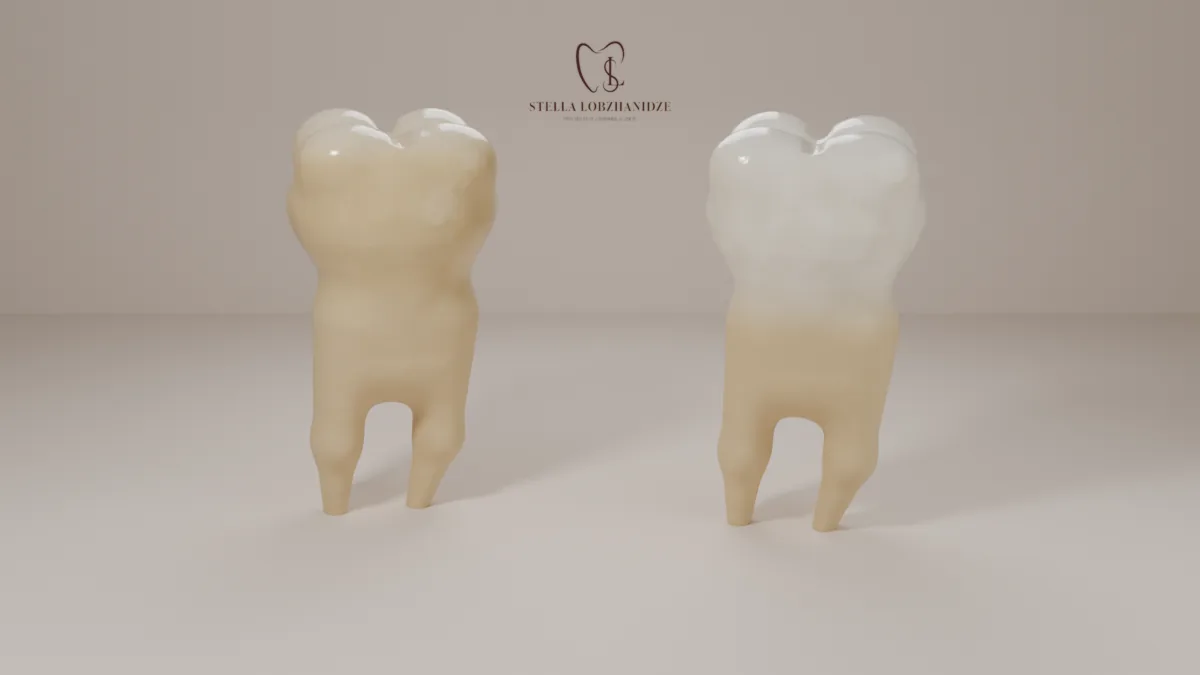
Teeth whitening lightens natural teeth that have become stained, for example by coffee, tea or tobacco. Your teeth and gums should be healthy first.
Whitening is not done, or is postponed, in these cases:
- people under 18, because EU Directive 2011/84/EU does not allow whitening products with more than 0.1% hydrogen peroxide for them
- pregnancy and breastfeeding
- untreated tooth decay or gum disease (periodontitis)
- leaking fillings or crown margins
- exposed tooth necks, where the decision is made case by case
Why is a check-up needed first?
EU rules on whitening products require a dental examination beforehand. Its purpose is to rule out risks and conditions in the mouth. The first application is reserved for a dentist.
With tooth decay, gum disease or leaking crown margins, the whitening agent can irritate the nerve of the tooth. These problems are therefore treated first.
According to the NHS, whitening at beauty salons or with products from shops or the internet works less well and can damage teeth and gums.
What is the professional clean beforehand for?
A professional clean removes deposits and surface stains, for example from coffee, tea, red wine or tobacco.
Only then can we see how much of the discolouration lies inside the tooth itself. This is the part that whitening lightens. At our practice, professional teeth cleaning is part of preventative care.
Do fillings and crowns get lighter too?
No. Whitening products only work on natural teeth. Fillings, crowns, dentures and implants keep their colour.
After whitening, they may therefore look darker than the teeth next to them. Please mention it to us beforehand if you have visible fillings or crowns. If needed, they can be adjusted afterwards.
Will my teeth become sensitive?
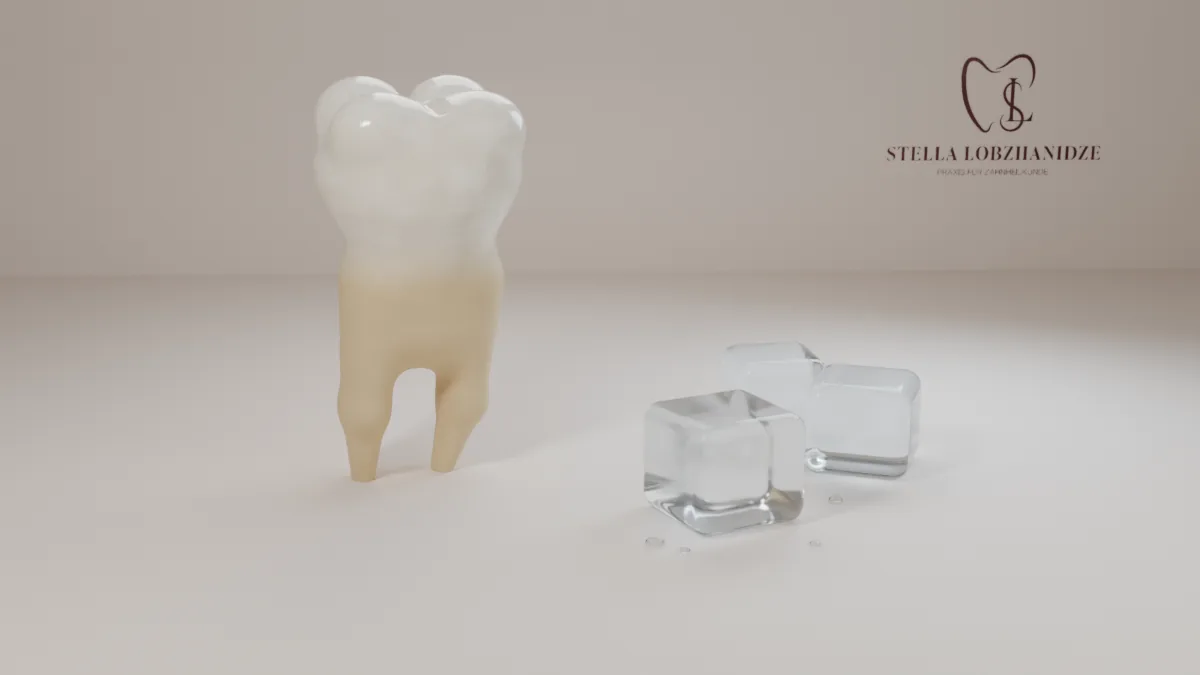
This is common. Teeth then react mainly to cold or sweet things. It usually only lasts a short time.
- Your gums may feel irritated or sore, and white patches on the gums are possible.
- At the practice, the gums are covered before treatment.
- Poorly fitting trays can irritate the gums, which is why they are custom-made.
- Whitening too often can make your teeth more sensitive.
What should I keep in mind before and after?
This is how preparation usually works:
- Examination of your teeth and gums, where we also discuss visible fillings and crowns
- Treatment of tooth decay or gum inflammation, if needed
- Professional teeth cleaning
- Whitening at the practice or home whitening with custom-made trays, following our instructions
The result is not permanent. Coffee, tea, red wine and smoking will stain your teeth again over time.
Regular professional cleaning removes new surface stains. Repeat whitening should not be done too often.
Come to the practice if:
- You would like lighter teeth and are not sure whether whitening is right for you
- Your teeth stay sensitive for longer after whitening
- Your gums are sore or irritated after using an over-the-counter whitening product
- Fillings or crowns stand out in colour after whitening
Book an appointment
Book online or give us a call.
Sources
- EUR-Lex – Council Directive 2011/84/EU (hydrogen peroxide in tooth whitening products)
- NHS – Teeth whitening
- Verbraucherzentrale – Bleaching: Möglichkeiten der Zahnaufhellung (German)
- Apotheken Umschau – Bleaching für weißere Zähne (German)
This article is for general information only and does not replace a dental examination or advice.