Electric or manual toothbrush: which is better?
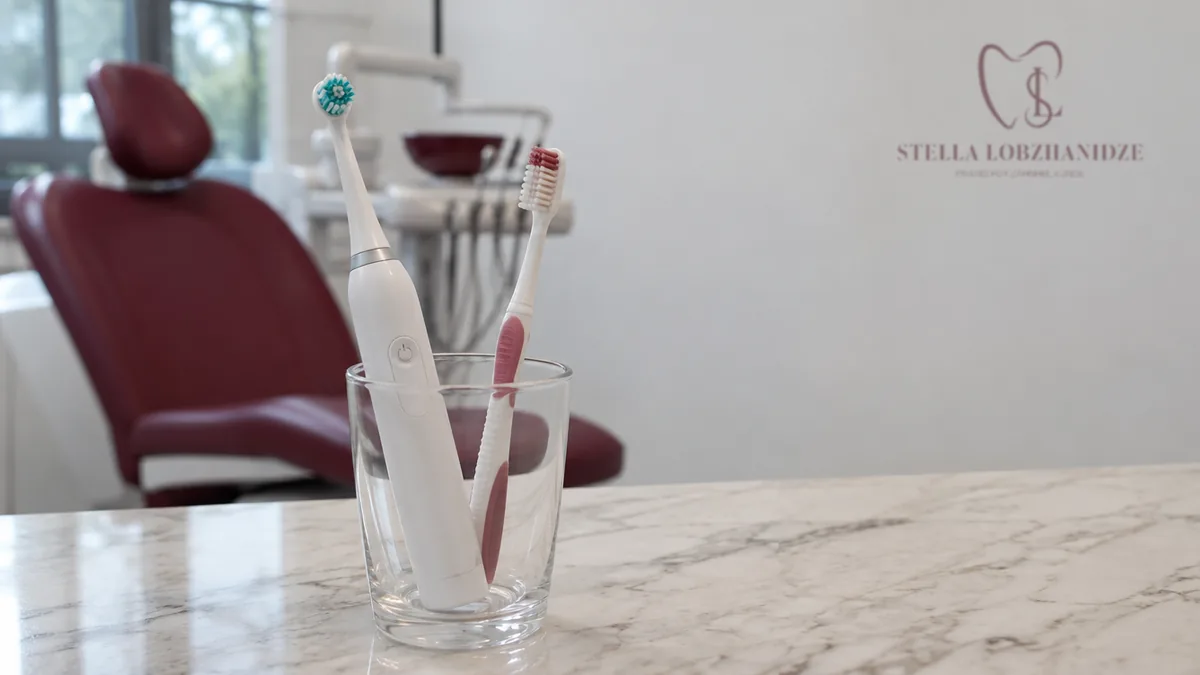
When it comes to an electric or manual toothbrush, there is no clear loser. In studies, electric brushes remove slightly more plaque, but a manual toothbrush is enough if you brush thoroughly. What matters is that you reach every tooth surface gently twice a day.
By Stela Lobzhanidze, dentist in Vienna-Meidling
Published
Key points
- Electric toothbrushes remove slightly more plaque and reduce gum inflammation a little more than manual brushes.
- Whether this prevents tooth decay or periodontitis in the long run has not been shown.
- With good technique and fluoride toothpaste, a manual toothbrush cleans well enough.
- Electric brushes need less pressure and help children, older people and anyone who finds the brushing motion difficult.
- Replace your brush or brush head every two to three months, after a cold and as soon as the bristles splay.
Is an electric toothbrush better than a manual one?
A Cochrane review analysed 56 studies with more than 5,000 participants. With electric toothbrushes, plaque decreased by 11 percent more than with manual brushes after one to three months, and by 21 percent more after more than three months. Gum inflammation decreased by 6 and 11 percent more respectively.
The quality of this evidence is rated as moderate. Whether electric brushes help keep teeth healthier in the long term is unclear. Side effects were rarely reported, and they were local and temporary.
Is a manual toothbrush enough if I brush properly?
Yes. The NHS and the Austrian health portal agree: both types clean well if you reach every surface of every tooth and use fluoride toothpaste.
For manual brushes, gesundheit.gv.at recommends rounded nylon bristles of medium hardness. This is how to brush properly:
- Place the brush at an angle of about 45 degrees to the gum line.
- Use small movements from the gum towards the tooth, first on the outer surfaces, then on the inner ones.
- Finish by cleaning the chewing surfaces.
- Do not press hard. Too much pressure harms the gums and the necks of the teeth.
Brush twice a day for about two to three minutes, in the morning and in the evening. Brushing before bed is especially important.
Many electric brushes have a timer and warn you if you press too hard. This can help if you tend to brush too briefly or too firmly. Afterwards, just spit out the toothpaste and do not rinse with water, so the fluoride keeps working for longer.
Sonic or rotating toothbrush: what is the difference?
Oscillating-rotating brushes have a small round head that turns quickly back and forth. Sonic toothbrushes have a longer head that vibrates very fast.
According to the German health insurer BARMER, oscillating-rotating models come out slightly ahead in comparisons for plaque removal and gentleness on the gums. More than half of the studies in the Cochrane review used this type. Both kinds usually clean better than a manual brush. Far more important than the design is that you like the brush and use it regularly.
Are electric toothbrushes suitable for children?
Electric toothbrushes need less pressure, which makes them practical for children and older people too. Young children should use a children's toothbrush with a small, narrow head and a children's toothpaste with less fluoride.
Whichever brush you choose, children need help. The Austrian Dental Chamber advises parents to brush their child's teeth again afterwards until roughly the end of primary school. As a rule of thumb: until the child can write fluently.
When should you replace your toothbrush or brush head?
Replace your manual toothbrush or brush head every two to three months. The Austrian Dental Chamber says at least four times a year.
Replace it sooner if the bristles splay out to the side, and after a cold or other illness. Rinse the brush well after use and let it dry.
Which toothbrush suits sensitive gums?
If your gums are sensitive or bleed easily, softer bristles are often more comfortable. Electric brushes with a pressure sensor help you avoid brushing too hard.
Bleeding gums when brushing can be a sign of gum inflammation. In that case, do not just change your brush. Have the cause checked by a dentist.
How can prophylaxis in Vienna-Meidling help you?
During a professional dental cleaning at our practice in 1120 Vienna-Meidling, we remove hard and soft deposits, including below the gum line. Your teeth are then polished and treated with fluoride.
You also get personal tips for caring for your teeth at home, including choosing the right toothbrush. To book an appointment, call +43 1 813 31 23 or book online at stelladent.termin365.at.
Come to the practice if:
- your gums bleed regularly when you brush
- your gums are receding or the necks of your teeth are exposed
- your teeth are sensitive to cold or sweet things
- you are unsure whether your technique reaches every tooth surface
Book an appointment
Book online or give us a call.
Sources
- Cochrane – Elektrische Zahnbürsten im Vergleich mit Handzahnbürsten zur Erhaltung der Mundgesundheit
- gesundheit.gv.at – Zahngesundheit
- Österreichische Zahnärztekammer – Mundhygiene für zu Hause: 12 Tipps
- NHS – How to keep your teeth clean
- BARMER – Zahnputzhilfen: Handzahnbürste, elektrische Zahnbürste und Co.
- gesund.bund.de (BMG) – Mundhygiene und Zahnvorsorge für gesunde Zähne
- gesundheit.gv.at – Fluorid
This article is for general information only and does not replace a dental examination or advice.