Loose or painful dental crown: what should you do?
You should have a loose crown checked by a dentist soon, even if it does not hurt. Common reasons are decay at the edge of the crown or a leaking seal between tooth and crown. If the tooth under the crown hurts, inflammation inside the tooth may also be the cause.
By Stela Lobzhanidze, dentist in Vienna-Meidling
Published
Key points
- A crowned tooth can still get decay, especially at the edge of the crown.
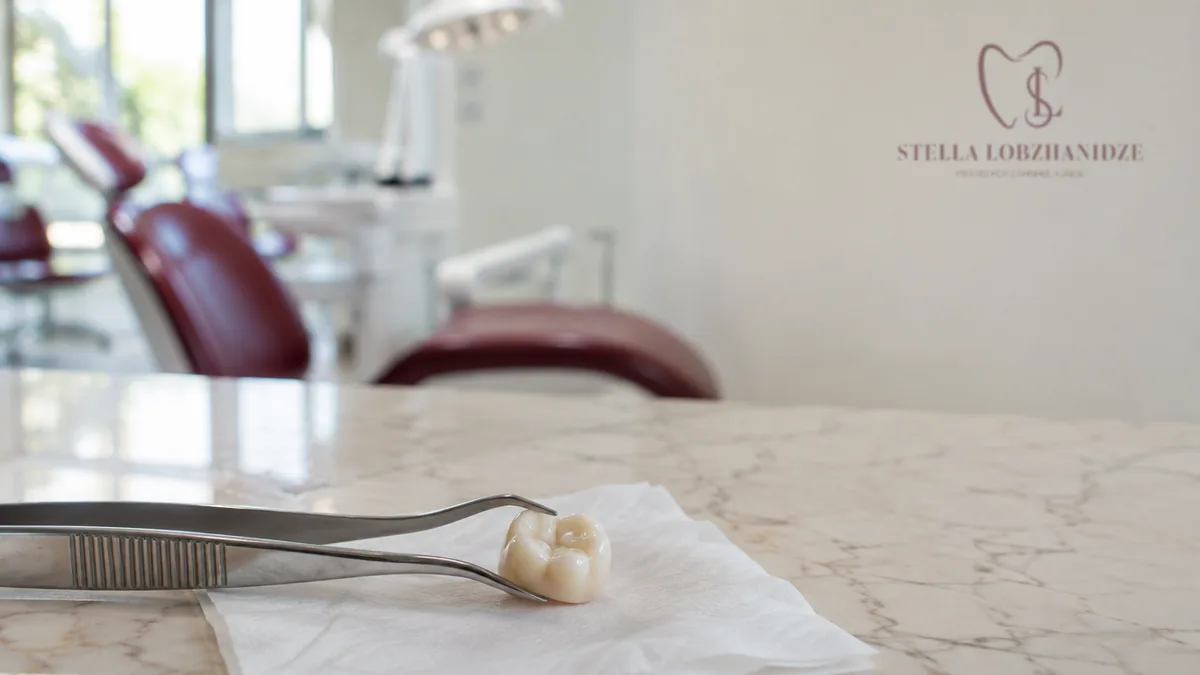
- If the crown has come off, keep it and bring it to your appointment.
- Until then, chew on the other side and avoid hard and sticky foods.
- Pain when biting or with hot food and drinks can point to inflammation of the tooth nerve.
- Swelling that reaches your eye or neck, or difficulty breathing or swallowing, is an emergency.
Why does a crown come loose?
Crowns generally last a long time, normally around eight to ten years. Even so, a crown can come loose over time. Possible reasons include:
- decay under or at the edge of the crown, for example when the gum recedes and the root is exposed
- plaque at the edge of the crown that causes the seal between tooth and crown to fail
- cement that gives way after some years
- heavy strain, for example from grinding
Only an examination can show which cause applies. This often includes an X-ray.
What should you do if the crown is loose or falls out?
These steps help until your appointment:
- If the crown has fallen out, keep it and bring it with you.
- Contact your dental practice and say whether you are in pain.
- Chew on the other side and avoid hard, sticky and very hot or cold foods.
- Keep brushing the area gently so that it stays clean.
- If you are in pain, ask a pharmacist for a suitable painkiller.
If the tooth underneath is healthy and the crown still fits, it can often be cleaned and fixed back in place. Otherwise a new crown is needed. Your dentist will decide after the examination.
Is a loose crown an emergency?
Without pain or swelling, a loose crown is usually not a case for the emergency department. Still, book an appointment soon.
It is urgent if toothache lasts more than two days, painkillers do not help, or you also have a fever, a swollen cheek or pain when biting.
If swelling reaches your eye or neck, or you find it hard to breathe, swallow or speak, you need medical help straight away. In Austria, call the ambulance on 144.
Why does a crown hurt even though it has been in place for a while?
The crown itself cannot hurt, but the tooth underneath or the surrounding tissue can. Common causes are:
- decay under the crown
- inflammation of the tooth nerve or at the root tip, which may show as pain with heat or when biting, a feeling of pressure, or the feeling that the tooth is too long
- a crack in the tooth
- gum inflammation or gum disease at the edge of the crown
- teeth grinding
A tooth that has already had root canal treatment can also become inflamed again. Without treatment, this can develop into an abscess.
Does the tooth have to come out if there is inflammation under the crown?
Not necessarily. Many teeth that used to be extracted can be saved today.
If the tooth nerve is inflamed, root canal treatment is usually an option. Under local anaesthetic, the inflamed tissue is removed from the root canals, and the space is cleaned and sealed.
If the inflammation persists, a root-end resection (apicoectomy) can help. This is a small surgical procedure and often the last chance to keep the tooth. Your dentist will decide whether your tooth can be saved after an examination and X-rays.
How can you prevent problems with a crown?
Care for a crown as thoroughly as for your own teeth. Brush twice a day with fluoride toothpaste and clean between your teeth every day with floss or interdental brushes.
Keep sugary food and drinks to a minimum. Go for regular check-ups so that decay at the edge of the crown is spotted early.
Where can you get help quickly in Vienna?
At our practice in 1120 Vienna-Meidling, we keep emergency appointments free every day for patients in pain. Please call us first on +43 1 813 31 23.
We see urgent cases in addition to our regular appointments, so there may be some waiting time.
Outside our opening hours, including at weekends, you can reach the on-call emergency dentist service in Vienna on +43 1 512 20 78.
Come to the practice if:
- a crown wobbles or has fallen out, even without pain
- the tooth under the crown hurts with heat or when you bite
- toothache lasts longer than two days or painkillers do not help
- the gum at the edge of the crown is red, bleeds or you have a bad taste in your mouth
See a dentist or the emergency service straight away if:
- swelling reaches your eye or neck
- swelling makes it hard to breathe, swallow or speak
- you have very severe pain, facial swelling and a fever
Outside opening hours, you can reach the dental emergency service on +43 1 512 20 78
Book an appointment
Book online or give us a call.
Sources
- KZBV – Patienteninfos: Kronen
- gesundheit.gv.at – Wurzelbehandlung und Wurzelspitzenresektion
- NHS – Toothache
- Leeds Teaching Hospitals NHS Trust – Crowns
- Leeds Teaching Hospitals NHS Trust – Bridges
- Landeszahnärztekammer Wien – Notdienstsuche
- gesundheit.gv.at – Notrufnummern & Hotlines
This article is for general information only and does not replace a dental examination or advice.