New dentures: getting used to them in the first days
Getting used to new dentures usually takes a few weeks. Extra saliva, unusual speech and the first sore spots are common at the start and often improve within a few days. Start with soft food, practise patiently and have sore spots adjusted at the practice.
By Stela Lobzhanidze, dentist in Vienna-Meidling
Published
Key points
- It usually takes a few weeks before new dentures feel familiar.
- Extra saliva, a gag reflex and unclear speech often settle within a few days.
- Soft food in small bites makes eating easier at the start.
- Have sore spots corrected at the practice instead of leaving the dentures out for long.
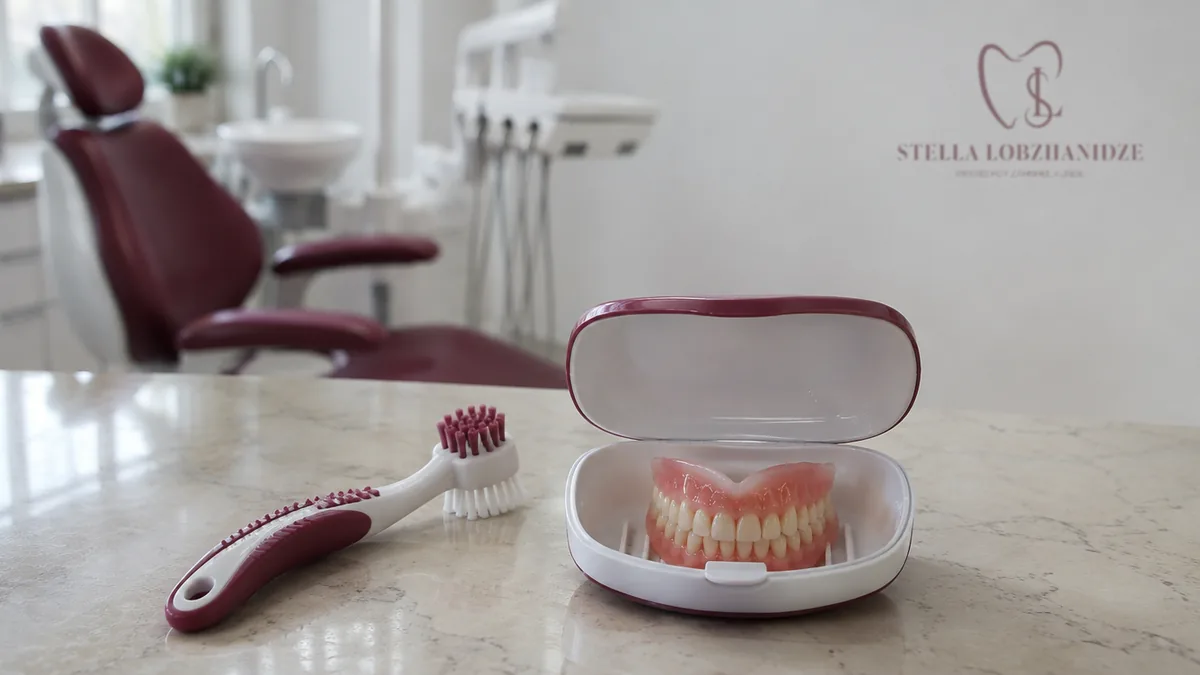
- Clean your dentures after meals with a brush and mild soap, not with toothpaste.
How long does it take to get used to dentures?
According to the NHS, it can take a few weeks to get used to wearing dentures. The first days are usually the hardest.
Many people notice more saliva, a slight gag reflex or a change in their speech at first. In most cases these problems go away on their own after a few days.
Practise taking the dentures out and putting them in at home in front of a mirror. Your dentist will show you how to do this beforehand.
What can you eat with new dentures?
Biting and chewing take longer at first. This is normal and gets easier with practice.
- Start with soft food and move on to firmer food step by step.
- Cut your food into small, bite-sized pieces.
- Take small bites and chew mainly with your back teeth.
- With full dentures, biting with the front teeth is especially difficult at first. Give yourself time.
Why does your speech sound different with dentures?
Your tongue and lips first need to get used to the new shape in your mouth. That is why some sounds feel strange in the first days.
Read a text out loud at home regularly. This trains your pronunciation and helps many people speak clearly again sooner.
If your dentures click when you talk or slip, have them checked at the practice.
What should you do about sore spots from new dentures?
Redness and sore spots usually appear in the first days. Rinsing, for example with chamomile tea, can soothe the gums. Ask at a pharmacy which ointment is suitable for use in the mouth.
Even so, do not leave the dentures out for long. Your dentist needs to see the sore spot to adjust the denture in the right place.
If things do not improve or you are in pain, book an appointment for an adjustment.
Can you wear your dentures at night?
There is no single rule. The NHS advises taking dentures out at night unless your dentist recommends otherwise. This lets your gums rest and lowers the risk of infection.
If your gums are healthy, wearing dentures at night can make sense in some cases. Follow your practice's advice.
Overnight, keep your cleaned dentures in water or a cleaning solution in a closed container. Change the water every day.
How should you clean your dentures?
Plaque on dentures can lead to inflammation and bad breath. Clean them outside your mouth after meals.
- Rinse off food remains with cold water after eating.
- Fill the sink with water or put a towel in it, so the dentures do not break if you drop them.
- Brush the dentures with a denture brush or toothbrush and a little mild soap or washing-up liquid. Toothpaste is not suitable because it can scratch the surface.
- Brush your own teeth with fluoride toothpaste and gently brush your gums and tongue.
- Use cleaning tablets no more than once a day and for no longer than one hour.
When should you come back for a check-up?
A check-up is often booked soon after the dentures are fitted. Come in earlier if something presses, wobbles or a clasp has loosened.
Over time the jaw changes and dentures can become loose. They can then be relined or adjusted. Regular check-ups help keep a good fit.
At our practice in 1120 Vienna-Meidling, we make partial and full dentures and show you how to care for them. Book an appointment on +43 1 813 31 23 or online at stelladent.termin365.at.
Come to the practice if:
- a sore spot does not get better after a few days
- your dentures click, slip or wobble when you speak
- your gums are red, bleed or itch
- your dentures are damaged or broken
Book an appointment
Book online or give us a call.
Sources
- NHS – Dentures (false teeth)
- Guy's and St Thomas' NHS Foundation Trust – Dentures
- Techniker Krankenkasse – Zahnersatzprothesen: Gewöhnung und Pflege
- gesundheit.gv.at – Zahnersatz
- ÖGK – Zahnersatz
This article is for general information only and does not replace a dental examination or advice.