Mouthwash: when does it make sense?
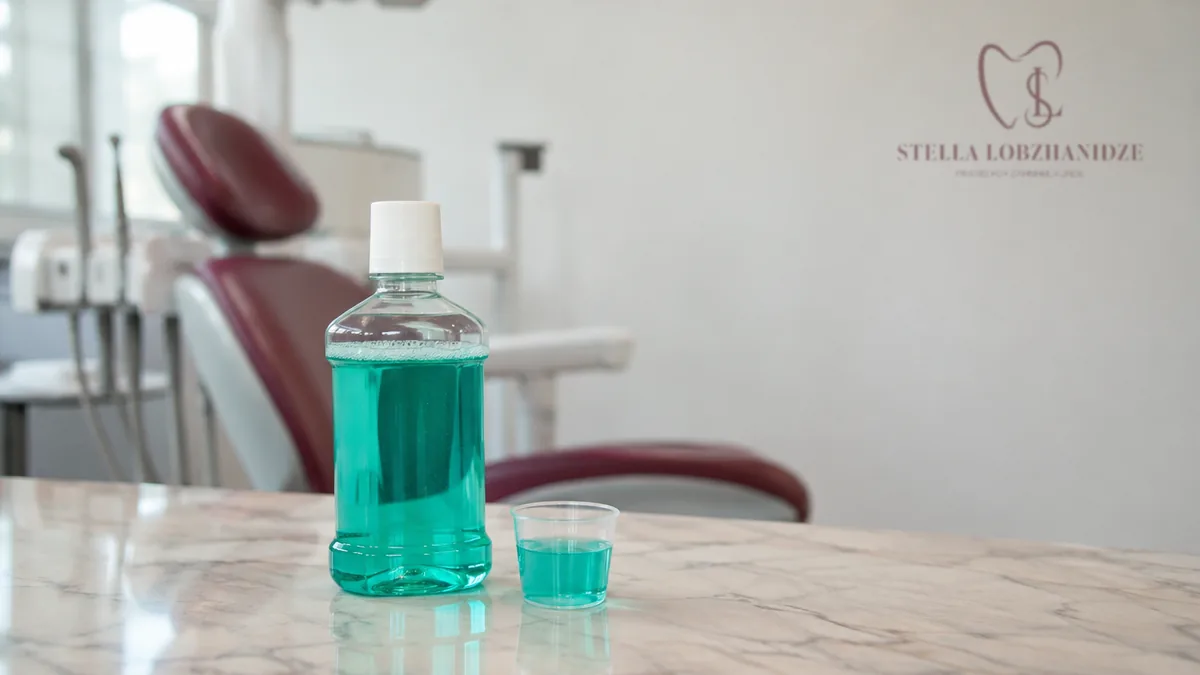
Mouthwash can add to your daily dental care, but it does not replace a toothbrush or floss. It is mainly useful if you have a higher risk of decay, wear fixed braces or find brushing difficult. Use chlorhexidine mouthwash only for a limited time and as agreed with your dentist.
By Stela Lobzhanidze, dentist in Vienna-Meidling
Published
Key points
- Mouthwash adds to brushing, it does not replace it.
- Fluoride mouthwash makes tooth enamel more resistant to acids.
- Chlorhexidine can stain teeth and tongue and should only be used short term and as advised.
- Alcohol-free products are the better choice, especially for children and pregnant women.
- Do not use mouthwash straight after brushing, and do not rinse with water afterwards.
Is mouthwash useful if I brush anyway?
The basis is still brushing with fluoride toothpaste and cleaning between your teeth. Mouthwash can support this care. In a test by the German consumer organisation Stiftung Warentest, more than half of the mouthwashes tested helped prevent decay, plaque and gum inflammation.
Mouthwash can be particularly useful:
- if you have a higher risk of tooth decay
- if you wear fixed braces
- if limited hand movement makes it hard to brush thoroughly
Can mouthwash replace brushing my teeth?
No. Stiftung Warentest and dental experts agree on this. Mouthwash does not replace a toothbrush, fluoride toothpaste, floss or interdental brushes.
A toothbrush only reaches part of the tooth surfaces. The spaces between the teeth are particularly prone to decay and gum disease and need their own cleaning aids.
Which mouthwash is right for me?
There are medicinal mouthwashes and cosmetic ones that mainly freshen your breath. The most important active ingredients are:
- Fluoride, such as amine or stannous fluoride: it makes enamel more resistant to acids and protects against decay.
- Antibacterial ingredients such as chlorhexidine, cetylpyridinium chloride or zinc: they act against plaque and bleeding gums.
- Essential oils such as menthol or thymol: they freshen the breath and also act against bacteria.
Which mouthwash suits you depends on your risk of decay and the state of your gums. Your dentist can advise you.
How long can you use a chlorhexidine mouthwash?
Chlorhexidine is a strong antibacterial. However, it can stain teeth and tongue, affect your sense of taste and, rarely, cause allergies. Long-term use can upset the balance of the bacteria in your mouth.
Use higher-strength solutions only for a short time and as agreed with your dentist, for example during gum treatment. Your dentist will tell you exactly how long. Stains can be removed during a professional teeth cleaning.
Do mouthwashes contain alcohol, and is that harmful?
Some mouthwashes contain alcohol. It can dry out and sting the lining of the mouth. In the body, alcohol is broken down into acetaldehyde, which is considered carcinogenic. Because contact time is short, the amount is small, but together with other risk factors it may play a role.
Experts therefore recommend alcohol-free products. They are the better choice anyway for pregnant women, children and people with alcohol problems.
How do you use mouthwash correctly?
To get the most from the active ingredients, keep these points in mind:
- Do not use mouthwash straight after brushing, or you will wash away the fluoride from the toothpaste. Choose a different time, such as after lunch.
- Use the solution undiluted and as directed on the pack.
- Spit the mouthwash out and do not swallow it.
- Do not rinse with water afterwards.
- Do not eat or drink for 30 minutes after using a fluoride mouthwash.
Children can use an alcohol-free mouthwash from about six years of age, once they can spit reliably. Keep the bottle out of reach of young children.
How can Stella Dent in Vienna help?
During professional teeth cleaning at our practice in 1120 Vienna-Meidling, we remove hard and soft deposits, including below the gum line. Your teeth are then polished and treated with fluoride, and you get tips for your care at home. We can also discuss whether a mouthwash makes sense for you.
You can book an appointment online at stelladent.termin365.at or by phone on +43 1 813 31 23.
Come to the practice if:
- your gums are painful, bleeding or swollen
- bad breath does not go away after a few weeks of good care
- you want to use a chlorhexidine mouthwash for longer than agreed
- stains appear on your teeth or tongue after using a mouthwash
Book an appointment
Book online or give us a call.
Sources
- Stiftung Warentest – Mundspüllösungen: Kein Ersatz fürs Zähneputzen, aber eine gute Ergänzung
- Apotheken Umschau – Wie sinnvoll sind Mundspülungen für die Zahnpflege?
- Techniker Krankenkasse – Gesund im Mund: Welche Zahnpflege ist die Richtige?
- NHS – How to keep your teeth clean
- NHS – Bad breath
- gesundheit.gv.at – Mundgeruch
- Österreichische Zahnärztekammer – Mundhygiene für zu Hause: 12 Tipps
This article is for general information only and does not replace a dental examination or advice.