Periodontitis and general health: what do your gums have to do with your heart and diabetes?
Periodontitis does not stay confined to the mouth. Professional bodies describe a link with cardiovascular disease, and with diabetes the two conditions affect each other in both directions. So treating your gums often does more than just help your teeth.
By Stela Lobzhanidze, dentist in Vienna-Meidling
Published

Key points
- Periodontitis is a chronic inflammation of the tissues supporting the teeth, caused by bacteria, and it may cause no pain for a long time.
- Diabetes raises the risk of periodontitis, and severe periodontitis can make blood sugar harder to control.
- There is a link with cardiovascular disease, as inflammatory substances can promote hardening of the arteries.
- Severe periodontitis appears to raise the risk of premature birth.
- Smoking increases the risk of periodontitis several times over, and stress can also promote the disease.
Is there a link between periodontitis and the heart?
The German National Association of Statutory Health Insurance Dentists (KZBV) speaks of a scientifically established link between periodontitis and cardiovascular disease. Bacteria and inflammatory substances from the gum pockets can promote hardening of the arteries and so favour heart attacks and strokes.
Bacteria from the mouth are also often involved in inflammation of the inner lining of the heart. People with artificial heart valves appear to have a higher risk here. Bacteria can also settle more easily on artificial hip and knee joints.
A link does not mean that every heart condition comes from the teeth. But it is a good reason to take periodontitis seriously.
Can periodontitis make diabetes worse?
Yes, it can. The Austrian Dental Chamber describes the link between periodontitis and diabetes as well established and two-way.
People with diabetes have up to three times the risk of periodontitis. Persistently high blood sugar weakens the body's defences and slows wound healing. Conversely, severe untreated periodontitis can make insulin work less well. Blood sugar is then harder to control.
Does treating periodontitis improve blood sugar?
Successful periodontitis treatment can lower raised blood sugar. Analyses of studies show that metabolic control in type 2 diabetes improves as a result.
If you have diabetes, the following helps:
- Tell your dentist that you have diabetes, how long you have had it and how well it is controlled.
- Tell your diabetes doctor if your gums are inflamed.
- Go for regular check-ups, even if you have no symptoms.
- Have a professional dental cleaning every three to twelve months, depending on your risk.
- Brush twice a day with fluoride toothpaste and clean between your teeth once a day.
Does periodontitis matter during pregnancy?
During pregnancy, hormone levels change. The gums then become inflamed more easily.
Severe periodontitis appears to raise the risk of premature birth. Babies of affected mothers more often have a low birth weight. The Austrian Dental Chamber therefore stresses how important a dental check-up is during pregnancy.
What role do smoking and stress play?
Smoking is one of the most important risk factors. Smokers have two to seven times the risk of periodontitis. Smoking also masks bleeding gums, an important warning sign, and reduces the success of treatment. The European guideline therefore recommends support to stop smoking.
Psychological stress weakens the body's defences and can speed up periodontitis. Heredity also plays a role, especially when the disease progresses quickly at a young age.
How can you spot periodontitis early?
Periodontitis does not hurt for a long time, which is why it often goes unnoticed. Look out for these signs:
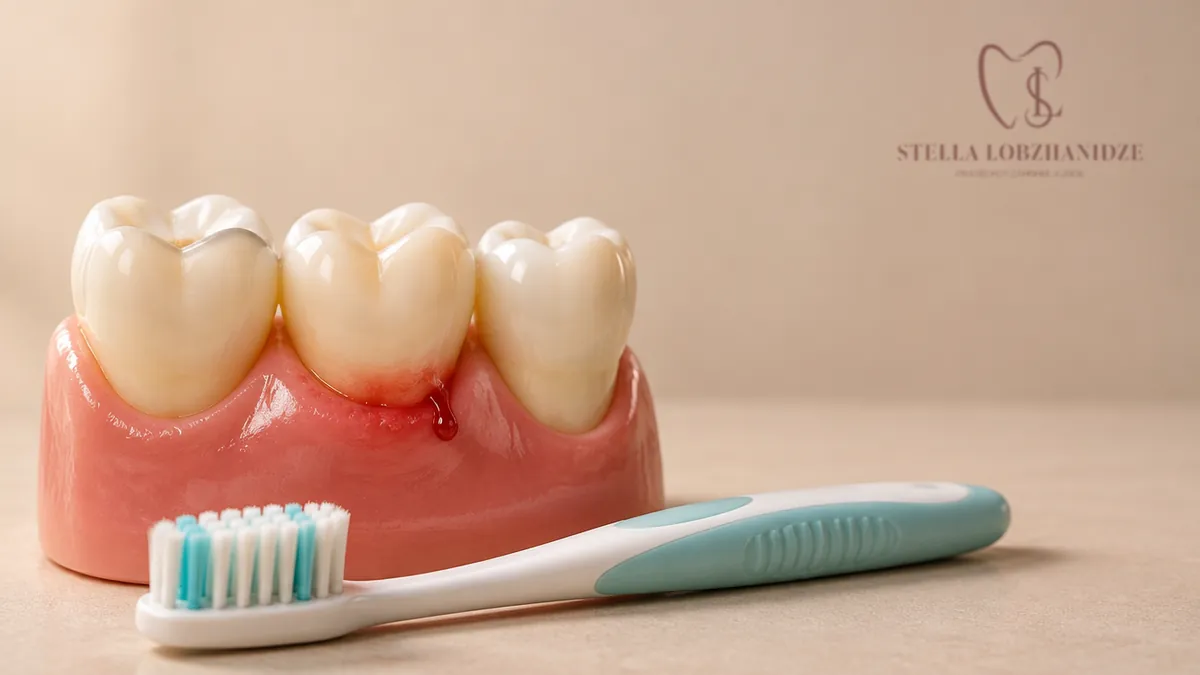
- gums that bleed regularly
- red or swollen gums
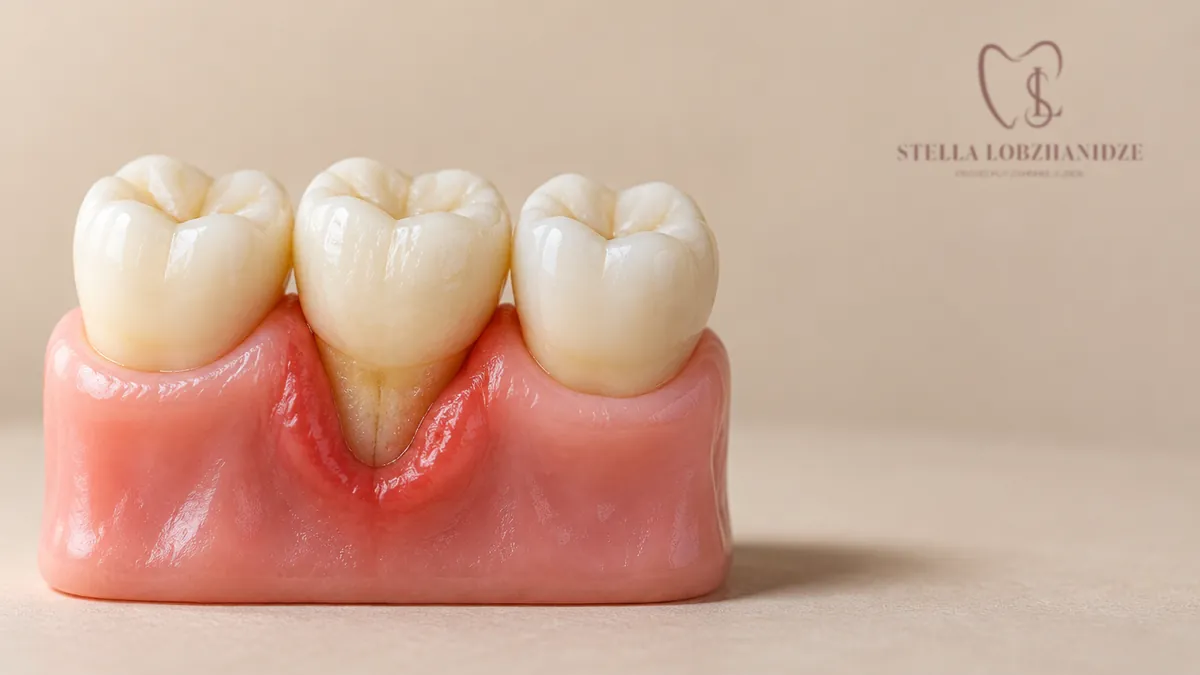
- receding gums
- persistent bad breath or a bad taste
- sensitive or loose teeth
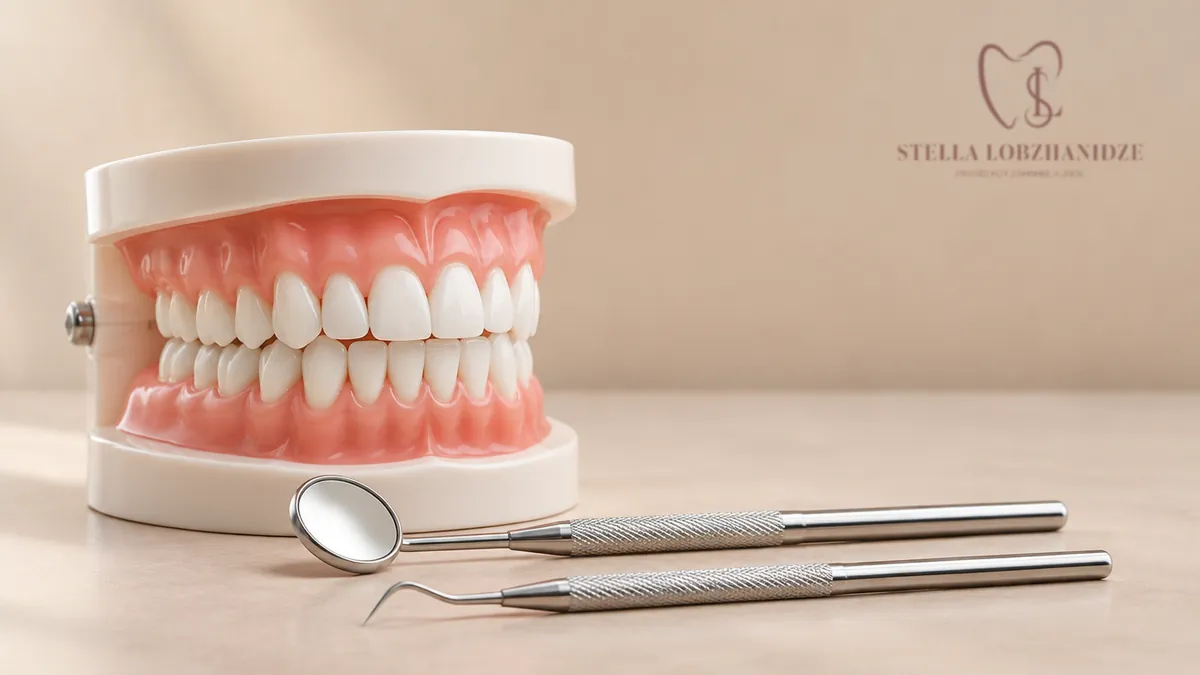
For early detection, experts recommend a basic periodontal examination once a year. The dentist uses a fine probe to measure how deep the gum pockets are.
How do we treat periodontitis in Vienna-Meidling?
At our practice in 1120 Vienna-Meidling, we treat inflammation of the tissues supporting the teeth. Over several sessions, deep scaling removes bacteria and hard deposits, including below the gum line, so the inflammation can subside. You also get guidance on oral hygiene at home.
The earlier it is treated, the better. To book an appointment, call +43 1 813 31 23 or book online at stelladent.termin365.at.
Come to the practice if:
- your gums bleed regularly or are red or swollen
- your gums are receding or teeth are becoming loose
- you have diabetes and your gums have not been checked for a while
- you are pregnant or planning a pregnancy and your gums often bleed
Book an appointment
Book online or give us a call.
Sources
- KZBV – Parodontitis: Ursachen und Auswirkungen
- Österreichische Zahnärztekammer – Potentielle Auswirkungen von Parodontitis
- Bundeszahnärztekammer – Gesund im Mund bei Diabetes (Patienteninformation)
- EFP – Treatment of stage I–III periodontitis: The EFP S3 level clinical practice guideline (J Clin Periodontol 2020)
- gesundheit.gv.at – Parodontitis
- AWMF – S2k-Leitlinie Diabetes und Parodontitis (Reg.-Nr. 083-015, 2024)
- MedUni Wien / Universitätszahnklinik Wien – Presseaussendung: Rund jeder zweite Österreicher im mittleren Lebensalter hat Parodontitis (2012)
This article is for general information only and does not replace a dental examination or advice.