Bleeding gums – why it happens and what helps
Bleeding gums are usually a sign of inflamed gums. The most common cause is bacterial plaque along the gumline. Thorough but gentle brushing and cleaning between your teeth help, and if the bleeding continues, have it checked by a dentist.
By Stela Lobzhanidze, dentist in Vienna-Meidling
Published
Key points
- Healthy gums do not bleed, so bleeding usually points to inflammation.
- The most common cause is bacterial plaque where the teeth meet the gums.
- Gum inflammation is often painless, so it can go unnoticed for a long time.
- Brush gently twice a day and clean between your teeth every day.
- Left untreated, gum inflammation can develop into periodontitis.
What does it mean when your gums bleed?
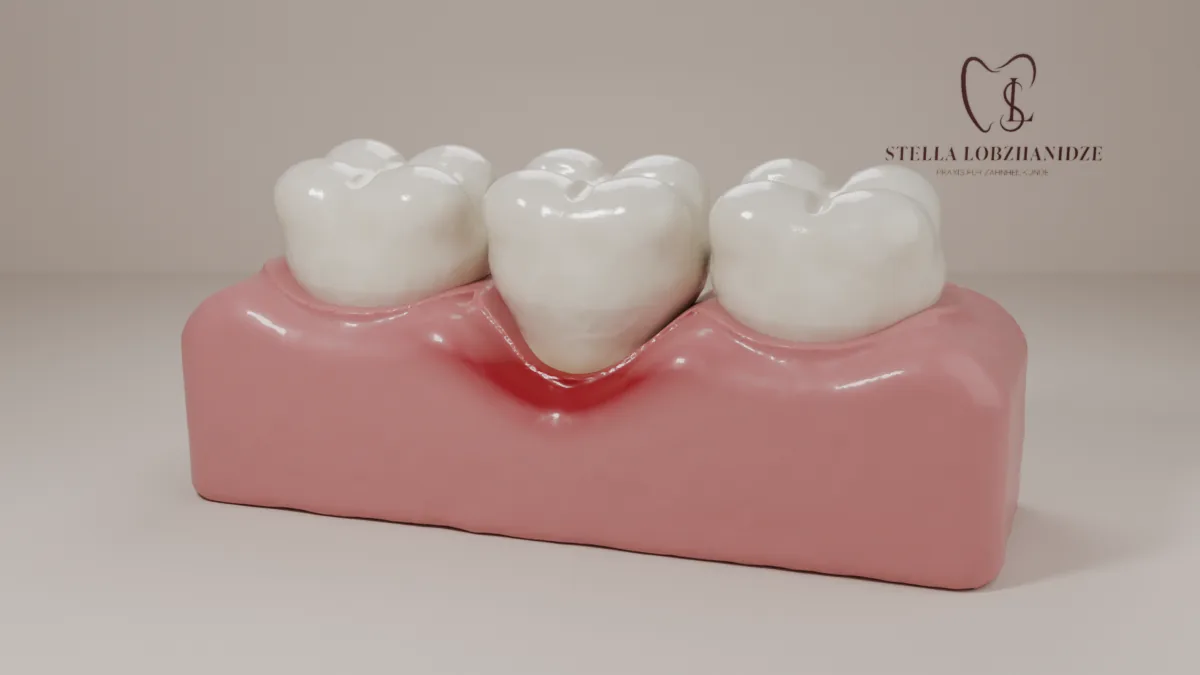
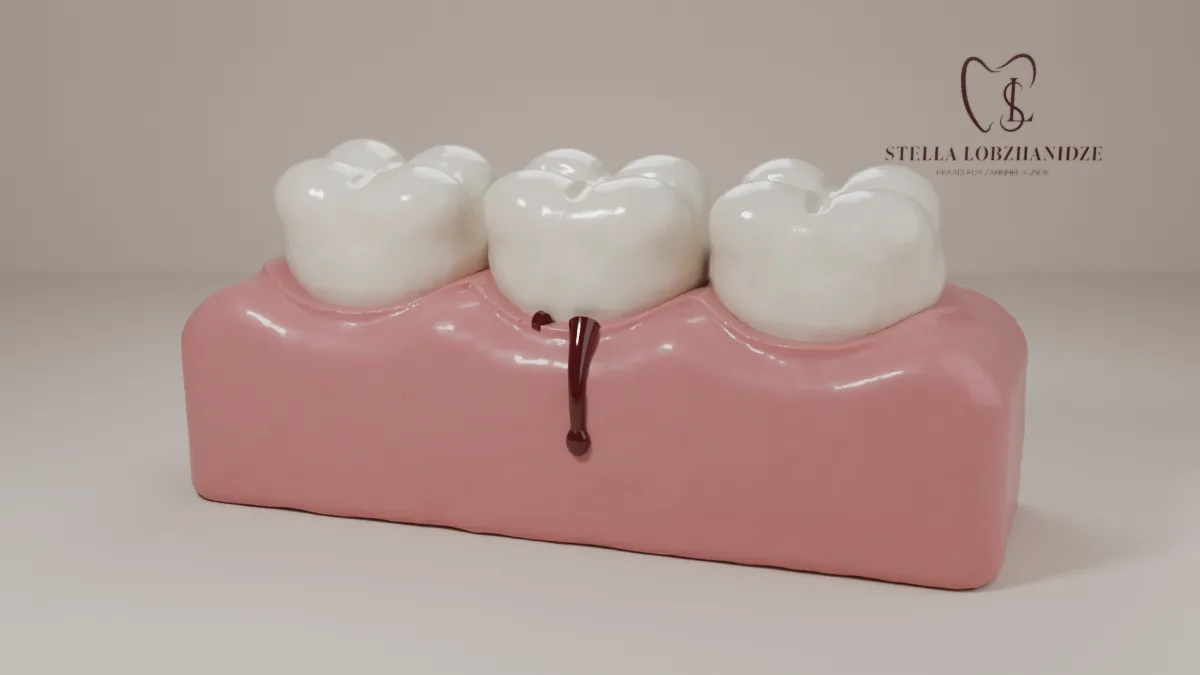
Healthy gums do not bleed and are not tender. If your gums bleed when you brush, clean between your teeth or bite into hard foods such as apples, this is usually a sign of gum inflammation (gingivitis).
Inflamed gums are often red, swollen and tender. They no longer sit firmly against the tooth. There is usually no pain, which is why the inflammation often goes unnoticed for a long time.
Less often, bleeding has other causes, such as medicines or general health conditions.
Why do gums become inflamed?
The cause is usually bacterial plaque. It builds up mainly where the teeth meet the gums.
The bacteria produce substances that get into the gum tissue and make it swell. According to gesund.bund.de, plaque that is not removed can lead to inflammation within just a few days.
Over time, plaque hardens into tartar. Tartar can also inflame the gums. It is removed at the dental practice.
What role does brushing technique play?
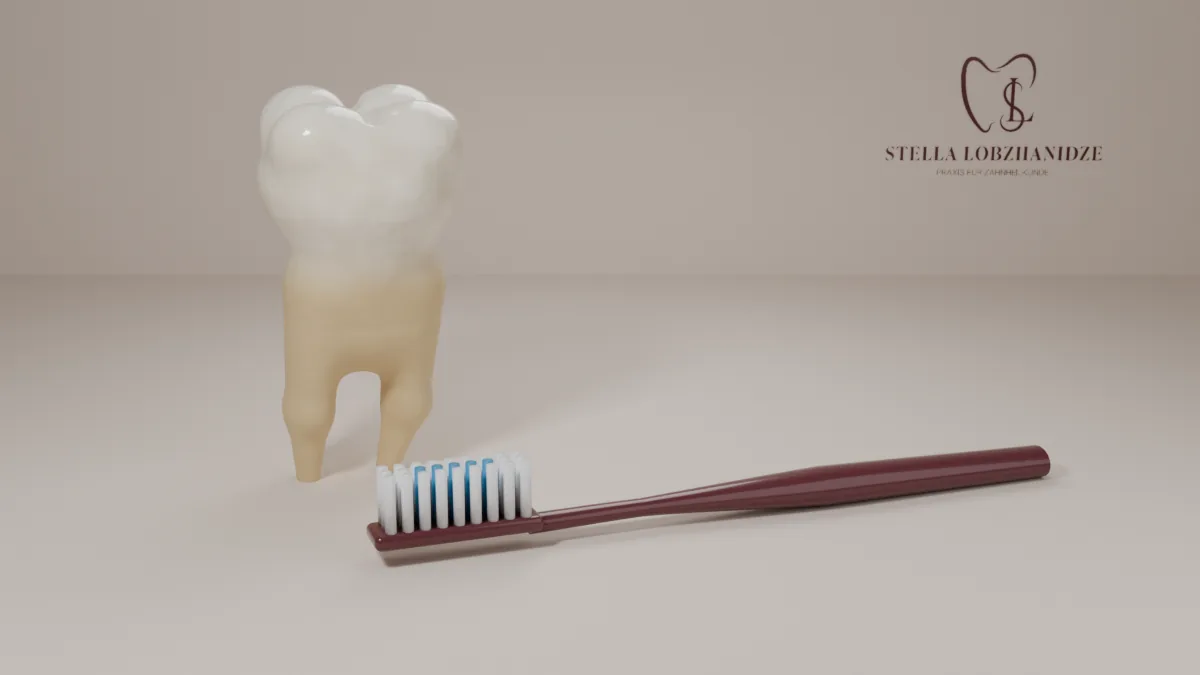
If you brush too rarely or not thoroughly enough, plaque stays along the gumline and between the teeth. There it irritates the gums.
Brushing too hard and flossing the wrong way can also make your gums bleed. The US health library MedlinePlus therefore recommends a soft toothbrush and gentle brushing.
You can learn the right brushing technique at the dental practice.
When is periodontitis behind it?
If gum inflammation is not treated, it can turn into periodontitis. This inflammation also affects the jawbone that holds the teeth. As well as bleeding, you may notice these signs:
- bad breath or a bad taste in your mouth
- sensitive tooth necks and sore gums
- gums that are shrinking back (gum recession)
- pockets forming between the teeth and gums
- loose teeth
- a dental abscess
The earlier periodontitis is detected, the better it can be treated. The aim of treatment is to stop it getting worse.
What else can cause bleeding gums?
Besides plaque, other factors can make the gums more vulnerable or cause bleeding:
- smoking
- diabetes and other metabolic conditions
- hormonal changes during pregnancy
- medicines that slow blood clotting (blood thinners)
- poorly fitting dentures or other appliances in the mouth
- less often, bleeding disorders, a lack of vitamin C or vitamin K, or leukaemia
If you take blood thinners or other medicines, do not stop taking them on your own. Talk to your doctor first.
What can you do yourself?
The most important thing is to remove plaque thoroughly but gently every day.
- Brush twice a day for at least two minutes each time, using a soft toothbrush and without pressing hard.
- Use a fluoride toothpaste and spit it out afterwards without rinsing.
- Clean between your teeth every day with floss or interdental brushes.
- Only use a mouthwash if your dentist recommends it, and not straight after brushing.
- Do not smoke.
- Eat a balanced diet and keep snacking between meals to a minimum.
Have regular check-ups even if you have no symptoms. This is especially important during pregnancy and if you have diabetes.
How can the dental practice help?
First, your teeth and gums are examined for signs of inflammation. You will also be asked about your symptoms, how you clean your teeth and any medicines you take.
For gum inflammation, plaque and tartar are removed, as well as overhanging edges of fillings or crowns if needed. For periodontitis, plaque and hard deposits below the gumline are also removed. Sometimes X-rays, antibiotics or gum surgery are needed.
Treatment also includes guidance on oral hygiene. How well it works depends a lot on your care at home.
At our practice in 1120 Vienna-Meidling, we offer dental hygiene and preventive care as well as periodontics (gum treatment). Our dental hygiene team will show you the right brushing technique and how to clean between your teeth. Professional dental cleaning is a private service, but many health insurance funds pay a contribution towards it.
Come to the practice if:
- your gums bleed when you brush or eat hard foods
- your gums are swollen and painful
- you have bad breath
- your child has sore or bleeding gums
- the bleeding continues despite treatment or comes with other unexplained symptoms
- you notice sore areas, red patches or a lump in your mouth or on your lip
See a dentist or the emergency service straight away if:
- your gums are very painful and swollen
- teeth become loose or fall out
- your gums are bleeding heavily
Outside opening hours, you can reach the dental emergency service on +43 1 512 20 78
Book an appointment
Book online or give us a call.
Sources
- gesundheit.gv.at – Gingivitis – Zahnfleischentzündung
- gesund.bund.de – Zahnfleischentzündung und Parodontitis
- NHS – Gum disease
- MedlinePlus (U.S. National Library of Medicine) – Bleeding gums
This article is for general information only and does not replace a dental examination or advice.