Tooth-friendly snacks: what belongs in the lunchbox?
A tooth-friendly snack consists of wholegrain bread, fresh vegetables and fruit, and low-sugar dairy products, with water or unsweetened tea to drink. For teeth, what matters most is how often sugar enters the mouth during the day. Sweet things are therefore better eaten with meals than in between.
By Stela Lobzhanidze, dentist in Vienna-Meidling
Published
Key points
- Sugar is a key cause of tooth decay; above all, it matters how often your child eats or drinks sugar.
- A good snack contains wholegrain bread, vegetables, fresh fruit and a dairy product with little sugar.
- Whole fruit is gentler on teeth than juice, smoothies or fruit pouches.
- The best thirst quenchers are tap water, mineral water and unsweetened fruit tea.
- Sweets and dried fruit are better eaten with a meal than at break time.
Why does the snack matter for teeth?
Sugar is a key trigger of tooth decay. For teeth, it is not only the amount that counts but also how often sugar and acid act on them.
A child who snacks again and again throughout the day or keeps sipping sweet drinks puts more strain on their teeth than with one short sweet meal. The snack at nursery or school is therefore a good chance to build in sugar-free breaks.
Which snack is good for your child's teeth?
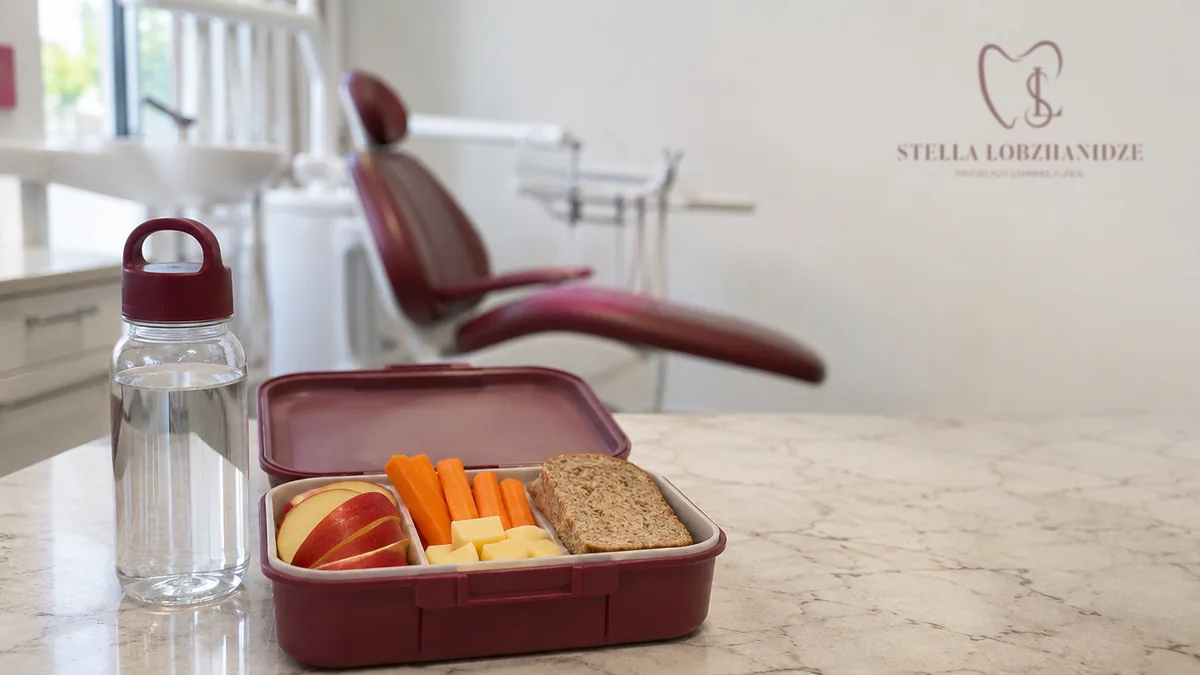
A balanced snack provides energy for the morning and is kind to teeth. It could look like this:
- wholegrain bread or rolls with lean cheese, ham or a curd cheese spread
- raw vegetables such as peppers, carrots, tomatoes or radishes
- fresh fruit such as an apple or grapes
- yoghurt, buttermilk or curd cheese cream with little sugar
- a drinking bottle with water
Cut fruit and vegetables into child-sized pieces or sticks. If mornings are hectic, you can prepare the snack the evening before.
Is fruit a bad snack for teeth?
No, whole fruit is a good choice. The sugar is held within the structure of the fruit, so it does less harm to teeth.
It is different when fruit is juiced or blended. This releases the sugar. Fruit juice and smoothies therefore count as so-called free sugars, just like added sugar.
Fruit pouches seem practical, but they are not an equal substitute for fresh fruit. They often contain sugar from fruit juice concentrates, and your child does not need to chew. Treat them like sweets and offer them only now and then.
Do dried fruit or cereal bars harm teeth?
Dried fruit is better for teeth as part of a meal, for example in muesli, than as a snack in between.
With cereal bars, it is worth checking the ingredients. Honey, syrup and added sugar count as free sugars, which promote decay. Heavily sweetened bars are best treated like sweets.
Which drinks are best for children's teeth?
The best thirst quenchers are tap water and mineral water. Unsweetened fruit tea is also a good choice.
- Lemonades, sports drinks and diluted squash often contain a lot of sugar and do not belong in the lunchbox.
- Sweeteners are not a good solution, because they get children used to a sweet taste.
- Cola, iced tea, energy drinks and green or black tea are not suitable for children because of the caffeine.
- Fruit juice is best given only in small amounts and with a meal.
Even for babies, drinks and food should not be sweetened. Constantly sipping sweet drinks is particularly bad for teeth.
How often can your child have sweets?
Something sweet now and then is fine. Strict bans often make sweets even more appealing. What matters is that snacking on sweets between meals does not become a daily habit.
Ideally, your child eats sweets in one go, directly with or after a meal. After a snack in between, rinsing the mouth with water helps.
As a guide, the UK's NHS gives a maximum of 19 grams of free sugar a day for children aged four to six and 24 grams for those aged seven to ten. That is about five to six sugar cubes.
How do we support you in Vienna?
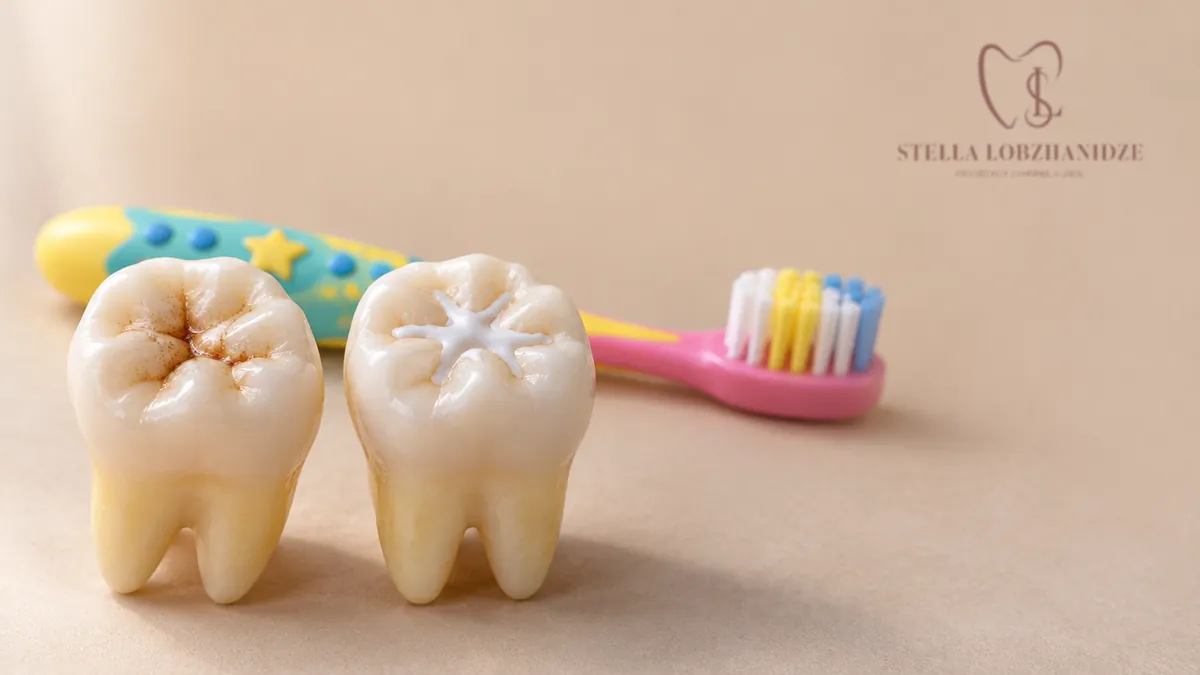
During check-ups and prophylaxis appointments at our practice in 1120 Vienna-Meidling, we give you tips for dental care at home. To help prevent decay in children, we offer fluoride treatment and fissure sealing, among other things.
We recommend check-ups twice a year. You can book an appointment on +43 1 813 31 23 or online at stelladent.termin365.at.
Come to the practice if:
- you notice white, brown or dark spots on your child's teeth
- your child complains of pain with sweet or cold food or when chewing
- the last check-up was more than six months ago
Book an appointment
Book online or give us a call.
Sources
- gesundheit.gv.at – Gesunde Jause von zu Hause
- gesundheit.gv.at – Gesunde Jause: Richtig trinken
- NHS – Sugar: the facts
- BZÄK – Ernährungszahnmedizin und Mundgesundheit
- ÖGK – Gesunde Zähne von A–Z
- Gesundheit Österreich GmbH – Österreichische Zahnstatuserhebung 2023/24: 6- bis 7-jährige Kinder
- Land Oberösterreich, ÖGK – Gesunde Zähne von Anfang an
This article is for general information only and does not replace a dental examination or advice.