Diet for healthy teeth: what really matters
For healthy teeth, what matters most in your diet is how often you have sugar and acid. Sweet things are best kept to mealtimes, and water is the best drink. A balanced diet also protects your gums.
By Stela Lobzhanidze, dentist in Vienna-Meidling
Published
Key points
- Sugar is the main dietary cause of tooth decay.
- Frequent snacking does more harm than the same amount of sugar in one go.
- Have sweet and acidic food at mealtimes and not before going to bed.
- After acidic food, wait about half an hour before brushing your teeth.
- Little sugar and plenty of fibre also help against gum inflammation.
What kind of diet is good for healthy teeth?
Sugar does not attack the teeth directly. Bacteria in dental plaque feed on it and produce acids. These acids dissolve minerals from the enamel, and over time tooth decay develops. Sugar also helps bacteria stick to the teeth.
According to guidance from the UK health authorities, free sugars are the main dietary cause of tooth decay. They are found not only in sweets but also in many processed foods and in drinks such as lemonade, cola or iced tea. It is worth checking the ingredients list.
How often a day can I eat sugar?
Not only the amount matters, but also how often. After every sugary snack or meal, plaque stays acidic for about 20 to 40 minutes. During this time the enamel loses minerals.
If several hours pass between two sugary intakes, the enamel can recover, especially with fluoride from toothpaste. If you snack all day long, your teeth never get a break. There is no fixed number. Have sweet things as rarely as possible and ideally with main meals.
Do not eat or drink anything sugary before going to bed. At night less saliva flows, and saliva normally buffers acids.
Are snacks between meals bad for your teeth?
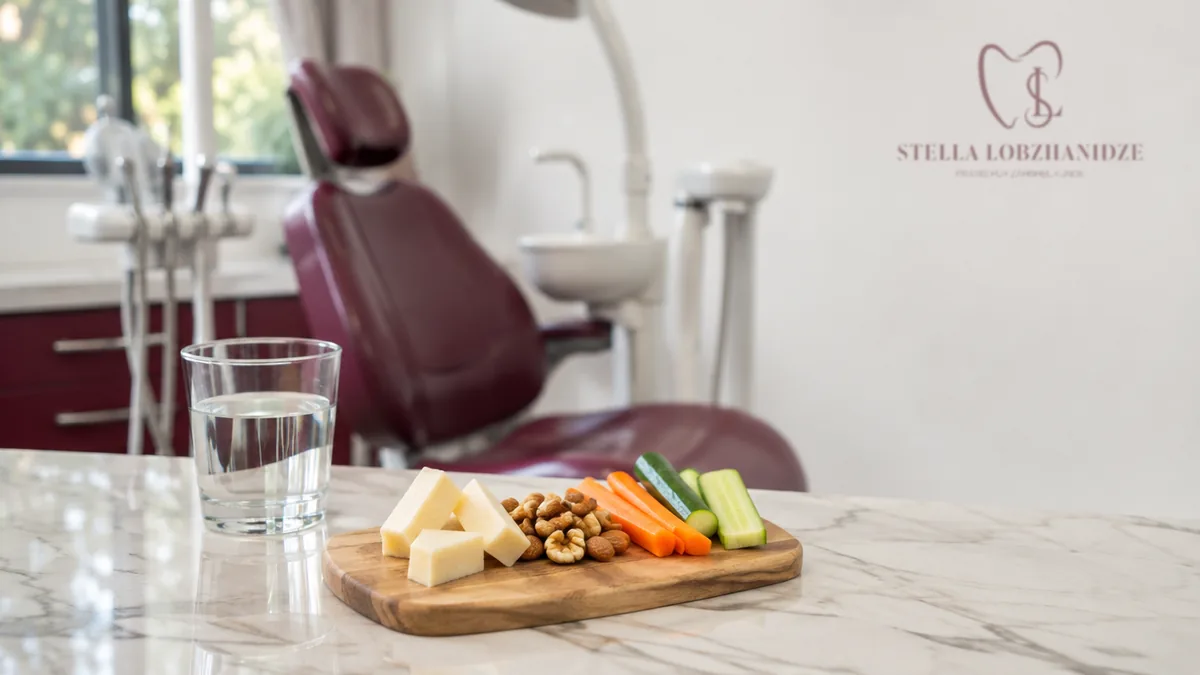
Not in principle. It depends on what you eat. Fresh fruit, for example, is a suitable snack. Foods that need thorough chewing stimulate saliva, and saliva neutralises acids.
Less suitable between meals are:
- biscuits, cakes and sweets
- foods that stick to the teeth, such as toffees, honey or cereal bars
- dried fruit
- sweetened drinks and fruit juices
Is fruit bad for your teeth because of the acid?
Fruit is part of a healthy diet, and you do not need to give it up. But acid from fruit, fruit juice, salad dressings or soft drinks can attack the enamel directly. This is called erosion. These tips protect your enamel:
- Have acidic food and drinks mainly at mealtimes.
- Drink fruit juice and smoothies only in small amounts and with a meal.
- Do not swish drinks around your mouth.
- After something acidic, brush gently and without pressing hard. There is no good evidence that waiting before brushing helps much.
Which drinks are tooth-friendly?
Water is the best drink for your teeth. It quenches thirst and rinses away food debris. Lower-fat milk and unsweetened tea and coffee are also suitable.
Tea and coffee can stain the teeth, but this is a purely cosmetic issue. Soft drinks, iced tea and juices, on the other hand, contain a lot of sugar and often acid as well.
What role does diet play for your gums?
An unhealthy diet often shows in the mouth first. According to Professor Johan Wölber, a periodontist in Dresden, tooth decay and gum inflammation are usually the first consequences. Highly processed carbohydrates such as sugar, white flour, juices and soft drinks are considered the biggest shared risk factor.
A wholefood diet with plenty of fibre is good for the gums. Wölber also recommends more omega-3 fatty acids, for example from oily sea fish. A good diet does not replace daily brushing, though.
How can the dental practice in Vienna help?
Even with a good diet, brushing with fluoride toothpaste and regular check-ups remain important. At our practice in 1120 Vienna-Meidling we offer preventive check-ups and professional teeth cleaning. You will also get tips for caring for your teeth at home.
We recommend coming for a check-up and cleaning twice a year, or more often if you have a higher risk of tooth decay. If you wish, our recall service will remind you of your appointments.
You can book an appointment on +43 1 813 31 23 or online at stelladent.termin365.at.
Book an appointment
Book online or give us a call.
Sources
- GOV.UK – Delivering better oral health: chapter 10, healthier eating
- KKH – Zahnfreundliche Ernährung
- Zahnärztliche Mitteilungen – Die ersten Symptome ungesunder Ernährung sind Karies und Zahnfleischentzündungen
- gesundheit.gv.at – Zahngesundheit
- WHO – Sugars and dental caries
- GOV.UK – Delivering better oral health: chapter 7, tooth wear
- gesundheit.gv.at – Zahnpflege für Säuglinge und Kinder
This article is for general information only and does not replace a dental examination or advice.