Dental care with diabetes: what matters
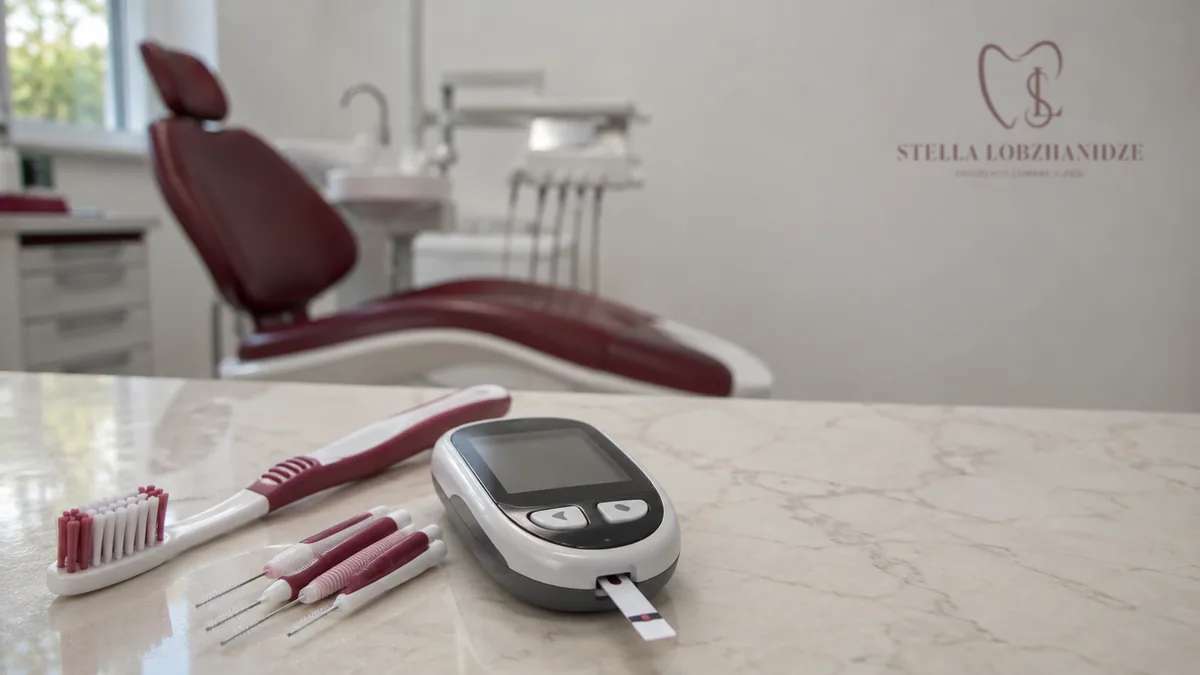
If you have diabetes, thorough dental care is especially important. People with diabetes develop gum disease (periodontitis) more often, and periodontitis in turn makes blood sugar harder to control. Careful oral hygiene, regular check-ups and well-controlled blood sugar protect your teeth and gums.
By Stela Lobzhanidze, dentist in Vienna-Meidling
Published
Key points
- People with diabetes have about three times the risk of periodontitis.
- Periodontitis and diabetes affect each other.
- Successful periodontitis treatment can improve long-term blood sugar, but not in every case.
- A dry mouth is common with diabetes and raises the risk of tooth decay.
- Tell your dentist that you have diabetes and which medicines you take.
How are diabetes and gum inflammation linked?
People with diabetes develop periodontitis about three times as often as others. The inflammation often progresses faster and more severely. The risk is particularly high when blood sugar is poorly controlled.
The link also works the other way round. Periodontitis makes it harder to control blood sugar. According to the German Diabetes Society, the deeper the gum pockets, the higher the long-term blood sugar.
A dry mouth is also common with diabetes. Less saliva means less protection against tooth decay and infections. Fungal infections in the mouth also occur more easily.
Can good oral hygiene improve blood sugar?
Successful periodontitis treatment can lower long-term blood sugar (HbA1c). According to the North Rhine Dental Chamber, however, this does not happen for everyone. So have your HbA1c checked regularly by your GP during treatment.
In turn, well-controlled blood sugar lowers the risk of periodontitis. Dental care and care from your GP go hand in hand.
Which dental care is recommended with diabetes?
The basic rules are the same as for everyone. With diabetes, though, it is especially important to stick to them consistently:
- Brush your teeth twice a day for two minutes.
- Clean between your teeth every day, for example with floss or interdental brushes.
- Pay attention to your diet. Some sugar substitutes can also promote tooth decay.
- Ask at the practice whether extra fluoride makes sense for you.
How often should you have a dental check-up with diabetes?
The German Diabetes Society recommends regular dental check-ups for everyone with diabetes. The North Rhine Dental Chamber advises two to four professional cleanings a year, depending on the risk of tooth decay and periodontitis.
In addition, gesundheit.gv.at recommends a basic periodontal examination once a year. A fine probe is used to measure how deep the gum pockets are. This helps detect periodontitis early.
What should you tell your dentist about your diabetes?
Tell the practice team which type of diabetes you have and all the medicines you take. Keep your medical history form up to date and bring your latest HbA1c value if you have it.
These points help to avoid low blood sugar during your appointment:
- Plan appointments around your meals and medicines.
- Carry glucose tablets with you.
- Tell us straight away if you feel unwell during treatment.
When are bleeding gums a warning sign with diabetes?
If your gums bleed when you brush, this points to inflammation. With diabetes you should have it checked quickly, because gum inflammation can turn into periodontitis. Periodontitis often causes symptoms only late.
Other warning signs are red or swollen gums, bad breath, a bad taste, sensitive tooth necks, receding gums and loose teeth.
How can our practice in Vienna support you?
At our practice in 1120 Vienna-Meidling we offer professional teeth cleaning and periodontitis treatment. During periodontitis treatment, bacteria and hard deposits are removed over several sessions, including below the gum line. You also get guidance on caring for your teeth at home.
We recommend a check-up and cleaning twice a year, more often with periodontitis. If you wish, our recall service will remind you of your appointments. You can reach us on +43 1 813 31 23 or online at stelladent.termin365.at.
Come to the practice if:
- your gums bleed when you brush or eat
- your gums are red or swollen
- you have persistent bad breath or a bad taste in your mouth
- teeth feel loose or your gums are receding
- your mouth is often dry
Book an appointment
Book online or give us a call.
Sources
- Zahnärztekammer Nordrhein – Patientenbroschüre Diabetes
- Zahnärztliche Mitteilungen – Deutsche Diabetes Gesellschaft empfiehlt regelmäßige Zahnarztbesuche
- gesundheit.gv.at – Parodontitis
- gesundheit.gv.at – Zahngesundheit
- gesundheitsinformation.de (IQWiG) – Zahnfleischentzündung und Parodontitis
- gesundheit.gv.at – Diabetes: Unterzuckerung und Überzuckerung
This article is for general information only and does not replace a dental examination or advice.