Caries diagnosis without X-rays: what is possible?
In many cases, caries can be diagnosed without X-rays. The dentist examines your teeth closely and can also shine light through them, for example with the DIAGNOcam. This does not always replace an X-ray completely, though.
By Stela Lobzhanidze, dentist in Vienna-Meidling
Published
Key points
- Dentists can usually spot tooth decay through a careful examination of the teeth.
- Transillumination shines light through the tooth and involves no X-ray radiation.
- Light-based devices add to the examination, but they sometimes miss early enamel caries.
- A dental X-ray involves a very low radiation dose and is only taken when it is needed.
- Your dentist decides case by case whether an additional X-ray makes sense.
Can a dentist detect caries without an X-ray?
Yes, often. Dentists usually find tooth decay by looking closely at the teeth. Early caries shows up as rough white or brownish spots in the enamel.
It is harder between the teeth and under old fillings. There, decay is hard to see with the naked eye. This is where tools such as light or X-rays come in.
Caries does not hurt at first. Pain usually starts only once it has reached the dentine. That is why your dentist may find decay you cannot feel yet.
What alternatives to X-rays are there for diagnosing caries?
Besides a careful examination, there are methods that work with light:
- Transillumination: light, often near-infrared, is shone through the tooth. This mainly reveals decay between the teeth.
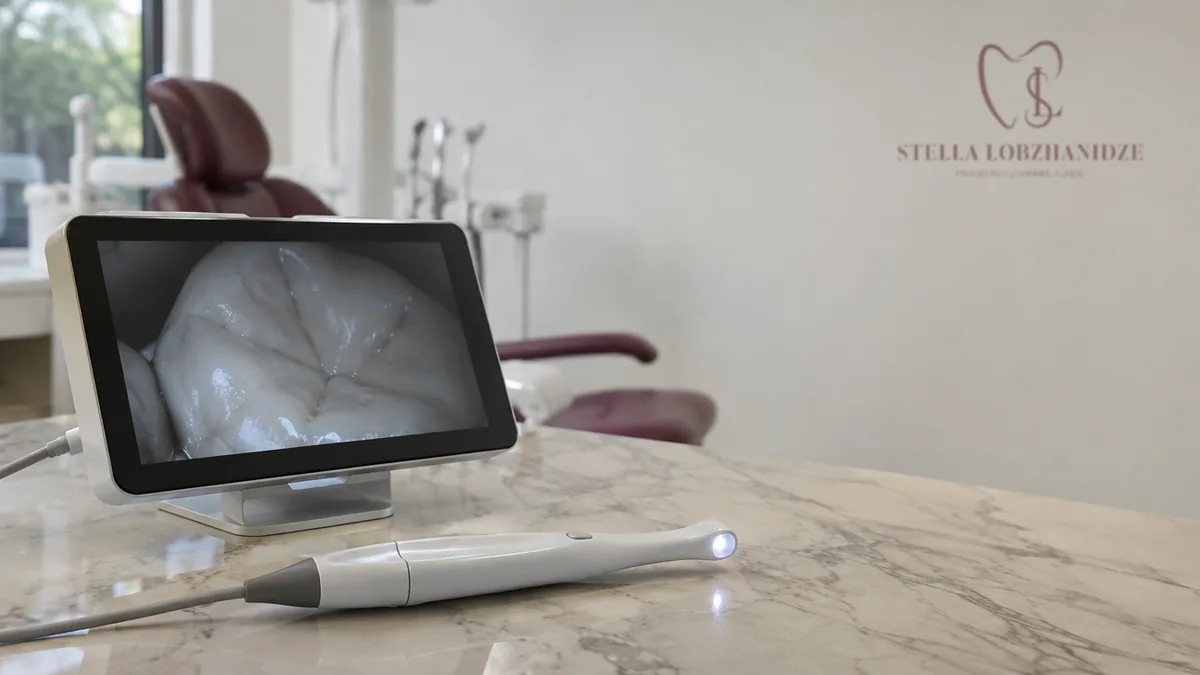
- Digital transillumination with a camera: the image appears directly on a screen. One example is the DIAGNOcam.
- Optical coherence tomography (OCT): in studies it detects early decay more reliably, but it is hardly available in dental practices yet.
Transillumination involves no X-ray radiation. The image can therefore be repeated as often as needed, for example to monitor early decay.
Is a diagnosis with light or a camera more accurate than an X-ray?
Not necessarily. In a study from the University of Munich, transillumination and X-rays agreed very well for decay between the teeth.
A Cochrane review from 2021 is more cautious. It found that near-infrared and fibre-optic devices miss some early enamel caries. The evidence is also weak because many studies used extracted teeth.
The experts therefore see these devices as an addition to the examination, not a replacement. Transillumination also has a limit with deep decay: it does not show the tooth nerve, so it cannot tell how close the decay is to the nerve.
Are dental X-rays dangerous?
A single dental X-ray involves a very low radiation dose. According to the Austrian health portal, it is about 0.01 millisieverts. Natural background radiation in Austria averages 2.8 millisieverts a year.
Even a small dose is not entirely without risk. When X-rays are used carefully, however, the benefit clearly outweighs it. In Austria, every X-ray must be medically justified in advance. Doctors weigh benefit against risk and check whether a radiation-free method is available.
Dental X-rays are usually possible during pregnancy too, because the abdomen and pelvis are not directly exposed. Still, always tell your dentist if you are or might be pregnant.
How often should you have a dental X-ray?
There is no fixed schedule for everyone. An X-ray is only taken if it is really needed for diagnosis or treatment.
An X-ray helps, for example, to judge how deep a cavity goes, whether it sits between the teeth or whether decay has formed under an old filling.
Feel free to ask why an X-ray is planned. Your dentist will explain the benefit and tell you whether transillumination with light is enough in your case.
Where can you get caries diagnosis without X-rays in Vienna?
At our practice in 1120 Vienna-Meidling, we use the DIAGNOcam. It shines light through the tooth and shows decay, especially between the teeth, without X-ray radiation. You can see the images directly on the screen.
The method is particularly suitable for children, pregnant women and anyone who wants to avoid radiation. If an X-ray would also be useful, we will discuss it with you first.
We recommend a check-up twice a year. Before any treatment, you receive a cost estimate. You can book online at stelladent.termin365.at or call us on +43 1 813 31 23.
Come to the practice if:
- you notice white or brownish spots on a tooth
- a tooth is sensitive to cold or sweet things
- your last check-up was a while ago
- you are unsure whether a planned X-ray is necessary
Book an appointment
Book online or give us a call.
Sources
- Gesundheitsportal (gesundheit.gv.at) – Karies: Was ist das?
- Gesundheitsportal (gesundheit.gv.at) – Strahlenanwendung in der Medizin
- Cochrane Database of Systematic Reviews (Macey et al. 2021) – Transillumination and optical coherence tomography for the detection and diagnosis of enamel caries
- Zahnärztliche Mitteilungen (zm) – Leuchten statt Strahlen
- Zahnärztekammer Niederösterreich – PatientInnen-Information Zahnröntgen
- Zahnärztekammer Kärnten – Leitfaden: Schwangerschaft und Röntgenuntersuchungen
- gesundheitsinformation.de (IQWiG) – Karies
This article is for general information only and does not replace a dental examination or advice.