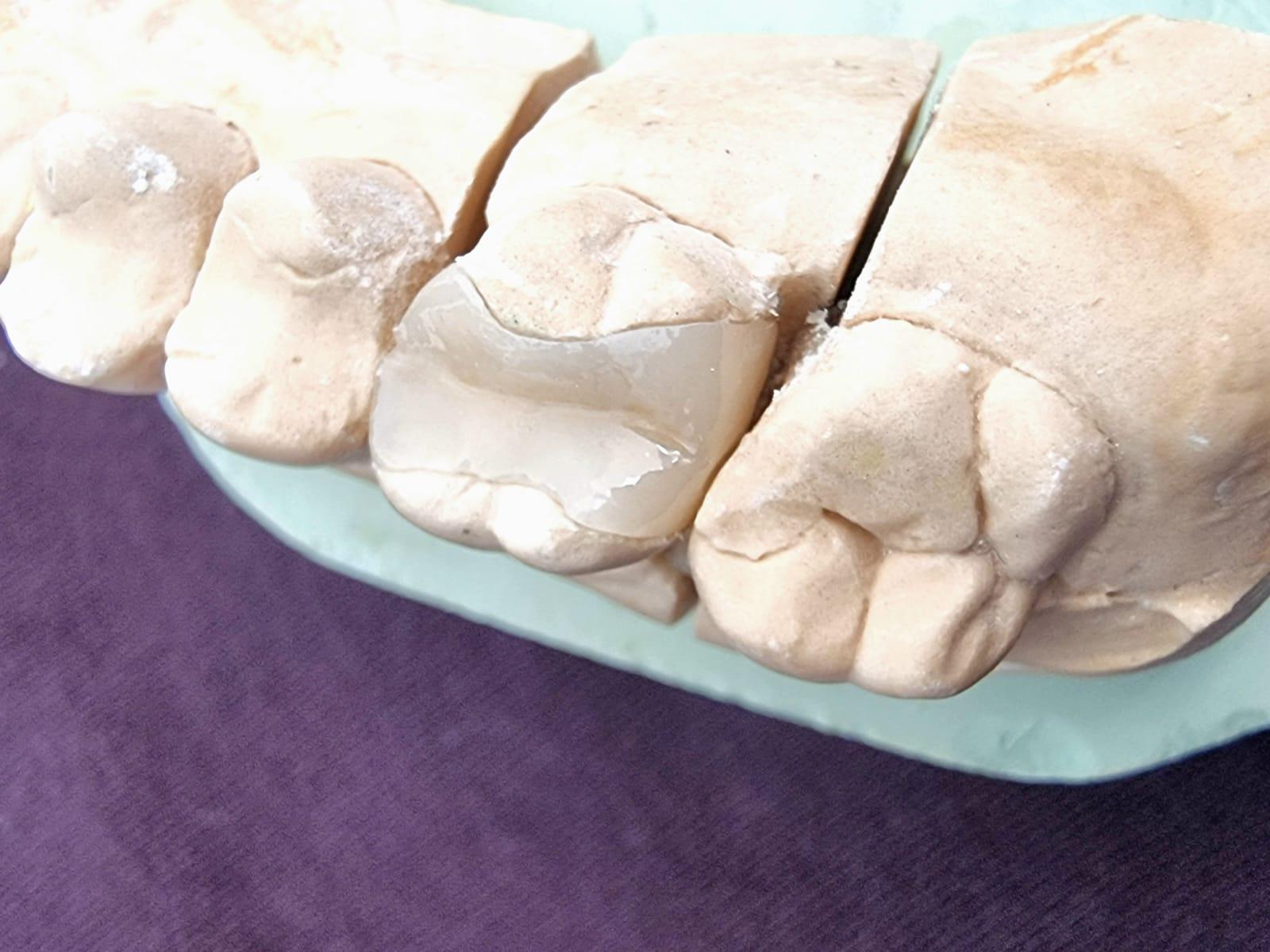
High-quality ceramic restorations
Ceramic inlays are the premium solution for larger cavities and tooth damage. Unlike conventional fillings, they are made in a dental laboratory specifically for your tooth.
All-ceramic material is highly biocompatible, doesn't discolour and is exceptionally durable.
Thanks to the precise fit and the inlay being bonded to the tooth, your tooth's original strength is fully restored.
Ceramic inlays: the treatment step by step
How your custom-made ceramic inlays are created
Preparation and impression
Once the decay has been removed, the tooth is carefully prepared for the inlay. We then take an accurate impression or digital scan.
Temporary inlay
The prepared tooth is protected with a temporary filling while your inlay is made in the laboratory.
Made in the dental laboratory
In the dental laboratory, your inlay is made from high-quality all-ceramic material specifically for your tooth and perfectly matched to its colour.
Fitting and polishing
The finished inlay is bonded into place, the fit is checked and the surface is polished to a high shine.
Benefits of ceramic inlays
Perfect appearance
An invisible restoration that looks just like a natural tooth
Biocompatible
No allergies or intolerances
Precise fit
Made in the laboratory for a precise fit, down to the millimetre
Strength
Restores the tooth's original strength
Stain-resistant
Ceramic isn't stained by coffee, tea or nicotine
Treatment time
- • 1st appointment: 60–90 min
- • 2nd appointment: 45–60 min
- • Laboratory time: 7–10 days
- • 2 appointments needed
Aftercare
- • Your usual oral hygiene routine
- • Regular check-ups
- • Long-term warranty
- • Professional teeth cleaning
Perfect ceramic inlays for your teeth!
Book an appointment for your ceramic inlays today and enjoy a natural-looking, long-lasting restoration.
Guides on this topic
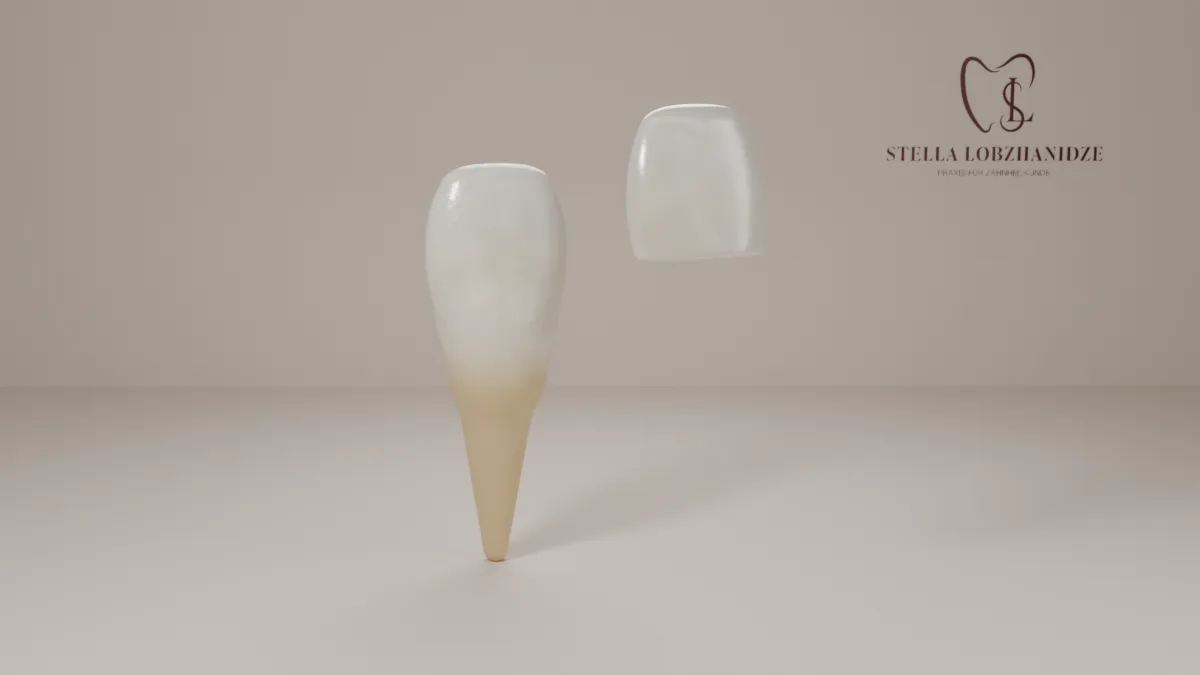 Who are veneers suitable for?Veneers are thin shells bonded to the front surface of a tooth. They can be an option for healthy front teeth that are discoloured, chipped or have small gaps. A little enamel is often filed away first, and this step cannot be undone.Read more
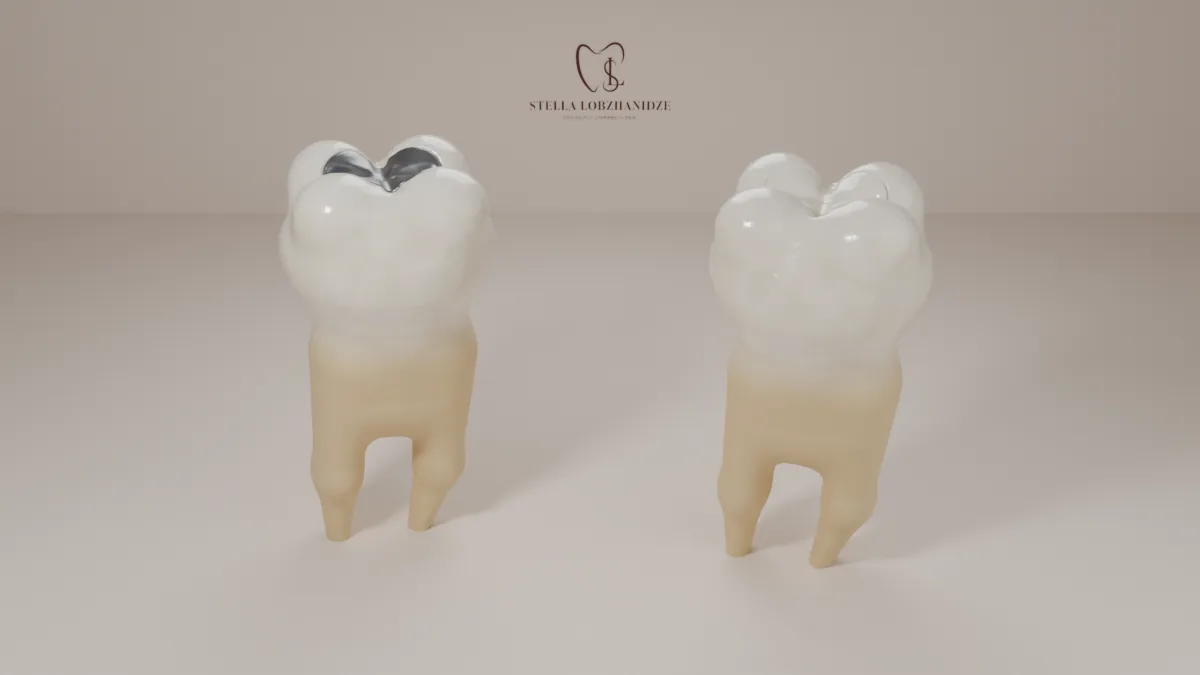 Which fillings are available after the amalgam ban?Since 1 January 2025, amalgam can generally no longer be used for fillings in the EU. Intact amalgam fillings do not need to be replaced. For new fillings, there are several materials, such as composite, glass ionomer cement or ceramic inlays.Read more
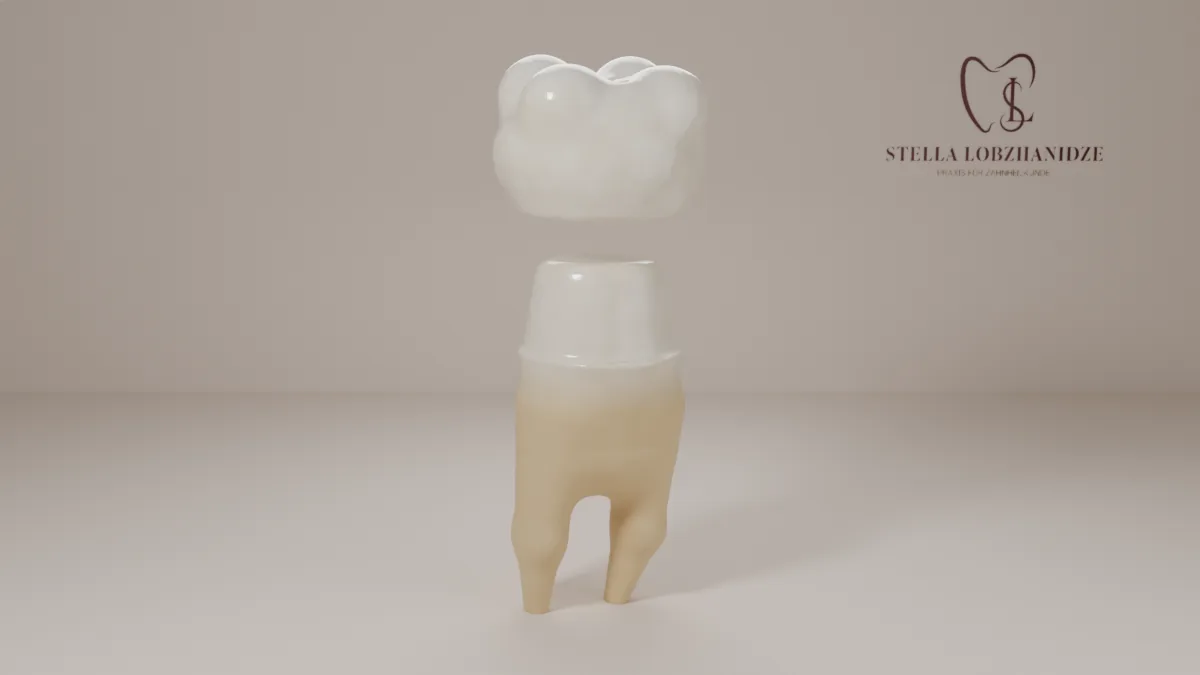 When does a tooth need a crown?A crown may be an option when a tooth is badly damaged, for example by a large filling, deep decay, a break or severe wear. It covers the whole tooth and makes it stronger again. If enough healthy tooth is left, a filling, an inlay or an onlay is sometimes enough.Read more