
Night guard for teeth grinding in 1120 Vienna
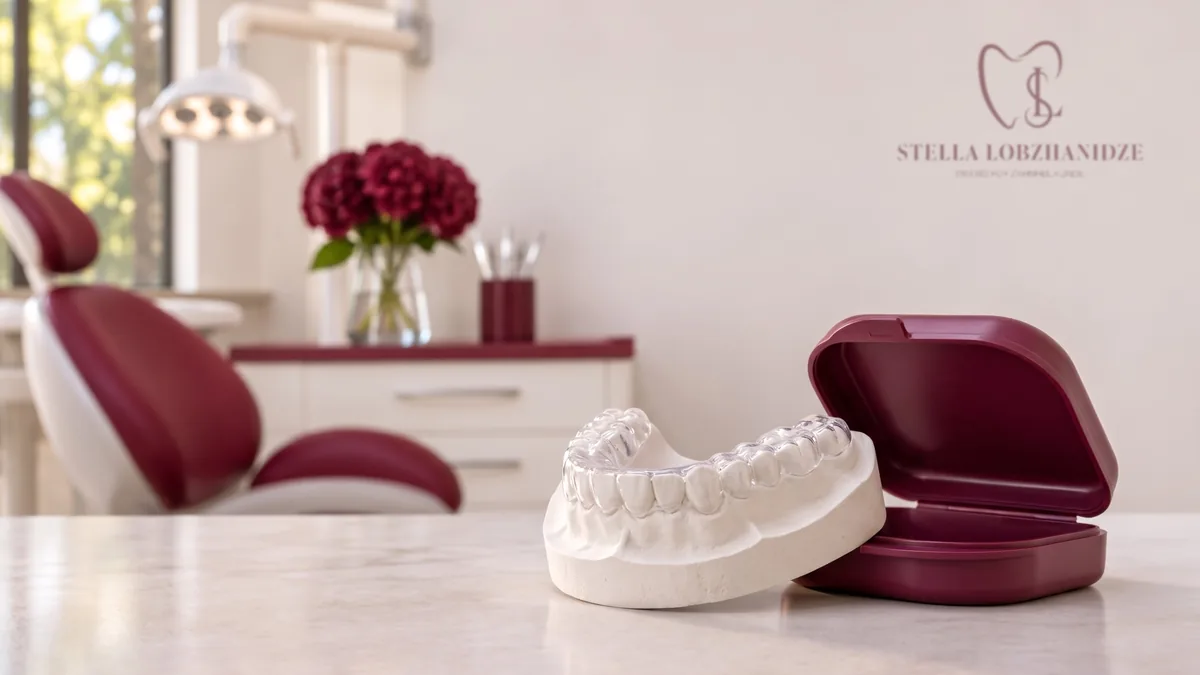
A custom-fitted occlusal splint protects your teeth if you grind or clench at night.
Grinding and clenching
Teeth grinding, known as bruxism, affects about one in five people and often goes unnoticed for a long time. It can happen at night during sleep or during the day while awake. Common triggers are stress, anxiety, sleep problems, alcohol, caffeine and smoking.
Signs of teeth grinding
- Grinding noises during sleep
- Tense jaw muscles or headaches in the morning
- Sensitive, worn or cracked teeth
How the splint helps
The splint is made to fit from an impression and is usually worn at night. It stops the teeth from rubbing directly against each other. Hard splints that cover all the teeth of one jaw are recommended. At your check-up we look for signs of wear and discuss with you whether a splint makes sense.
What the splint cannot do
The splint protects the teeth but does not stop the grinding for good. If you leave it out, the grinding usually returns soon. That is why it is worth looking at triggers such as stress and sleep; relaxation exercises help especially with daytime clenching.
FAQ
Hard or soft: which splint is right?
Does health insurance pay for the splint?
Do children grind their teeth too?
Sources
Questions about your teeth?
We will take a calm look. Book online or by phone.
Medically reviewed by Stela Lobzhanidze, dentist · Last reviewed: November 2026
Guides on this topic
 Tooth pain when biting: where does it come from?Pain when biting usually starts in the tooth itself, for example from decay, a leaking filling, a crack or an inflamed nerve. Teeth grinding can also be behind it. Since these causes are hard to tell apart from the outside, a dentist should examine the tooth.Read more
 All-ceramic or metal-ceramic crown: which suits you?An all-ceramic crown is made entirely of ceramic, while a metal-ceramic crown has a metal core with a ceramic layer on top. Both are tooth-coloured and well proven for single front and back teeth. Which is the better fit depends on the tooth, your bite, any allergies and your own wishes.Read more
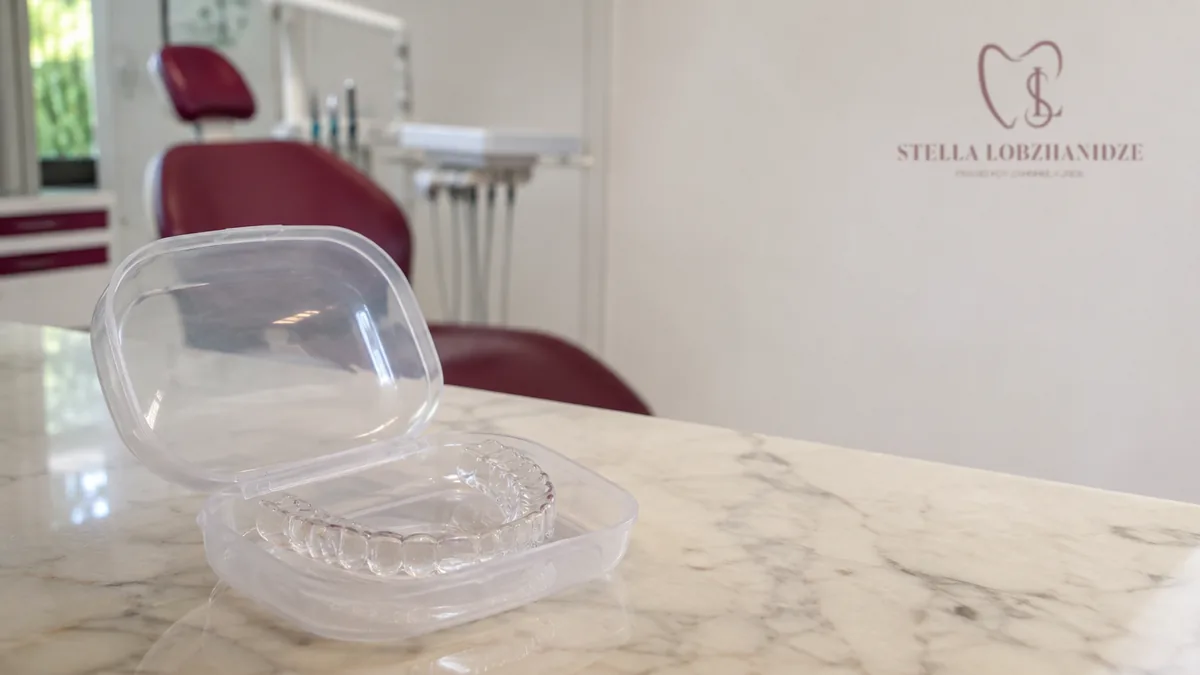 Teeth grinding: when does a splint help?Teeth grinding, known medically as bruxism, affects about one in five people and often goes unnoticed for a long time. A splint protects the teeth during sleep but does not stop the grinding for good. That is why relaxation and looking at possible triggers matter too.Read more